Foundries Win as Chip Prices Rise
💡AI demand is tightening mature-node chips, raising the cost and lead-time risks behind every server build.
⚡ 30-Second TL;DR
What Changed
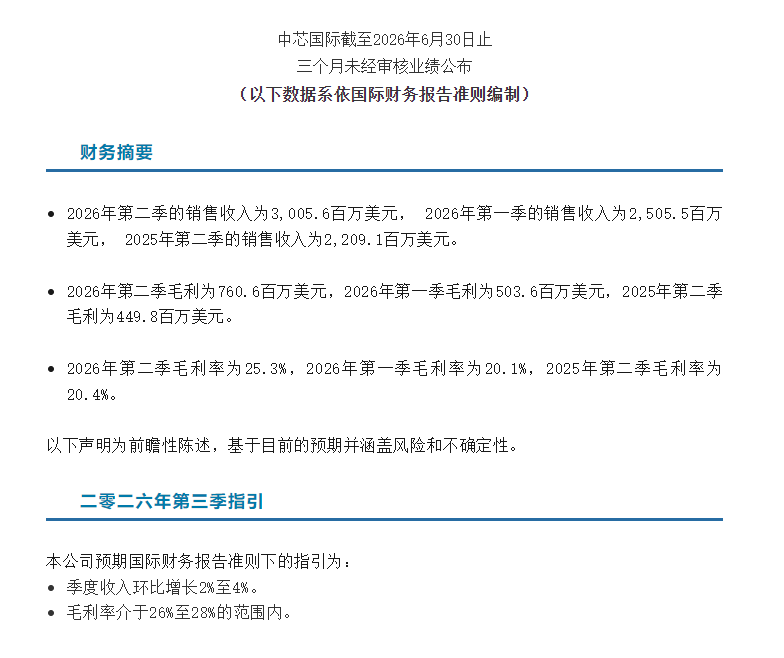
SMIC generated $3.006 billion in quarterly revenue, up 20% sequentially, with gross margin recovering to 25.3%.
Why It Matters
AI infrastructure demand is spreading beyond advanced GPUs into mature-node power and analog components. AI hardware startups should expect tighter foundry allocation, longer lead times, and greater exposure to wafer and packaging cost increases.
What To Do Next
Audit your AI hardware bill of materials and reserve mature-node wafer and packaging capacity before committing to volume deployments.
Key Points
- •SMIC generated $3.006 billion in quarterly revenue, up 20% sequentially, with gross margin recovering to 25.3%.
- •Hua Hong posted record quarterly revenue of $717.5 million, up 26.8% year over year, with utilization above 100%.
- •AI servers are increasing demand for mature-node power-management and analog chips, alongside recovery in automotive and industrial power devices.
- •Higher foundry utilization is improving pricing power and supporting upstream suppliers of equipment, gases, photoresists, and other semiconductor materials.
🧠 Deep Insight
AI-generated analysis for this event.
🔑 Enhanced Key Takeaways
- •SMIC's recent financial performance is heavily bolstered by the 'China for China' strategy, where domestic fabless design houses are aggressively shifting orders to local foundries to mitigate geopolitical supply chain risks.
- •Hua Hong Semiconductor's utilization exceeding 100% is largely attributed to its specialized 65nm and 90nm BCD (Bipolar-CMOS-DMOS) process platforms, which are critical for the high-voltage requirements of AI server power delivery systems.
- •The surge in mature-node demand is being further accelerated by the rapid adoption of 8-inch and 12-inch wafer capacity for IoT and smart home appliances, which are seeing a cyclical inventory replenishment phase in 2026.
- •Foundry pricing power is being reinforced by a strategic shift in product mix, where SMIC and Hua Hong are prioritizing higher-margin automotive-grade chips over consumer electronics, effectively tightening supply for lower-tier customers.
- •Upstream material suppliers in China are reporting record-high localization rates for photoresists and specialty gases, as foundries mandate domestic sourcing to ensure long-term production stability against potential export controls.
📊 Competitor Analysis▸ Show
| Feature/Metric | SMIC | Hua Hong | TSMC (Mature Nodes) | GlobalFoundries |
|---|---|---|---|---|
| Primary Focus | Logic/Mixed-Signal | Power/Analog/BCD | Advanced/Mature Logic | Specialized Analog/RF |
| Utilization (2026) | ~93.7% | >100% | High (Capacity Constrained) | Moderate/Stable |
| Pricing Power | Increasing | High (Niche Nodes) | Premium | Competitive |
| Tech Leadership | 7nm/5nm (Limited) | 65nm-90nm BCD | Industry Standard | Specialized Nodes |
🛠️ Technical Deep Dive
- SMIC utilizes a proprietary N+1 and N+2 process technology to achieve performance metrics comparable to 7nm nodes without relying on EUV lithography.
- Hua Hong's BCD process technology integrates power transistors and analog circuits on a single chip, reducing the footprint for AI server power management integrated circuits (PMICs).
- Both foundries are increasingly deploying AI-driven yield management systems to optimize wafer throughput and reduce defect density in mature-node manufacturing.
- The shift toward 12-inch wafer production for power devices allows for higher die-per-wafer counts, significantly improving cost-efficiency for automotive and industrial clients.
🔮 Future ImplicationsAI analysis grounded in cited sources
⏳ Timeline
Weekly AI Recap
Read this week's curated digest of top AI events →
👉Related Updates
AI-curated news aggregator. All content rights belong to original publishers.
Original source: 虎嗅 ↗