Audi’s EV Pivot Arrives Too Late
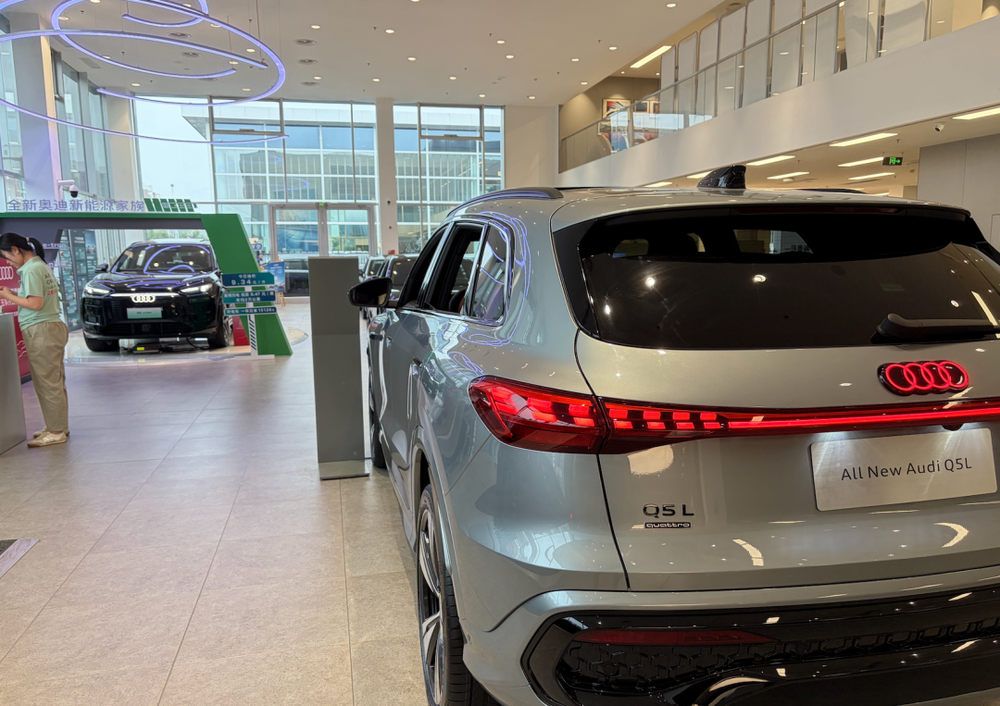
💡Audi’s delayed PPE rollout shows why AI-assisted driving and localized software now decide EV competitiveness.
⚡ 30-Second TL;DR
What Changed
FAW Audi sales fell more than 19% year over year in the first seven months, while A6L sales declined more than 30%.
Why It Matters
The case shows that an established automotive brand can lose its advantage when software, assisted driving, and localized product iteration become core purchase criteria. For AI suppliers, it highlights the importance of China-specific data, partnerships, and deployment speed rather than relying only on global platforms.
What To Do Next
Benchmark Momenta-assisted-driving capabilities against your target Chinese EV scenarios, especially urban navigation, cockpit interaction, and localization latency, before committing to an automotive AI partnership.
Key Points
- •FAW Audi sales fell more than 19% year over year in the first seven months, while A6L sales declined more than 30%.
- •PPE-based Q6L e-tron and A6L e-tron arrived after Chinese EV brands had already iterated on smart cockpits, assisted driving, and charging.
- •SAIC Audi’s AUDI E5 Sportback and E7X use 800V architecture, Momenta assisted driving, and CATL batteries.
- •AUDI’s two EV models sold 12,500 units in the first seven months, outperforming FAW Audi’s four e-tron models.
🧠 Deep Insight
AI-generated analysis for this event.
🔑 Enhanced Key Takeaways
- •Audi's strategic shift involves a 'China-specific' platform developed in collaboration with SAIC, which significantly shortens the development cycle from the traditional 48 months to approximately 24 months.
- •The new AUDI brand (marketed without the four-ring logo in China) is specifically designed to target younger, tech-savvy demographics who prioritize digital experience over traditional brand heritage.
- •Audi has faced significant internal friction regarding the dual-joint-venture strategy, as FAW-Audi dealers have expressed concerns over market cannibalization and the dilution of the Audi brand identity.
- •The PPE (Premium Platform Electric) platform, while technologically advanced, faced software integration delays that hampered the global launch schedule of the Q6L e-tron, exacerbating its late arrival in China.
- •Audi's partnership with Momenta for the AUDI brand marks a departure from its reliance on Volkswagen Group's internal software unit, CARIAD, which has struggled with development bottlenecks.
📊 Competitor Analysis▸ Show
| Feature | Audi (AUDI Brand) | NIO (ET5/ET7) | Tesla (Model 3/Y) |
|---|---|---|---|
| Architecture | 800V PPE/SAIC Platform | 400V/800V Hybrid | 400V |
| Smart Cockpit | Momenta/China-specific OS | Banyan/NOMI AI | Tesla OS |
| Assisted Driving | Momenta ADAS | NIO AD (NAD) | FSD |
| Pricing Strategy | Premium/Competitive | Premium | Aggressive/Dynamic |
🛠️ Technical Deep Dive
- The AUDI brand models utilize a localized version of the PPE platform, optimized for China's specific charging infrastructure and digital ecosystem requirements.
- The 800V electrical architecture enables high-speed charging, capable of adding significant range in under 15 minutes, addressing a key pain point for Chinese EV consumers.
- Integration of Momenta's advanced driver-assistance systems (ADAS) allows for high-level autonomous driving features, including urban Navigate on Autopilot (NOA), which is a prerequisite for competitiveness in the Chinese market.
- The vehicles feature a centralized electronic architecture designed to support over-the-air (OTA) updates for both infotainment and vehicle control systems, a significant upgrade over previous FAW-Audi software stacks.
🔮 Future ImplicationsAI analysis grounded in cited sources
⏳ Timeline
Weekly AI Recap
Read this week's curated digest of top AI events →
👉Related Updates

AI-curated news aggregator. All content rights belong to original publishers.
Original source: 虎嗅 ↗