WhatsApp Introduces Usernames to Enhance Privacy
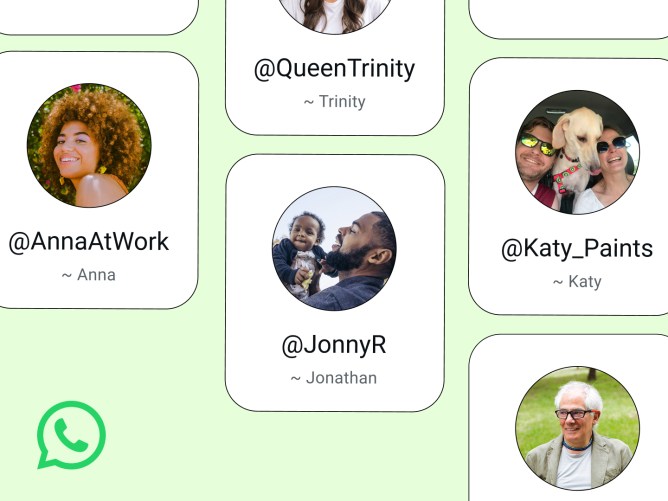
Meta is decoupling WhatsApp identity from phone numbers, a major shift for privacy and platform integration.
30-Second TL;DR
What Changed
Users can now create unique usernames for their WhatsApp accounts.
Why It Matters
This change significantly impacts privacy-focused communication and could influence how developers integrate WhatsApp into third-party services. It reduces reliance on PII (phone numbers) for user discovery.
What To Do Next
Monitor the WhatsApp Business API documentation for updates on how username-based discovery will affect contact synchronization and lead generation workflows.
Key Points
- •Users can now create unique usernames for their WhatsApp accounts.
- •The feature enables communication without exposing personal phone numbers.
- •This update aligns WhatsApp's identity architecture with other Meta platforms like Instagram.
Deep Insight
AI-generated analysis for this event — not the original article.
Enhanced Key Takeaways
- •The username feature utilizes a new cryptographic identity layer that decouples the WhatsApp account from the SIM-based phone number, allowing for multi-device synchronization without a primary phone connection.
- •Meta has implemented a 'Username Reservation' protocol to prevent squatting, requiring accounts to meet specific activity thresholds before claiming high-value handles.
- •Privacy settings now include a granular 'Who can find me by username' toggle, allowing users to restrict discovery to contacts only or open it to the public.
- •This transition facilitates the integration of WhatsApp into the broader Meta Verified ecosystem, enabling businesses to use usernames for verified customer support channels.
- •The implementation includes a transition period where existing phone-number-based chats remain encrypted, while new username-based chats utilize an updated Signal Protocol variant for identity key rotation.
Competitor Analysis
- WhatsApp (Usernames)
- Username/Phone (Hybrid)
- Telegram
- Username/Phone
- Signal
- Phone Number Only
- WhatsApp (Usernames)
- High (Masked Number)
- Telegram
- Medium (Number visible to some)
- Signal
- High (Number required)
- WhatsApp (Usernames)
- Searchable by Handle
- Telegram
- Searchable by Handle
- Signal
- Invite Only/Contact Sync
| Feature | WhatsApp (Usernames) | Telegram | Signal |
|---|---|---|---|
| Identity Basis | Username/Phone (Hybrid) | Username/Phone | Phone Number Only |
| Privacy | High (Masked Number) | Medium (Number visible to some) | High (Number required) |
| Discovery | Searchable by Handle | Searchable by Handle | Invite Only/Contact Sync |
Technical Deep Dive
- Identity Layer: Moves from a phone-number-as-primary-key architecture to a decentralized identifier (DID) system mapped to a username.
- Key Management: Introduces a new identity key rotation mechanism that allows users to change their username without breaking existing end-to-end encrypted sessions.
- Discovery Service: Implements a privacy-preserving lookup service using OPAQUE or similar password-authenticated key exchange (PAKE) protocols to prevent mass scraping of username-to-number mappings.
- Multi-Device: Decouples the primary device requirement by allowing the username to act as the root of trust for secondary device linking.
Future ImplicationsAI analysis grounded in cited sources
Timeline
- 2009-02WhatsApp is founded with a focus on phone-number-based identity.
- 2014-02Meta (then Facebook) acquires WhatsApp for $19 billion.
- 2016-04WhatsApp completes the rollout of full end-to-end encryption for all messages.
- 2023-05WhatsApp introduces multi-device support, allowing usage without a phone connection.
- 2025-11Beta testing for username-based discovery begins for select global regions.
Event Coverage
Weekly AI Recap
Read this week's curated digest of top AI events →
Related Updates

AI-curated news aggregator. All content rights belong to original publishers.
Original source: Meta Newsroom ↗
This is a summary, not the original. Read the source, or get the weekly briefing.
The weekly digest
One email a week. Unsubscribe anytime.