Western Automakers Shift R&D Hubs to China
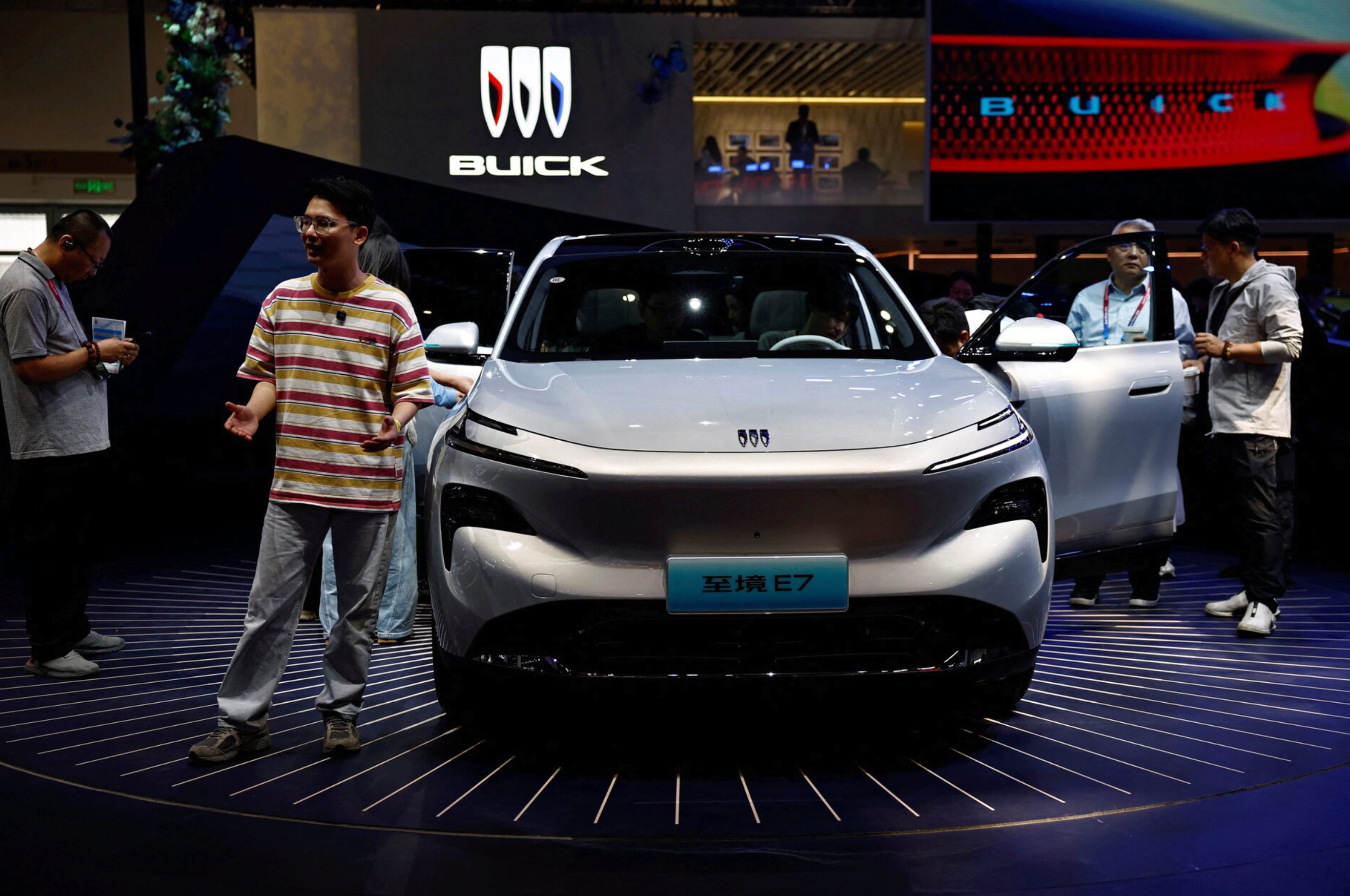
💡Understand how global automotive giants are restructuring their AI and software R&D to compete in the EV market.
⚡ 30-Second TL;DR
What Changed
Western car manufacturers are integrating Chinese engineering teams into global R&D workflows.
Why It Matters
This shift suggests that AI-driven automotive software development will increasingly be localized in China, potentially changing the global supply chain for intelligent vehicle tech.
What To Do Next
Monitor the software architecture patterns emerging from Chinese EV R&D centers to identify new AI integration benchmarks.
Key Points
- •Western car manufacturers are integrating Chinese engineering teams into global R&D workflows.
- •Focus areas include electric vehicle (EV) powertrains and advanced automotive software.
- •China is now viewed as a critical innovation engine rather than just a low-cost production site.
🧠 Deep Insight
AI-generated analysis for this event — not the original article.
🔑 Enhanced Key Takeaways
- •Western automakers are increasingly adopting a 'In China, For China' strategy, developing vehicle architectures specifically tailored to Chinese consumer preferences for digital cockpits and rapid feature iteration.
- •The shift is driven by the 'China Speed' phenomenon, where local EV startups reduce vehicle development cycles to 18-24 months, forcing global firms to localize R&D to remain competitive.
- •Major manufacturers are establishing localized software joint ventures and partnerships with Chinese tech giants like Huawei, Baidu, and Tencent to integrate advanced autonomous driving and connectivity stacks.
- •Regulatory pressures and the need to comply with China's strict data security and localization laws for connected vehicles are accelerating the move of R&D centers into the country.
- •Global R&D centers in China are now being tasked with 'reverse innovation,' where technologies developed for the Chinese market are being exported back to European and North American vehicle lineups.
🛠️ Technical Deep Dive
- Integration of 800V high-voltage electrical architectures to support ultra-fast charging standards prevalent in the Chinese market.
- Adoption of centralized E/E (Electrical/Electronic) architecture, moving away from distributed ECUs to domain controllers to facilitate Over-the-Air (OTA) updates.
- Implementation of localized AI-driven Advanced Driver Assistance Systems (ADAS) utilizing high-definition mapping data specific to Chinese urban environments.
- Development of software-defined vehicle (SDV) platforms that decouple hardware and software layers to allow for faster deployment of third-party applications and services.
🔮 Future ImplicationsAI analysis grounded in cited sources
⏳ Timeline
Weekly AI Recap
Read this week's curated digest of top AI events →
👉Related Updates


AI-curated news aggregator. All content rights belong to original publishers.
Original source: cnBeta (Full RSS) ↗
This is a summary, not the original. Read the source, or get the weekly briefing.
Weekly AI briefing
One email a week. Unsubscribe anytime.