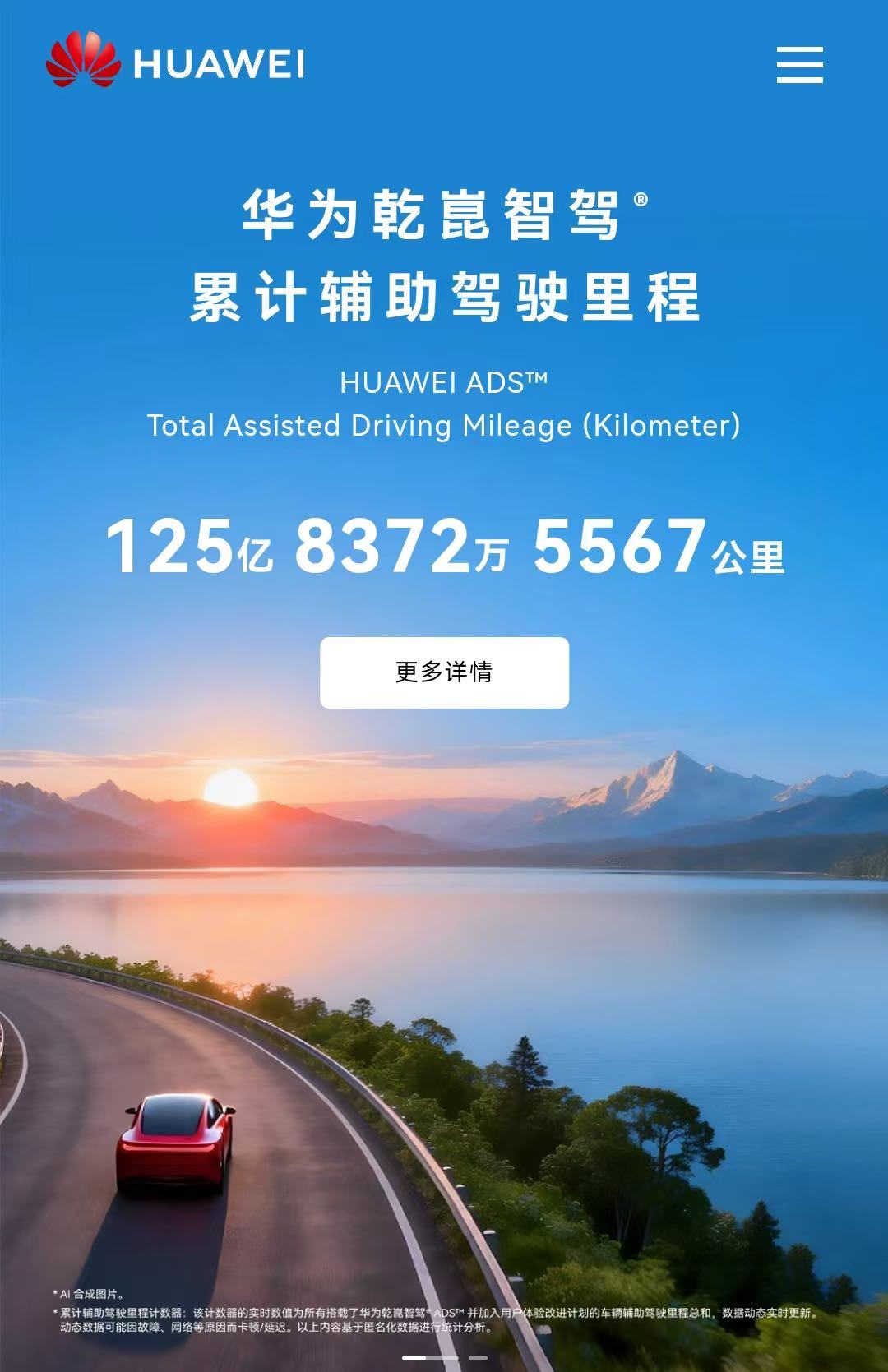
Huawei Qiankun clarifies data smoothing in mileage display
💡Learn how to handle high-frequency telemetry data in UI without sacrificing user trust or data integrity.
⚡ 30-Second TL;DR
What Changed
Mileage data is transmitted every few seconds from the backend
Why It Matters
Highlights the challenge of balancing real-time data accuracy with UI performance in connected vehicle systems. Developers should consider how data interpolation impacts user trust in telemetry-heavy applications.
What To Do Next
Audit your telemetry UI components to ensure that data smoothing logic is transparently communicated to users to avoid trust issues.
Key Points
- •Mileage data is transmitted every few seconds from the backend
- •Smoothing algorithm applied to frontend UI for continuous scrolling
- •Data accuracy is maintained despite visual interpolation
🧠 Deep Insight
AI-generated analysis for this event — not the original article.
🔑 Enhanced Key Takeaways
- •The clarification was issued in response to viral social media videos where users observed mileage numbers jumping or 'catching up' after vehicles exited tunnels or areas with poor cellular reception.
- •Huawei Qiankun's intelligent driving system utilizes a dual-layer data architecture where the vehicle's local CAN bus maintains absolute mileage integrity while the cloud-connected UI layer handles visual presentation.
- •The smoothing algorithm specifically targets the 'odometer animation' effect to ensure that the transition between discrete data packets appears as a fluid, linear progression to the driver.
- •This UI behavior is part of the broader 'Huawei Qiankun' ADS (Advanced Driving System) software stack, which prioritizes low-latency feedback for critical driving data while treating non-critical UI elements with asynchronous updates.
- •Industry experts note that this design choice is common in modern Software-Defined Vehicles (SDVs) to decouple high-frequency sensor processing from lower-frequency infotainment display updates.
📊 Competitor Analysis▸ Show
| Feature | Huawei Qiankun (ADS) | Tesla (FSD/Autopilot) | XPeng (XNGP) |
|---|---|---|---|
| Data Display Strategy | UI-side smoothing for latency masking | Real-time vector space rendering | Hybrid local/cloud synchronization |
| Network Dependency | High (Cloud-integrated UI) | Moderate (Local-first processing) | Moderate (Cloud-assisted) |
| Mileage Accuracy | High (Hardware-verified) | High (Hardware-verified) | High (Hardware-verified) |
🛠️ Technical Deep Dive
- The system employs a Kalman filter-based interpolation method on the frontend to predict and smooth the odometer increment between backend data packets.
- Backend data transmission utilizes an MQTT-based protocol for telemetry, which is inherently asynchronous and subject to jitter in mobile network environments.
- The UI rendering engine operates on a separate thread from the vehicle's safety-critical telemetry processing unit to ensure that UI stuttering does not impact vehicle control systems.
- The 'smoothing' logic is implemented within the HarmonyOS cockpit framework, specifically designed to handle high-resolution, high-refresh-rate display updates for digital instrument clusters.
🔮 Future ImplicationsAI analysis grounded in cited sources
⏳ Timeline
Weekly AI Recap
Read this week's curated digest of top AI events →
👉Related Updates




AI-curated news aggregator. All content rights belong to original publishers.
Original source: cnBeta (Full RSS) ↗
This is a summary, not the original. Read the source, or get the weekly briefing.
Weekly AI briefing
One email a week. Unsubscribe anytime.