Waymo robotaxi batteries repurposed for power grid storage
💡Learn how Waymo is solving the hardware sustainability challenge for autonomous vehicle fleets.
⚡ 30-Second TL;DR
What Changed
Waymo is recycling retired robotaxi batteries for grid-scale energy storage.
Why It Matters
This move sets a precedent for how large-scale autonomous fleets can manage hardware waste while contributing to energy infrastructure. It provides a blueprint for other AI-driven hardware companies to monetize or repurpose end-of-life assets.
What To Do Next
Evaluate the lifecycle of your hardware assets and explore secondary market partnerships for repurposing high-value components like batteries or specialized sensors.
Key Points
- •Waymo is recycling retired robotaxi batteries for grid-scale energy storage.
- •Projects are being deployed in California and Texas to bolster power grid resilience.
- •The initiative demonstrates a circular economy approach for autonomous vehicle components.
🧠 Deep Insight
Background and context from public sources — not the original article. 10 sources cited.
🔑 Enhanced Key Takeaways
- •Waymo has partnered with B2U Storage Solutions, a California-based battery repurposing company, to implement this initiative, which has been in development for several years.
- •The batteries being repurposed are specifically from Waymo's Jaguar I-PACE fleet, which are swapped out sooner than average EV batteries due to high utilization in robotaxi operations.
- •Waymo's centrally managed autonomous fleet provides consistent battery types and detailed performance data, offering a significant advantage for repurposing partners like B2U in optimizing second-life applications.
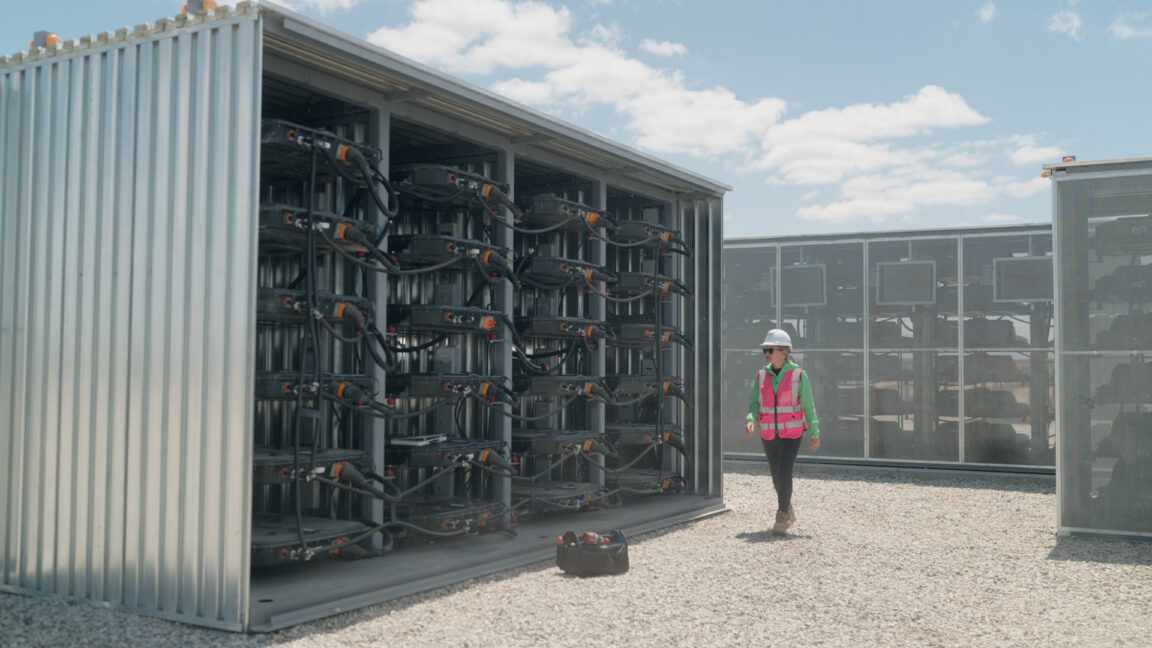
- •B2U's energy storage systems, which house up to 54 EV battery packs in shipping container-sized cabinets, currently have 4,000 batteries in the field, including those from other manufacturers like Nissan Leaf, Honda, and General Motors.
- •The repurposing process extends the functional life of these lithium-ion batteries by several years, enabling them to store excess renewable energy during low demand and dispatch it during peak usage times, thereby providing crucial stability to the power grid.
📊 Competitor Analysis▸ Show
Competitor Analysis: Second-Life EV Battery Storage
| Feature/Company | Waymo (with B2U Storage Solutions) | Redwood Materials (with Rivian) | Ford (New Business Line) | RePurpose Energy |
|---|---|---|---|---|
| Primary Source of Batteries | Retired Waymo robotaxi (Jaguar I-PACE) batteries | Rivian's second-life battery packs | Existing US battery manufacturing capacity, likely Ford's own EV batteries | Used EV batteries (e.g., Nissan USA) |
| Application Focus | Grid-tied energy storage systems in California and Texas | Grid-scale energy storage, AI data centers, utility storage, on-site industrial power | Battery energy storage systems for data centers and electric grid | Reliable, low-cost second-life energy storage systems |
| Scale/Capacity (Known) | Thousands of retired vehicles transitioning to power sector; B2U has 4,000 batteries in field | 10 MWh dispatchable energy at Rivian's Illinois facility (from 100+ packs) | Repurposing existing manufacturing capacity | Delivered first commercial unit to Nissan USA in 2024 |
| Key Differentiator | Consistent battery types and detailed performance data from centrally managed robotaxi fleet | Focus on large-scale industrial and utility applications, strong recycling background | Leveraging internal manufacturing capabilities for new business | Founded by UC Davis engineers, secured significant non-dilutive grants, AI for battery health |
| Partnerships | B2U Storage Solutions | Rivian | N/A (internal initiative) | Nissan USA |
| Geographic Focus | California, Texas | Primarily US (e.g., Illinois) | US (repurposing US manufacturing capacity) | Global (delivered to Nissan USA) |
🛠️ Technical Deep Dive
- The repurposed batteries are lithium-ion.
- B2U's energy storage systems are designed to house up to 54 EV battery packs within shipping container-sized cabinets.
- Waymo's newer generation robotaxis, such as the Zeekr RT, utilize a 93 kWh lithium-ion battery pack with an advanced 800V electrical architecture for fast charging.
- The Zeekr RT's electrical system includes a high voltage (HV) battery pack located along the bottom of the vehicle, an electronic power inverter for the single Drive Unit, and two independent 12V buses that power both autonomous driving system (ADS) components and base vehicle components.
🔮 Future ImplicationsAI analysis grounded in cited sources
⏳ Timeline
📎 Sources (10)
Factual claims are grounded in the sources below. Forward-looking analysis is AI-generated interpretation.
Weekly AI Recap
Read this week's curated digest of top AI events →
👉Related Updates
AI-curated news aggregator. All content rights belong to original publishers.
Original source: Ars Technica ↗
This is a summary, not the original. Read the source, or get the weekly briefing.
The weekly digest
One email a week. Unsubscribe anytime.