Washington’s New AI Chip Export Guidance Explained
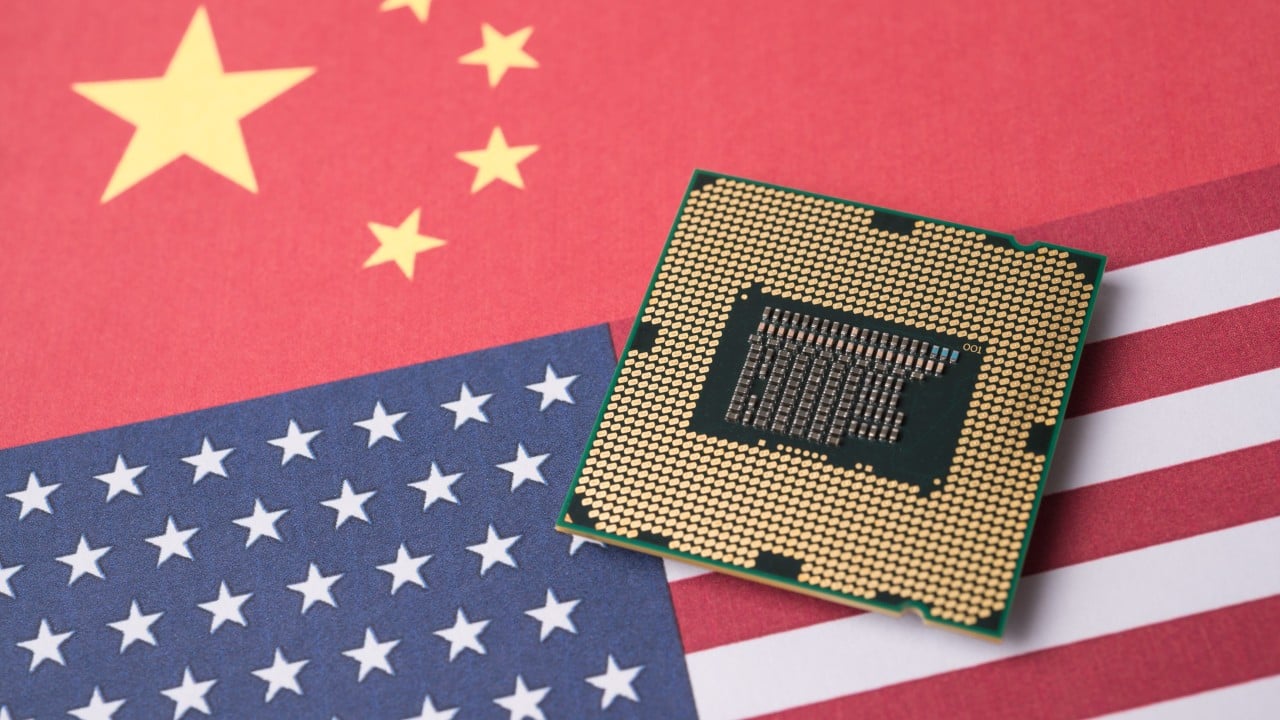
💡Understand how new US export controls on AI chips might impact your hardware supply chain and procurement strategy.
⚡ 30-Second TL;DR
What Changed
BIS issued new guidance on May 31 regarding advanced AI chip export licenses.
Why It Matters
This guidance creates uncertainty for companies relying on high-end GPU supply chains. It signals a continued tightening of export controls that may force firms to diversify their hardware sourcing strategies.
What To Do Next
Review your hardware procurement pipeline to assess if your current GPU suppliers are affected by the latest BIS licensing requirements.
Key Points
- •BIS issued new guidance on May 31 regarding advanced AI chip export licenses.
- •China’s Ministry of Commerce accused the US of disrupting global semiconductor supply chains.
- •Trade lawyers suggest the geopolitical rhetoric may outweigh the actual operational impact on tech firms.
🧠 Deep Insight
Background and context from public sources — not the original article. 21 sources cited.
🔑 Enhanced Key Takeaways
- •The new guidance issued on May 31, 2026, explicitly clarifies that export licenses are required for advanced AI computing items destined for entities whose ultimate parent company is headquartered in China or Macau, even if the receiving subsidiary is located outside these jurisdictions, thereby closing a perceived loophole that may have allowed substantial volumes of advanced chips to reach China-linked projects through overseas subsidiaries.
- •This May 31, 2026 guidance reaffirms a licensing requirement initially introduced on November 17, 2023, which some industry players may have believed was suspended after BIS announced in May 2025 that it would not enforce certain aspects of the January 2025 "AI Diffusion Rule."
- •The guidance specifically targets advanced processors such as NVIDIA's Blackwell and Rubin chips and AMD's MI350X class of accelerators, which will generally necessitate licenses when their ultimate destination is a China-headquartered firm.
- •Despite the recent tightening, a separate rule effective January 15, 2026, shifted the review policy for certain advanced computing semiconductors, including NVIDIA H200 and AMD MI325X, from a "presumption of denial" to a "case-by-case review" for exports to China and Macau, contingent on strict conditions like performance thresholds, a 50% volume cap relative to US sales, and independent US testing.
- •China's Ministry of Commerce has strongly criticized the US actions, accusing it of abusing export controls under the guise of national security, which they claim severely harms the legitimate rights of Chinese companies, disrupts international trade order, and destabilizes the global semiconductor supply chain.
🛠️ Technical Deep Dive
- The export controls are specifically designed to target high-performance GPUs and accelerators characterized by high processing speeds and interconnect bandwidths, which are critical for training large AI models.
- As of January 15, 2026, specific technical thresholds for case-by-case review eligibility for certain chips include a Total Processing Performance (TPP) of less than 21,000 and a total DRAM bandwidth below 6,500 GB/s, with NVIDIA H200 and AMD MI325X cited as examples.
- Earlier controls, implemented in October 2022, restricted chips with capabilities exceeding 300 tera operations per second or an interconnect speed greater than 600 gigabytes per second.
- US policy has evolved to include not only restrictions on the chips themselves but also thresholds on aggregate computing power (measured in petaflops) and controls on the specialized tooling required for advanced chip manufacturing.
- In response to these regulations, companies like Nvidia have developed "sanction-compliant" versions of their chips, such as the H800, which features a reduced interconnect speed of 400 GB/s compared to the H100, to fall below the specified performance thresholds.
🔮 Future ImplicationsAI analysis grounded in cited sources
⏳ Timeline
📎 Sources (21)
Factual claims are grounded in the sources below. Forward-looking analysis is AI-generated interpretation.
- thegputrade.com
- seekingalpha.com
- exportcompliancedaily.com
- tomshardware.com
- bis.gov
- independent.co.ug
- substack.com
- finnegan.com
- introl.com
- cfr.org
- morganlewis.com
- caixinglobal.com
- news.cn
- villagevoicenews.com
- techpolicylaw.org
- effectivealtruism.org
- laweconcenter.org
- tomshardware.com
- americanaffairsjournal.org
- astutegroup.com
- laweconcenter.org
Weekly AI Recap
Read this week's curated digest of top AI events →
👉Related Updates

AI-curated news aggregator. All content rights belong to original publishers.
Original source: SCMP Technology ↗
This is a summary, not the original. Read the source, or get the weekly briefing.
The weekly digest
One email a week. Unsubscribe anytime.