Violoop Turns Your Screen Into an AI Agent
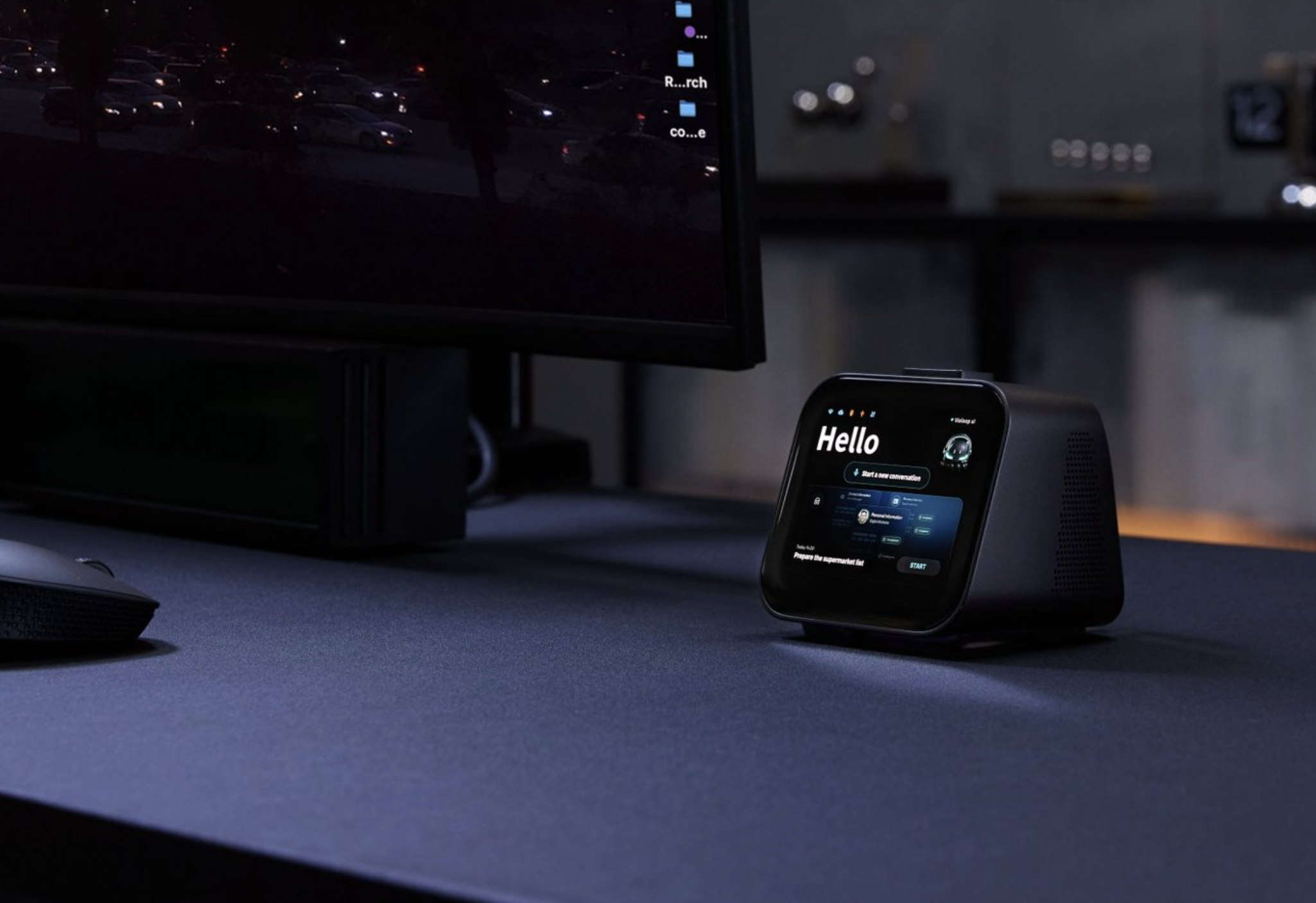
💡Violoop combines screen context, edge inference and hardware control to make proactive computer agents practical.
⚡ 30-Second TL;DR
What Changed
Violoop can access applications such as WeChat and Jianying without APIs by acting like an external human-operated input device.
Why It Matters
Violoop suggests that proactive desktop agents may depend as much on low-latency context capture as on foundation-model intelligence. Its hardware approach could unlock software without APIs, but continuous screen access creates significant privacy, consent and security obligations.
What To Do Next
Prototype a screen-agent loop with local OCR and a vision model, then enforce explicit confirmation gates for file sharing, payments and message sending.
Key Points
- •Violoop can access applications such as WeChat and Jianying without APIs by acting like an external human-operated input device.
- •Its workflow is split into screen understanding, proactive recommendation and user-confirmed execution.
- •The V4 device uses an RK3576 processor, 26 TOPS of AI compute, 8GB memory and can run 10B-parameter models locally.
- •The company positions persistent cross-application screen context as the foundation for personalized user models.
🧠 Deep Insight
Background and context from public sources — not the original article. 14 sources cited.
🔑 Enhanced Key Takeaways
- •Violoop utilizes a dual-chip architecture that physically separates the main control system from a dedicated security chip to ensure data isolation.
- •The device connects via HDMI for screen capture and USB for HID (Human Interface Device) emulation, requiring zero software installation on the host computer.
- •A physical confirmation button is integrated into the hardware to mandate human approval for high-stakes actions like file deletion or data submission.
- •The company has secured over 100 million yuan in funding from prominent investors including Lenovo Capital, CICC Porsche, and BlueRun Ventures.
- •The founding team consists of CEO Jaylen He, a UC San Diego alumnus, and CTO King Zhu, who previously contributed to Microsoft's Xbox and HoloLens hardware divisions.
📊 Competitor Analysis▸ Show
| Feature | Violoop | Software-based Agents (e.g., Anthropic Computer Use) | Cloud-based Automation (e.g., Zapier) |
|---|---|---|---|
| Installation | Plug-and-play (Hardware) | Software/API required | API/Integration required |
| Security | Physical isolation/Local processing | Cloud-dependent | Cloud-dependent |
| Latency | < 1.5s (Edge inference) | Variable (Network dependent) | Variable (API dependent) |
| Pricing | $399 (Early-bird) | Subscription/Usage-based | Subscription-based |
🛠️ Technical Deep Dive
- Hardware Interface: HDMI input for visual perception and USB HID for keyboard/mouse emulation.
- Security Architecture: Dual-chip design with physical isolation between the AI processing unit and the security controller.
- Compute: 26 TOPS AI accelerator optimized for local execution of 8B-10B parameter models.
- Latency Optimization: Edge-native inference pipeline achieving sub-1.5s response times for proactive task execution.
🔮 Future ImplicationsAI analysis grounded in cited sources
⏳ Timeline
📎 Sources (14)
Factual claims are grounded in the sources below. Forward-looking analysis is AI-generated interpretation.
Weekly AI Recap
Read this week's curated digest of top AI events →
👉Related Updates

AI-curated news aggregator. All content rights belong to original publishers.
Original source: 极客公园 ↗
This is a summary, not the original. Read the source, or get the weekly briefing.
Weekly AI briefing
One email a week. Unsubscribe anytime.