US-China Race for AI Dominance Heats Up
💡US-China AI rivalry drives policy changes affecting tools and data access.
⚡ 30-Second TL;DR
What Changed
US and China vie for leadership in AI technology
Why It Matters
Geopolitical AI race shapes regulations, talent flows, and tech access for practitioners worldwide.
What To Do Next
Map your AI stack's exposure to US-China export controls on chips.
Key Points
- •US and China vie for leadership in AI technology
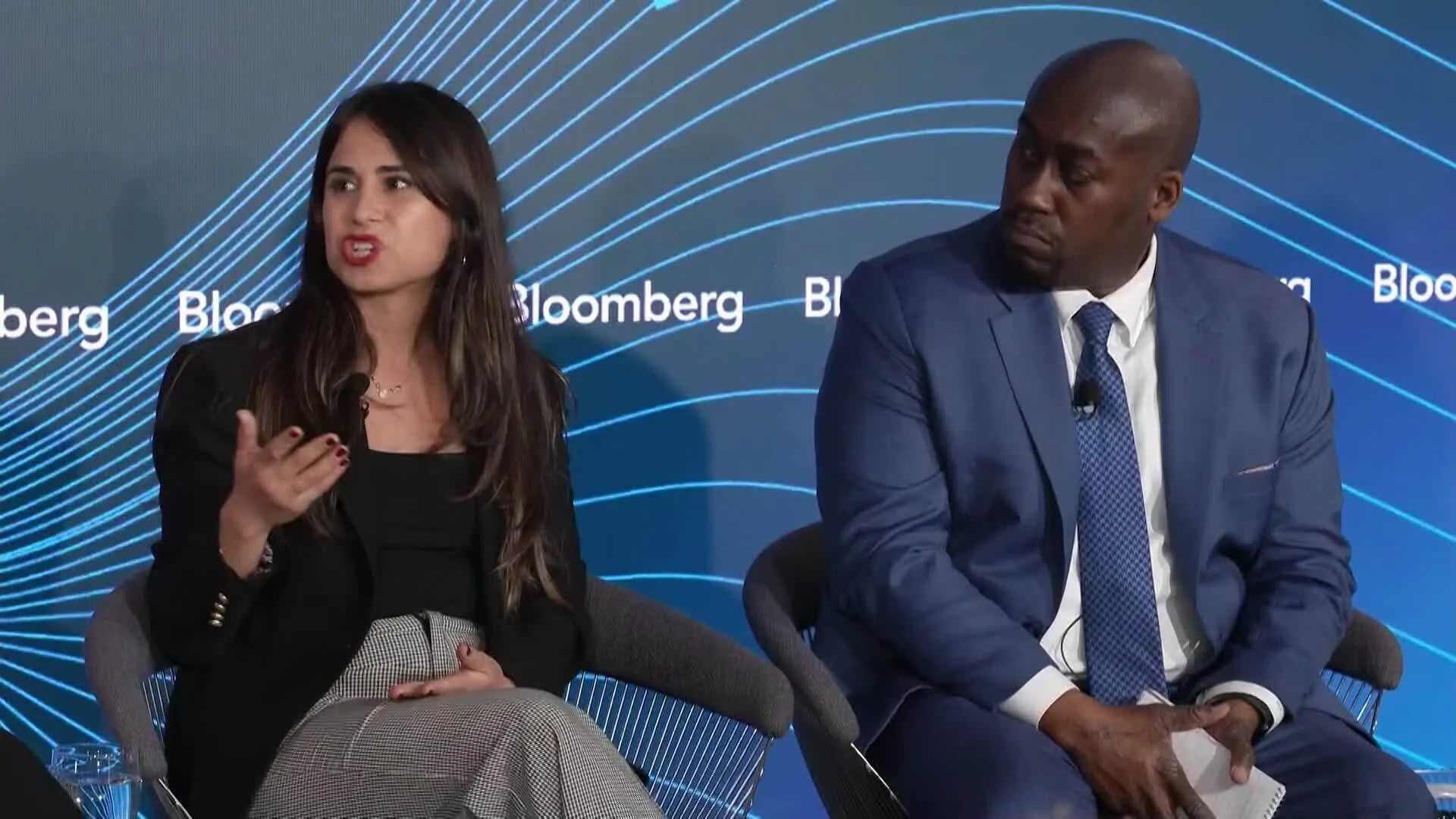
- •Bloomberg event featured Shirin Ghaffary in Washington DC
- •Focuses on strategic race implications for global AI
🧠 Deep Insight
Background and context from public sources — not the original article. 6 sources cited.
🔑 Enhanced Key Takeaways
- •The US maintains a commanding lead in AI chips and foundational model breakthroughs, with top US chips estimated to be five times more powerful than China's, though China's leading-edge chip production represents only 3% of US totals[2].
- •China is rapidly closing the gap in large language models and open-source AI ecosystems, with companies like DeepSeek and Alibaba's Qwen creating cost-efficient, accessible alternatives that are gaining global adoption[1].
- •The competition extends beyond technology to AI governance and standards-setting, with China proposing a global AI oversight organization while the US emphasizes export controls and alliance-building through initiatives like Pax Silica[2][3].
- •China is positioning itself to dominate AI applications in the physical world—smart factories, autonomous vehicles, robotics, and logistics automation—while the US focuses on scaling software capabilities and frontier model development[1].
- •Trade tensions have temporarily eased with relaxed export controls on semiconductors, but the US continues to tighten and loosen chip export restrictions as a strategic tool to constrain China's AI industry advancement[2].
🔮 Future ImplicationsAI analysis grounded in cited sources
⏳ Timeline
📎 Sources (6)
Factual claims are grounded in the sources below. Forward-looking analysis is AI-generated interpretation.
- swiftflutter.com — US China AI Race 2026 Who Leads
- time.com — AI Race US China
- truthonthemarket.com — US China AI Competition in the Spotlight
- youtube.com — Watch
- eastasiaforum.org — Standards Are the New Frontier in US China AI Competition
- asiasociety.org — Deepseek Moment One Year Later State US China AI Competition
Weekly AI Recap
Read this week's curated digest of top AI events →
👉Related Updates
Same topic
Explore #geopolitics
Same product
More on Bloomberg Technology
Same source
Latest from Bloomberg Technology
CXMT Listing Fuels China’s AI Hardware Momentum
Samsung Poised to Retake Smartphone Leadership

ChatGPT Gains iMessage Control, Raising Privacy Questions
OpenAI and Meta Face Data Center Backlash
AI-curated news aggregator. All content rights belong to original publishers.
Original source: Bloomberg Technology ↗
This is a summary, not the original. Read the source, or get the weekly briefing.
Weekly AI briefing
One email a week. Unsubscribe anytime.