OpenAI and Meta Face Data Center Backlash
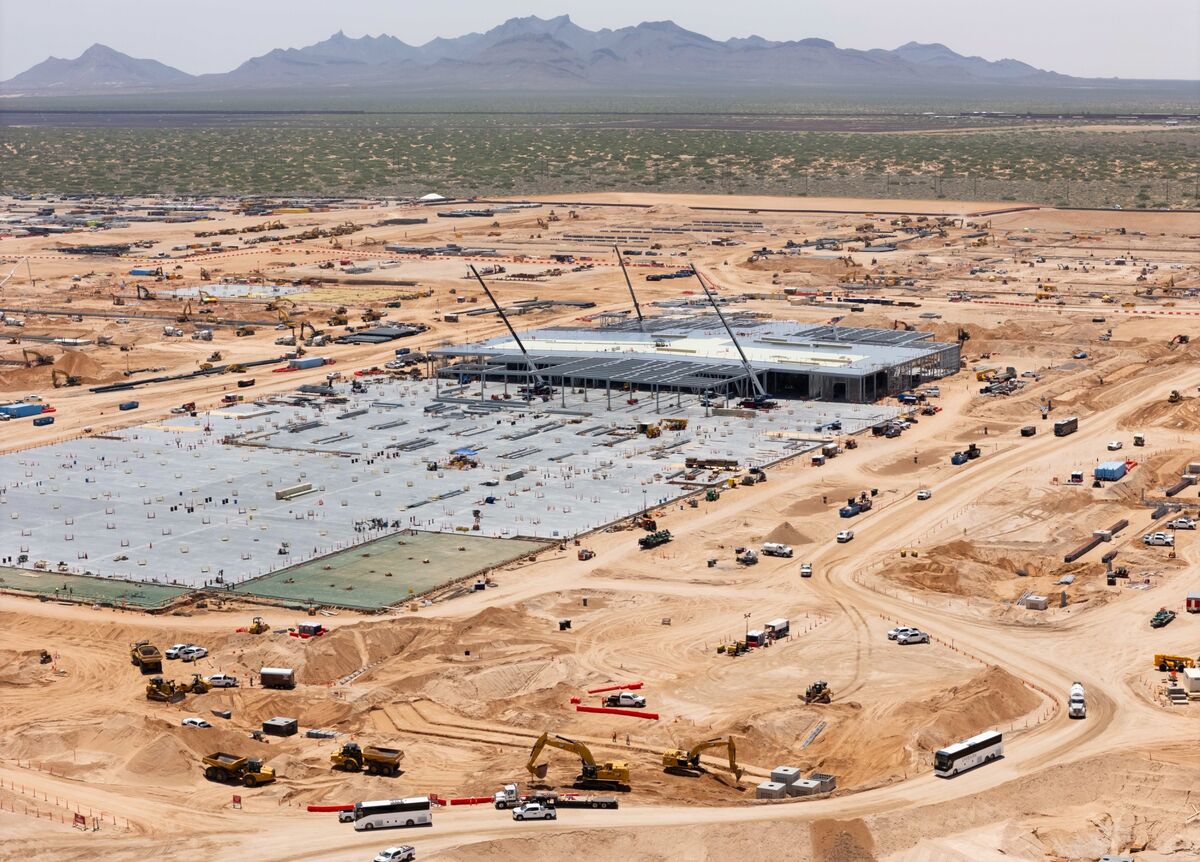
💡AI expansion increasingly depends on public support—not just GPUs and power.
⚡ 30-Second TL;DR
What Changed
OpenAI and Meta are working to counter growing opposition to their data center plans.
Why It Matters
Resistance to data center projects could slow AI capacity expansion, increase development costs, and create regulatory or permitting risks. AI companies may need to treat local engagement and infrastructure communications as part of deployment strategy.
What To Do Next
Add local permitting, power availability, and community-opposition risks to your AI infrastructure capacity plan before committing to new deployments.
Key Points
- •OpenAI and Meta are working to counter growing opposition to their data center plans.
- •The backlash is tied to broader concerns about large-scale AI infrastructure expansion.
- •The companies are treating public relations and community acceptance as strategic issues for their AI plans.
🧠 Deep Insight
Background and context from public sources — not the original article. 22 sources cited.
🔑 Enhanced Key Takeaways
- •Public opposition has stalled over $170 billion in AI data center projects across the U.S. since January 2024, with 75 projects blocked or delayed in the first three months of 2026 alone.
- •Concerns driving the backlash extend beyond resource consumption to include noise pollution, aesthetic disruption, impact on property values, and a perceived lack of meaningful local economic benefits from data centers.
- •Regulatory responses are shifting, with some states like Illinois, Washington, Oregon, and Texas implementing moratoriums or requiring data centers to fund grid upgrades and commit to renewable energy, moving away from unconditional tax incentives.
- •The Environmental Protection Agency (EPA) has decided against setting nationwide environmental standards for AI data centers, delegating regulatory authority to individual states, which could lead to a fragmented and inconsistent regulatory landscape.
- •In response to community pressure, companies like OpenAI are pledging significant community grant funds (e.g., $40-80 million in specific locations), while Meta is promoting "water-positive" approaches and investing in local infrastructure upgrades.
🛠️ Technical Deep Dive
- Water Consumption: A medium-sized data center can consume approximately 110 million gallons of water annually, equivalent to the yearly usage of about 1,000 households. Larger facilities can use up to 5 million gallons per day, comparable to the needs of a town with 10,000 to 50,000 residents. AI queries significantly increase water usage, with a single Large Language Model (LLM) response consuming between 10 to 50 milliliters of water and an AI image generation using roughly 23 milliliters.
- Energy Consumption: AI-focused "hyperscale" data centers can draw as much electricity as 100,000 homes or more. Globally, data centers consumed 448 trillion watt-hours of electricity in 2025, with projections indicating this could rise to 1,050 terawatt-hours annually by 2026, potentially making data centers the fifth-largest electricity consumer worldwide.
- Cooling Technologies: Most data centers rely on evaporative cooling systems, which are highly water-intensive. Novel technologies such as direct-to-chip cooling and immersion cooling are being explored to reduce both water and energy consumption.
- Efficiency Metrics: Power Usage Effectiveness (PUE) measures the energy efficiency of a data center, aiming for a score as close to 1 as possible. Water Usage Effectiveness (WUE) assesses water efficiency, reported in liters per kilowatt-hour (kWh), by dividing total water consumption by total energy consumed.
- Indirect Water Footprint: A substantial portion of a data center's water footprint is indirect, stemming from the water used by power plants (especially fossil fuel plants like coal and natural gas) to generate the electricity consumed by the facility.
🔮 Future ImplicationsAI analysis grounded in cited sources
⏳ Timeline
📎 Sources (22)
Factual claims are grounded in the sources below. Forward-looking analysis is AI-generated interpretation.
Weekly AI Recap
Read this week's curated digest of top AI events →
👉Related Updates

AI-curated news aggregator. All content rights belong to original publishers.
Original source: Bloomberg Technology ↗
This is a summary, not the original. Read the source, or get the weekly briefing.
Weekly AI briefing
One email a week. Unsubscribe anytime.