📱Engadget•Freshcollected in 50m
Understanding the Google Maps eco-friendly leaf icon
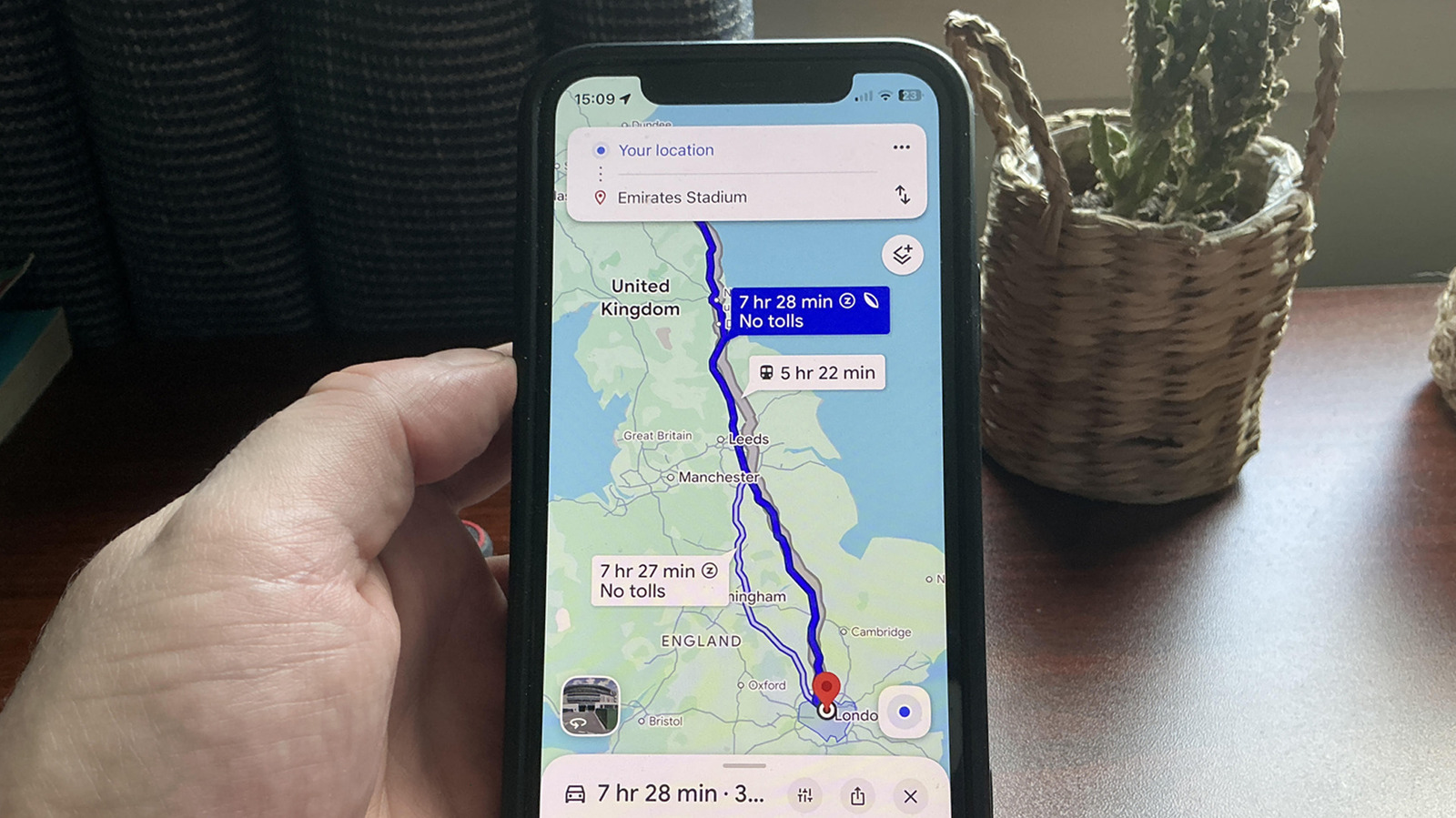
💡Learn how Google applies AI to optimize real-world physical routing for fuel efficiency at scale.
⚡ 30-Second TL;DR
What Changed
Leaf icon indicates routes optimized for fuel efficiency
Why It Matters
This feature demonstrates the practical application of AI in logistics and consumer navigation to reduce carbon footprints.
What To Do Next
Explore the Google Maps Platform Routes API to see if you can integrate similar fuel-efficiency metrics into your own logistics applications.
Who should care:Developers & AI Engineers
Key Points
- •Leaf icon indicates routes optimized for fuel efficiency
- •Routing engine uses AI to analyze traffic, road incline, and speed patterns
- •Users can toggle eco-friendly routing settings in the app preferences
🧠 Deep Insight
AI-generated analysis for this event.
🔑 Enhanced Key Takeaways
- •Google Maps integrates data from the U.S. Department of Energy’s National Renewable Energy Laboratory (NREL) to estimate fuel and energy consumption based on vehicle engine types.
- •The routing algorithm specifically accounts for different powertrain types, including internal combustion, hybrid, plug-in hybrid, and electric vehicles, to provide tailored efficiency recommendations.
- •Users can manually specify their vehicle's engine type in the Google Maps settings to improve the accuracy of the fuel-saving estimates provided by the leaf icon.
- •The feature is designed to reduce carbon emissions by suggesting routes that minimize stop-and-go traffic and maintain consistent speeds, even if the route is slightly longer in distance.
- •Google has expanded this technology beyond navigation to include 'eco-friendly' suggestions for flights and hotels, creating a unified sustainability-focused ecosystem across its travel products.
📊 Competitor Analysis▸ Show
| Feature | Google Maps | Apple Maps | Waze |
|---|---|---|---|
| Eco-Friendly Routing | Yes (Leaf Icon) | No | No |
| Powertrain Optimization | Yes | No | No |
| Real-time Fuel/Energy Estimates | Yes | No | No |
🛠️ Technical Deep Dive
- The routing engine utilizes a multi-objective optimization function that balances travel time, distance, and energy expenditure.
- It leverages historical traffic patterns and real-time telemetry data to predict fuel consumption rates across various road segments.
- The system incorporates topographical data (elevation changes) to calculate the energy cost of climbing or descending, which is critical for EV range estimation.
- Machine learning models are trained on NREL's vehicle performance datasets to map specific road characteristics to expected fuel efficiency metrics.
🔮 Future ImplicationsAI analysis grounded in cited sources
Integration with smart city infrastructure will enable real-time traffic light optimization.
Google is increasingly partnering with municipalities to use its traffic flow data to synchronize signals, further reducing idling and fuel consumption.
Dynamic EV charging stops will become a primary component of eco-routing.
As EV adoption grows, the routing engine will likely prioritize routes that optimize for battery health and charging station availability alongside energy efficiency.
⏳ Timeline
2021-10
Google Maps launches eco-friendly routing in the United States.
2022-09
Eco-friendly routing expands to Europe and other international markets.
2023-06
Google introduces engine-type selection (gas, diesel, hybrid, electric) to refine fuel efficiency calculations.
2024-02
Integration of AI-driven predictive modeling for real-time fuel consumption adjustments.
📰
Weekly AI Recap
Read this week's curated digest of top AI events →
👉Related Updates
AI-curated news aggregator. All content rights belong to original publishers.
Original source: Engadget ↗