TSMC Commits $100B for 4 New US Chip Plants
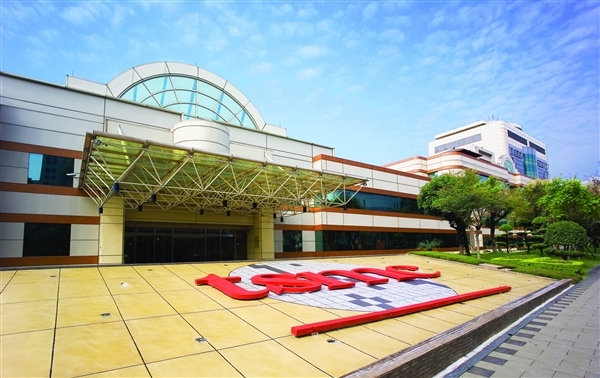
💡TSMC's $100B US expansion secures AI chip supply amid Trump pressure—key for infra builders.
⚡ 30-Second TL;DR
What Changed
Additional 100 billion USD investment announced
Why It Matters
Expands US-based advanced node capacity critical for AI GPUs and accelerators, mitigating supply chain risks from geopolitical tensions.
What To Do Next
Factor TSMC US fab ramp-up into your AI hardware roadmap for 2026+ supply planning.
Key Points
- •Additional 100 billion USD investment announced
- •Four new semiconductor factories in the US
- •Triggered by Trump's criticism of offshoring
- •Supports US chip manufacturing resurgence
🧠 Deep Insight
Background and context from public sources — not the original article. 5 sources cited.
🔑 Enhanced Key Takeaways
- •TSMC plans an additional $100 billion (NT$3.14 trillion) investment in US operations, potentially funding four new wafer fabs in Arizona as part of a US-Taiwan trade deal allowing tariff-free imports of materials and equipment.[1][2]
- •The investment is linked to a broader $250 billion pledge from Taiwan companies, driven by US demands including from Commerce Secretary Howard Lutnick for 40% of Taiwan's chip supply chain in the US, though deemed unrealistic by Taiwanese officials.[1][5]
- •This builds on TSMC's prior US commitments, bringing total Arizona investment to $165 billion, supported by $6.6 billion in CHIPS Act funding for three existing fabs with 2nm capability.[4][5]
- •TSMC's 2026 capex is projected at $52-56 billion, up 40% year-over-year, fueled by Q4 2025 net profit of $16 billion and revenue of $33 billion from AI chip demand.[2]
- •US operations, even expanded, expected to remain modest; Arizona fabs projected to handle ~30% of 2nm+ advanced production by early 2030s, with core R&D and capacity staying in Taiwan.[1]
📊 Competitor Analysis▸ Show
| Company | Investment | Locations | Key Details |
|---|---|---|---|
| TSMC | $100B additional ($165B total) | Arizona | 4 new fabs, tariff-free trade deal, CHIPS $6.6B for 3 prior fabs [1][2][4][5] |
| Micron | $200B | Idaho, NY, VA | 2 fabs ID, 4 NY, VA expansion; 40% US DRAM; CHIPS funding [3] |
| Samsung | $17B (part of $47B since 1970s) | Texas | Taylor plant operational 2026 [3] |
| Texas Instruments | $11B | Utah | 300mm fab, production 2026, 800 jobs [3] |
🛠️ Technical Deep Dive
- New fabs likely focused on advanced nodes (e.g., 2nm and below), aligning with existing Arizona plants receiving CHIPS funding for 2nm capability.[1][4]
- Trade deal enables tariff-free imports up to 2.5x plant capacity for materials/equipment and exports up to 1.5x production once operational.[1]
- Supports AI accelerators for Nvidia/Apple; capex prioritizes next-gen process tech amid surging AI demand.[2]
🔮 Future ImplicationsAI analysis grounded in cited sources
Accelerates US semiconductor onshoring, reduces geopolitical risks via shorter supply chains, intensifies pressure on rivals like Intel, but US share of TSMC's advanced output unlikely to exceed 30% long-term, preserving Taiwan's dominance while boosting AI infrastructure globally.[1][2]
⏳ Timeline
📎 Sources (5)
Factual claims are grounded in the sources below. Forward-looking analysis is AI-generated interpretation.
Weekly AI Recap
Read this week's curated digest of top AI events →
👉Related Updates

AI-curated news aggregator. All content rights belong to original publishers.
Original source: cnBeta (Full RSS) ↗
This is a summary, not the original. Read the source, or get the weekly briefing.
Weekly AI briefing
One email a week. Unsubscribe anytime.