Tokyo Memristor Breakthrough Enables Months-Long Standby
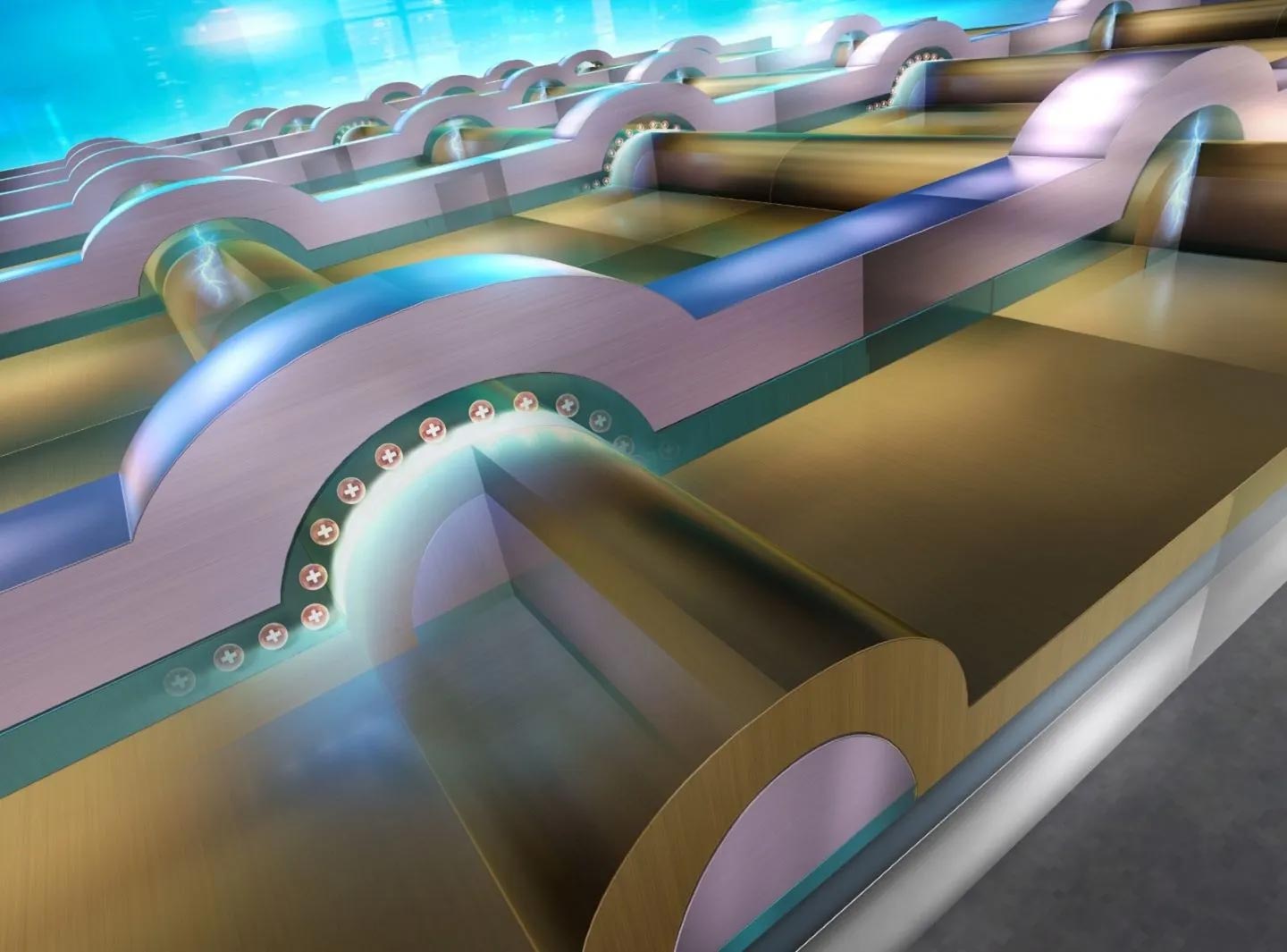
💡Memristor advance unlocks ultra-low power edge AI hardware
⚡ 30-Second TL;DR
What Changed
Ultra-small memristor device with inverse size-performance scaling
Why It Matters
This could transform edge computing by slashing power needs for always-on AI devices, boosting IoT adoption. AI practitioners gain efficient non-volatile memory for neuromorphic hardware.
What To Do Next
Prototype memristor-based memory in your edge AI hardware for low-power testing.
Key Points
- •Ultra-small memristor device with inverse size-performance scaling
- •Breaks electronic industry limits on miniaturization and power use
- •Enables months-long standby for wearables like smartwatches
🧠 Deep Insight
AI-generated analysis for this event.
🔑 Enhanced Key Takeaways
- •The breakthrough utilizes a novel 'atomic-scale' filament formation process that leverages quantum tunneling effects, which paradoxically become more stable as the device dimensions decrease below 10 nanometers.
- •Unlike traditional Flash or DRAM that require constant refresh cycles or charge pumps, this memristor architecture operates on a passive resistive switching mechanism that consumes zero power in the 'off' state.
- •The Tokyo Institute of Science team successfully integrated this memristor array onto a CMOS-compatible back-end-of-line (BEOL) process, facilitating easier adoption by existing semiconductor foundries.
🛠️ Technical Deep Dive
- •Device Architecture: Metal-Insulator-Metal (MIM) stack utilizing a hafnium oxide (HfO2) switching layer doped with transition metals.
- •Switching Mechanism: Formation and rupture of oxygen vacancy filaments at the atomic scale.
- •Scaling Behavior: Demonstrates an inverse relationship where the switching voltage (V_set/V_reset) decreases as the active area shrinks, contrary to conventional scaling laws.
- •Power Consumption: Sub-femtojoule (fJ) per bit switching energy, enabling ultra-low-power non-volatile memory (NVM) applications.
🔮 Future ImplicationsAI analysis grounded in cited sources
Weekly AI Recap
Read this week's curated digest of top AI events →
👉Related Updates
Same topic
Explore #memristor
Same product
More on memristor-storage-device
Same source
Latest from cnBeta (Full RSS)
Lunar impacts show gradual decline, not single burst
Quantum Photons Transmitted Over Chicago Commercial Fiber
Non-Abelian Anyons Enable Universal Quantum Computing

Microsoft plans to transform Minecraft into a global creator platform
AI-curated news aggregator. All content rights belong to original publishers.
Original source: cnBeta (Full RSS) ↗