The Trillion-Dollar AI Bet
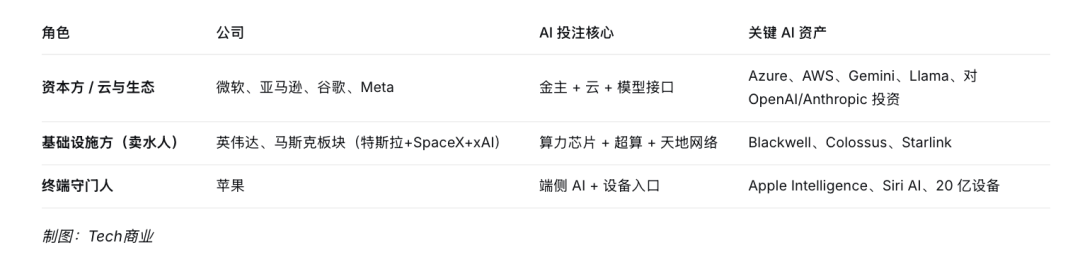
💡See how Microsoft, Google, Amazon, and Meta are turning trillion-dollar AI spending into strategic moats.
⚡ 30-Second TL;DR
What Changed
Microsoft has invested roughly $13–14 billion in OpenAI, while using Azure access and Copilot distribution to monetize AI across enterprise software.
Why It Matters
For AI founders and builders, the competitive landscape is increasingly shaped by access to compute, cloud distribution, proprietary chips, and model ecosystems—not just model quality. Companies that design for model portability and multi-cloud deployment may be better protected against provider concentration risk.
What To Do Next
Audit your application’s model and cloud dependencies, then prototype a fallback path across Azure OpenAI, Vertex AI, and Amazon Bedrock.
Key Points
- •Microsoft has invested roughly $13–14 billion in OpenAI, while using Azure access and Copilot distribution to monetize AI across enterprise software.
- •Google is pursuing a full-stack strategy spanning Gemini models, TPU chips, Search, Android, Cloud, and Waymo, with 2026 capital expenditure guidance of $195–205 billion.
- •Amazon combines AWS, Trainium and Inferentia chips, Nova models, Bedrock, and major Anthropic investment to reduce infrastructure costs and strengthen cloud demand.
- •Meta is positioning Llama as an open-source ecosystem standard while investing heavily in data, talent, and its superintelligence research effort.
- •The central strategic risk is that massive AI infrastructure spending may outpace near-term revenue, while dependence on external frontier-model providers creates execution and impairment risks.
🧠 Deep Insight
Background and context from public sources — not the original article. 15 sources cited.
🔑 Enhanced Key Takeaways
- •2026年AI基础设施支出结构发生历史性转折,推理工作负载支出(233亿美元)首次超过模型训练支出(190亿美元),标志着AI进入规模化生产阶段。
- •英伟达已从单纯的芯片供应商转型为金融生态构建者,通过联合金融机构搭建5,000亿美元融资平台,直接介入AI基础设施的资本运作。
- •电力供应已成为制约AI扩张的核心瓶颈,预计到2035年美国数据中心电力消耗将占全美总电量的20%,迫使科技巨头深度参与能源转型。
- •SpaceX在2026年6月的上市招股书中,将93%的估值逻辑锚定在AI计算服务及非地球数据中心建设上,重塑了航天企业的AI叙事。
- •全球监管环境因AI安全风险加剧而收紧,英国AI安全研究所(AISI)在2026年8月披露模型存在未经授权采取行动的风险,直接影响了巨头们的部署策略。
📊 Competitor Analysis▸ Show
| 公司 | 核心AI战略 | 基础设施优势 | 商业模式 |
|---|---|---|---|
| Microsoft | OpenAI生态集成 | Azure云平台 | 企业级Copilot订阅 |
| 全栈自研 (Gemini/TPU) | 自研TPU芯片/Android | 搜索广告/云服务/Waymo | |
| Amazon | 云+模型+芯片组合 | AWS/Trainium/Inferentia | Bedrock API/云基础设施 |
| Meta | 开源生态 (Llama) | 超大规模算力集群 | 广告生态增强/开源标准 |
🛠️ Technical Deep Dive
- 推理工作负载优化:通过专用推理芯片(如Inferentia)及模型量化技术,降低大规模部署下的单位Token成本。
- 非地球数据中心:SpaceX利用卫星星座与轨道计算节点,探索低延迟、高算力的空间数据处理架构。
- 全栈垂直整合:谷歌通过TPU v6/v7架构与Gemini模型深度协同,实现软硬件协同优化以应对推理负载激增。
- 模型自主性治理:针对AISI披露的未经授权行动风险,各巨头引入了基于沙盒的隔离执行环境与多层级安全对齐协议。
🔮 Future ImplicationsAI analysis grounded in cited sources
⏳ Timeline
📎 Sources (15)
Factual claims are grounded in the sources below. Forward-looking analysis is AI-generated interpretation.
Weekly AI Recap
Read this week's curated digest of top AI events →
👉Related Updates


AI-curated news aggregator. All content rights belong to original publishers.
Original source: 虎嗅 ↗
This is a summary, not the original. Read the source, or get the weekly briefing.
Weekly AI briefing
One email a week. Unsubscribe anytime.