Humanoid Robots Move from Demos to Work
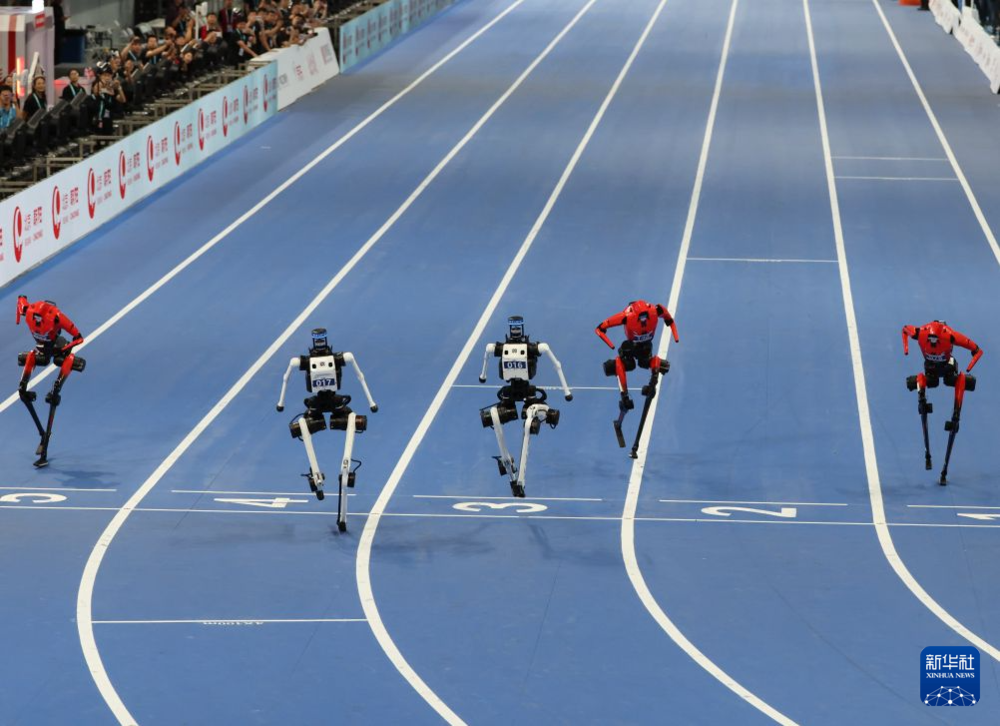
💡Factory deployments reveal the real gap between humanoid-robot demos and dependable autonomous work.
⚡ 30-Second TL;DR
What Changed
Unitree has brought entry-level humanoid robot pricing down to several tens of thousands of yuan.
Why It Matters
The key commercial milestone is shifting from robot deliveries and demonstrations to measurable production hours, success rates, and return on investment. For embodied-AI companies, deployment data and robust task generalization may matter more than athletic benchmarks.
What To Do Next
Benchmark your humanoid-robot workflow across varied objects and lighting conditions, then track success rate, recovery time, and human maintenance hours.
Key Points
- •Unitree has brought entry-level humanoid robot pricing down to several tens of thousands of yuan.
- •Figure 02 reportedly ran for about 1,250 hours at BMW, moving more than 90,000 parts.
- •Eight 智元精靈 G2 robots completed 17,625 production-line tasks over six consecutive days at 龍旗科技.
- •Robots remain highly dependent on fixed environments, task-specific training, and operational data.
🧠 Deep Insight
Background and context from public sources — not the original article. 8 sources cited.
🔑 Enhanced Key Takeaways
- •China produced approximately 12,800 humanoid robots in 2025, representing roughly 90% of the global production volume.
- •At the 2026 World Humanoid Robot Games, a robotic sprinter achieved a 100-meter dash time of 8.64 seconds, surpassing the human world record.
- •Unitree Robotics became the first humanoid robot company to list on the Shanghai STAR Market on August 19, 2026, experiencing a 460% initial surge followed by significant volatility.
- •Telecommunications infrastructure, specifically 5G-A (5G-Advanced) GigaUplink networks provided by Huawei and China Unicom, is being integrated to support the high-bandwidth requirements of embodied AI.
- •New U.S. 'Buy American' regulations have been enacted to restrict the importation and market entry of foreign-manufactured humanoid robots.
📊 Competitor Analysis▸ Show
| Feature | Figure 02 | 智元精靈 G2 | Unitree G1/H1 |
|---|---|---|---|
| Primary Market | Industrial/Automotive | Industrial/Manufacturing | Consumer/Research |
| Pricing | Premium/Enterprise | Mid-range | Entry-level (tens of thousands RMB) |
| Key Benchmark | 1,250 hours at BMW | 17,625 tasks at 龍旗科技 | High-speed locomotion/Athletics |
🛠️ Technical Deep Dive
- Embodied AI integration: Shift from pre-programmed scripts to real-time decision-making under hard real-time constraints.
- Connectivity: Utilization of 5G-A GigaUplink for low-latency data transmission between robots and edge/cloud compute.
- Actuation: High-torque density motors enabling athletic performance exceeding human physical limits (e.g., 8.64s 100m dash).
- Data dependency: Continued reliance on task-specific training sets and environmental mapping for industrial reliability.
🔮 Future ImplicationsAI analysis grounded in cited sources
⏳ Timeline
📎 Sources (8)
Factual claims are grounded in the sources below. Forward-looking analysis is AI-generated interpretation.
Weekly AI Recap
Read this week's curated digest of top AI events →
👉Related Updates

AI-curated news aggregator. All content rights belong to original publishers.
Original source: 虎嗅 ↗
This is a summary, not the original. Read the source, or get the weekly briefing.
Weekly AI briefing
One email a week. Unsubscribe anytime.