The rise of 'AI Prodigy' training camps for children
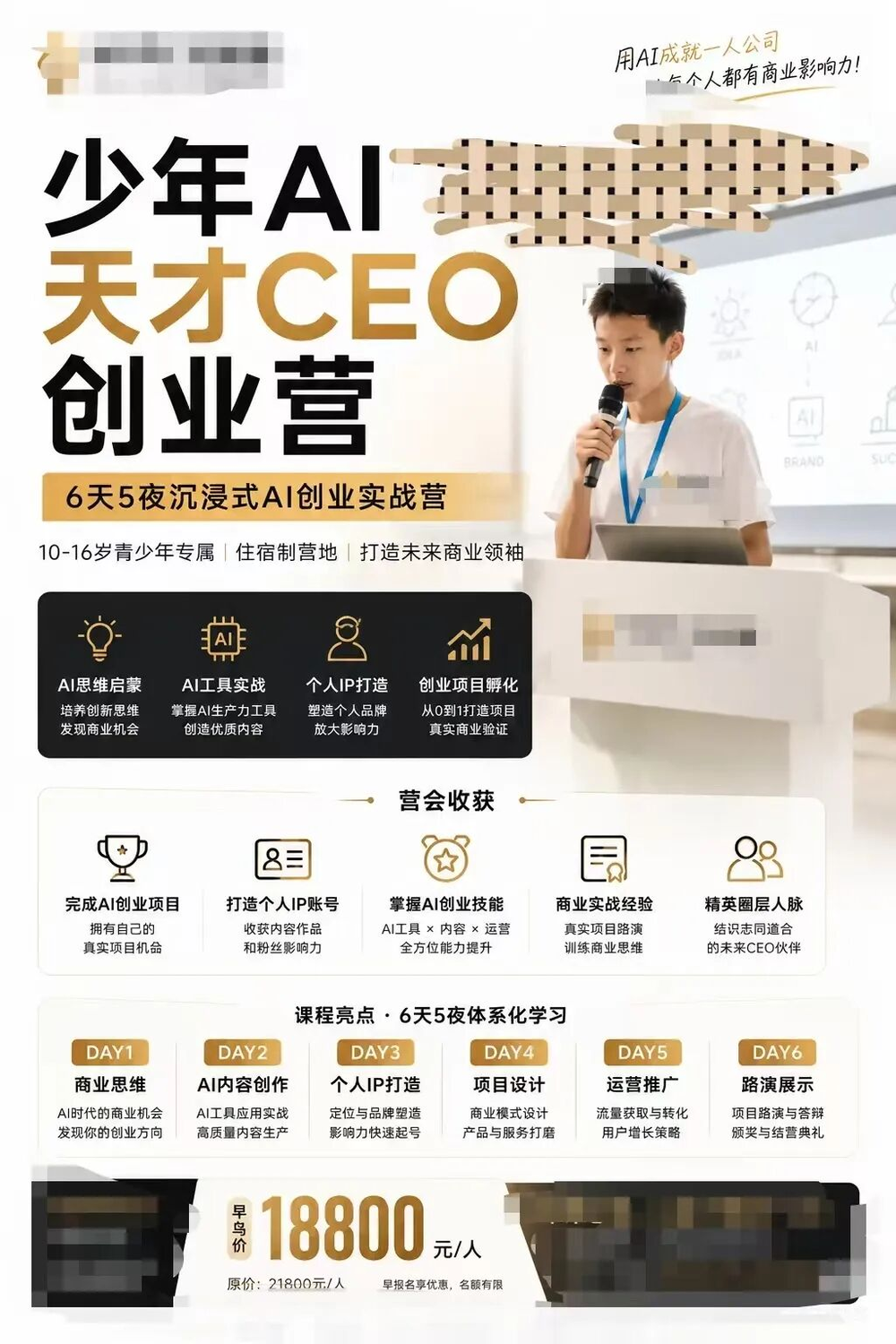
💡An insightful look at how AI anxiety is shaping the next generation's education and the 'AI entrepreneurship' bubble.
⚡ 30-Second TL;DR
What Changed
AI training camps for children have shifted from conceptual learning to 'practical' business simulation and agent building.
Why It Matters
The proliferation of these camps highlights the growing disconnect between AI tool accessibility and the actual skill sets required for long-term professional success.
What To Do Next
Focus on building deep technical fundamentals in ML/AI rather than superficial tool usage if you are mentoring the next generation.
Key Points
- •AI training camps for children have shifted from conceptual learning to 'practical' business simulation and agent building.
- •Parental anxiety regarding AI-driven job displacement is a primary driver for the enrollment in these expensive programs.
- •Critics argue that premature focus on 'AI entrepreneurship' ignores foundational education and is often a marketing gimmick.
- •The trend reflects broader societal anxiety about the impact of AI on future career paths.
🧠 Deep Insight
AI-generated analysis for this event.
🔑 Enhanced Key Takeaways
- •The 'AI Prodigy' market in China has seen a surge in 'No-Code' agent development platforms specifically marketed to minors, allowing children to build functional chatbots without learning traditional programming languages like Python.
- •Regulatory bodies in several Chinese provinces have begun investigating these camps for potential violations of consumer protection laws, specifically regarding the 'guaranteed outcome' marketing claims made by private education providers.
- •Data privacy concerns have emerged as these platforms often require children to upload personal data or interact with LLMs that may not be fully compliant with COPPA-equivalent standards for minors in China.
- •Industry reports indicate that the average cost for a 'premium' AI agent-building camp has increased by 40% year-over-year, significantly outpacing inflation in the broader extracurricular education sector.
- •There is a growing trend of 'AI-native' summer camps partnering with domestic LLM providers to offer children access to proprietary model APIs, creating a closed-loop ecosystem that locks students into specific vendor tools.
📊 Competitor Analysis▸ Show
| Feature | Traditional Coding Camps | AI Prodigy Agent Camps | Academic STEM Programs |
|---|---|---|---|
| Core Focus | Syntax & Logic | Prompt Engineering/Agents | Foundational Math/Science |
| Pricing | Moderate ($500-$1k) | High ($2k-$5k+) | Low/Moderate ($300-$800) |
| Outcome | Software Development | Business/Agent Deployment | Standardized Test Prep |
🛠️ Technical Deep Dive
- Most camps utilize visual programming interfaces (Block-based) that abstract away API calls to LLMs like DeepSeek, Qwen, or Ernie Bot.
- Agent building modules typically rely on RAG (Retrieval-Augmented Generation) frameworks, where children upload PDFs or text files to create a 'knowledge base' for their custom bot.
- Implementation often involves low-code orchestration layers that manage prompt chaining and memory buffers for the AI agents.
- Platforms frequently use fine-tuned system prompts to constrain the AI's behavior within 'child-safe' parameters, though these are often susceptible to jailbreaking.
🔮 Future ImplicationsAI analysis grounded in cited sources
⏳ Timeline
Weekly AI Recap
Read this week's curated digest of top AI events →
👉Related Updates


AI-curated news aggregator. All content rights belong to original publishers.
Original source: 虎嗅 ↗