2030 World Cup US Media Rights Target $2 Billion
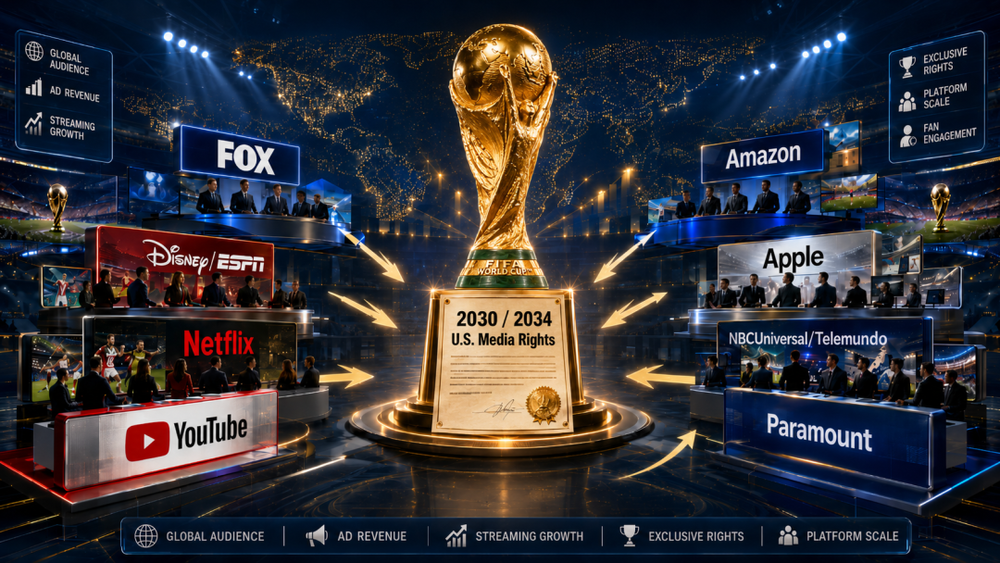
💡Big tech's entry into sports rights creates massive demand for AI-powered real-time broadcasting and ad-tech infrastruct
⚡ 30-Second TL;DR
What Changed
2030 World Cup US rights valuation could double compared to 2026.
Why It Matters
The entry of big tech into live sports broadcasting signals a major shift in media infrastructure and content delivery, impacting how AI-driven recommendation and ad-tech engines will operate at scale.
What To Do Next
Monitor how major streaming platforms integrate real-time AI analytics into live sports broadcasts to optimize viewer engagement.
Key Points
- •2030 World Cup US rights valuation could double compared to 2026.
- •FIFA considers bundling English and Spanish language rights to increase bidding pressure.
- •Streaming giants like Netflix, YouTube, Amazon, and Apple are entering the bidding conversation.
- •High viewership data from the 2026 World Cup is driving aggressive pricing strategies.
🧠 Deep Insight
AI-generated analysis for this event.
🔑 Enhanced Key Takeaways
- •FIFA is strategically leveraging the 2026 World Cup's success in North America, which set new records for stadium attendance and domestic broadcast reach, to justify the $2 billion valuation floor for 2030.
- •The 2030 tournament's unique multi-continental format—with opening matches in South America followed by the main tournament in Morocco, Portugal, and Spain—creates complex time-zone challenges for US broadcasters that may impact live viewership metrics.
- •FIFA has reportedly explored a 'direct-to-consumer' (DTC) contingency plan via FIFA+, which could serve as a leverage tool to force traditional broadcasters and streamers to increase their bids.
- •The integration of advanced data analytics and personalized advertising capabilities is a primary driver for tech giants like Amazon and Apple, who view the World Cup as a vehicle for long-term ecosystem lock-in rather than just ad revenue.
- •Regulatory scrutiny regarding sports broadcasting monopolies in the US is influencing FIFA's decision to potentially split rights packages by platform type (linear vs. streaming) rather than just language.
📊 Competitor Analysis▸ Show
| Feature | Traditional Broadcasters (e.g., FOX/Telemundo) | Tech Giants (Apple/Amazon/Netflix) | FIFA+ (DTC) |
|---|---|---|---|
| Pricing Strategy | High upfront rights fees; ad-supported | Subscription/Ecosystem value; data-driven | Low cost/Free; leverage tool |
| Distribution | Linear TV + Digital simulcast | Global streaming infrastructure | Global OTT platform |
| Benchmarks | Established reach; legacy sports audience | High engagement; tech integration | Direct fan relationship |
🔮 Future ImplicationsAI analysis grounded in cited sources
⏳ Timeline
Weekly AI Recap
Read this week's curated digest of top AI events →
👉Related Updates




AI-curated news aggregator. All content rights belong to original publishers.
Original source: 虎嗅 ↗