Tesla Brings Zero-Rare-Earth Motor to Cybercab
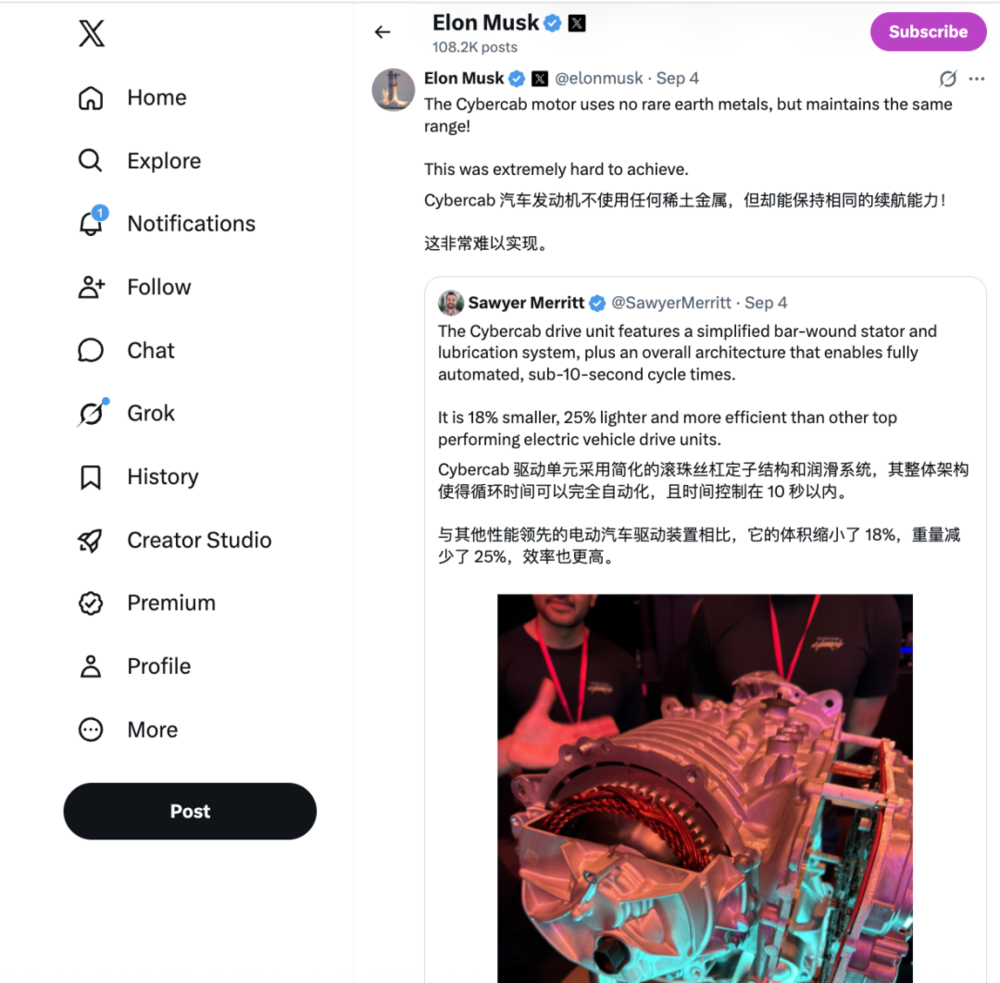
💡Tesla’s Cybercab tests whether rare-earth-free motors can match the density and efficiency demanded by autonomous vehicl
⚡ 30-Second TL;DR
What Changed
Cybercab is Tesla’s purpose-built autonomous taxi with no steering wheel or pedals, relying on its FSD system.
Why It Matters
For EV and robotics builders, Tesla’s result could weaken the assumption that high power density requires rare-earth permanent magnets. However, real-world efficiency across urban, highway, and high-temperature conditions remains more important than peak power alone.
What To Do Next
Benchmark your next motor or actuator design across full efficiency maps and thermal conditions instead of comparing only peak power density.
Key Points
- •Cybercab is Tesla’s purpose-built autonomous taxi with no steering wheel or pedals, relying on its FSD system.
- •The motor reportedly delivers 163 kW, while its volume is 18% smaller and weight 25% lower than comparable high-performance motors.
- •Tesla’s approach requires coordinated optimization of materials, electromagnetic structure, thermal management, power electronics, software control, and manufacturing.
- •A single vehicle will have limited impact on global rare-earth demand, but broader adoption could reduce incremental demand for high-performance NdFeB magnets.
Weekly AI Recap
Read this week's curated digest of top AI events →
👉Related Updates


AI-curated news aggregator. All content rights belong to original publishers.
Original source: 虎嗅 ↗
This is a summary, not the original. Read the source, or get the weekly briefing.
Weekly AI briefing
One email a week. Unsubscribe anytime.