SpaceX Targets Trillion-Dollar IPO with Musk-Centric Governance
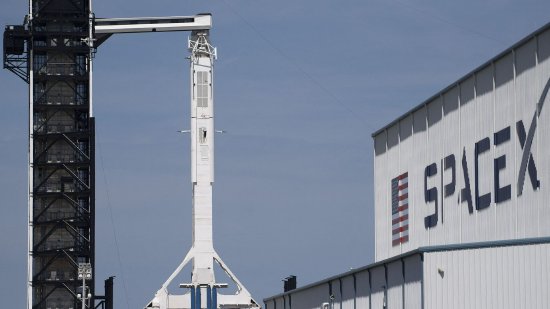
💡Understand how a trillion-dollar deep-tech firm structures governance to protect long-term, high-risk R&D missions.
⚡ 30-Second TL;DR
What Changed
SpaceX is planning a historic trillion-dollar IPO next month.
Why It Matters
This governance model sets a precedent for founder-led deep tech companies, potentially influencing how future AI and space startups structure their control and long-term vision.
What To Do Next
Monitor SpaceX's S-1 filing for insights into how they quantify 'Mars colonization' milestones as performance metrics for executive compensation.
Key Points
- •SpaceX is planning a historic trillion-dollar IPO next month.
- •New governance structure ensures Elon Musk maintains long-term control.
- •Compensation scheme is directly linked to Mars colonization milestones.
- •Investors are accepting reduced shareholder rights for access to unique space tech.
🧠 Deep Insight
Web-grounded analysis with 40 cited sources.
🔑 Enhanced Key Takeaways
- •SpaceX is targeting an IPO valuation between $1.75 trillion and $2 trillion, aiming to raise $50 billion to $75 billion, which would make it the largest initial public offering in history, potentially listing under the ticker "SPCX" or "SPY" in June 2026.
- •The proposed governance structure includes a dual-class share system where Elon Musk would retain approximately 79% of voting power with about 42% equity through Class B shares, each carrying 10 votes, making his removal as CEO or chairman virtually impossible without his own consent.
- •Elon Musk's compensation package is tied to highly ambitious milestones, including SpaceX achieving a $7.5 trillion market valuation and establishing a permanent human colony on Mars with at least one million people, alongside developing space-based data centers with 100 terawatts of processing power.
- •Major institutional investors, including public pension funds from New York and California, have voiced "serious concerns" over SpaceX's "extreme" governance terms, advocating for a one-share, one-vote system and criticizing provisions like mandatory arbitration and restrictions on shareholder proposals.
- •SpaceX recently acquired Elon Musk's artificial intelligence company, xAI (which includes X/Twitter), in an all-stock deal valued at approximately $250 billion in February 2026, with xAI subsequently rebranding as SpaceXAI, adding an AI business segment to SpaceX's portfolio.
📊 Competitor Analysis▸ Show
While direct pricing and benchmark data for all competitors are not consistently available, a qualitative comparison can be made:
| Feature/Company | SpaceX (Starship/Falcon/Starlink) | Blue Origin (New Glenn/New Shepard) | United Launch Alliance (ULA) (Vulcan Centaur) | Rocket Lab (Electron/Neutron) | Amazon (Project Kuiper) |
|---|---|---|---|---|---|
| Primary Focus | Reusable heavy-lift launch, satellite internet, Mars colonization | Heavy-lift launch, suborbital tourism, lunar landers | Government/national security launches, heavy-lift | Small-sat launch, medium-lift (Neutron) | Satellite internet |
| Reusability | Full (Starship, Super Heavy), Partial (Falcon 9/Heavy boosters) | Partial (New Shepard), Planned (New Glenn first stage) | Limited (Vulcan Centaur first stage engines) | Planned (Neutron first stage) | N/A (satellite constellation) |
| Launch Cadence | High (dominant market share, 180+ missions in early 2025) | Lower (New Glenn in service from 2025) | Moderate (Vulcan Centaur debut Jan 2024) | High (Electron), Planned (Neutron late 2025) | N/A (satellite deployment) |
| Key Differentiator | Cost-effectiveness via reusability, vertical integration, Starlink revenue | Deep funding, focus on heavy-lift and reusability | Reliability, legacy government contracts | Small-sat market leader, end-to-end space company | Direct Starlink competitor, consumer/enterprise focus |
| Market Share (Commercial Launch) | Dominant (90%+ of commercial launch market by early 2025) | Emerging | Declining, aiming to regain with Vulcan Centaur | Niche (small-sat), expanding to medium-lift | N/A (satellite internet) |
| Funding/Ownership | Private, IPO planned, Elon Musk control | Private, Jeff Bezos-funded | Joint venture (Boeing, Lockheed Martin) | Publicly traded (RKLB) | Publicly traded (AMZN) |
| Notable Tech | Starship, Raptor engines, Starlink constellation | BE-4 engines, Blue Moon lander | Centaur V upper stage | Electron rocket, Photon spacecraft | LEO satellite constellation |
Other competitors include Arianespace (Ariane 6), Relativity Space (Terran 1/R), Firefly Aerospace (Alpha), and various state-backed programs (e.g., China's CASC).
🛠️ Technical Deep Dive
- Starship System: A fully reusable two-stage super heavy-lift launch vehicle, comprising the Starship spacecraft (upper stage) and the Super Heavy rocket (booster).
- Dimensions: Stands 121-124 meters (398-407 ft) tall with a 9-meter (29.5 ft) diameter.
- Propulsion: Powered by Raptor engines, which are reusable methane-oxygen staged-combustion engines. The Super Heavy booster uses 33 Raptor engines, while the Starship upper stage uses 6 engines (3 sea-level Raptors and 3 Raptor Vacuum engines).
- Propellants: Uses sub-cooled liquid methane (CH4) and liquid oxygen (LOX), often referred to as methalox.
- Payload Capacity: Designed to carry over 100 metric tons (220,000+ lbs) to Low Earth Orbit (LEO) in a fully reusable configuration, with potential for up to 250 metric tons in an expendable configuration.
- Materials: Both stages are constructed from stainless steel.
- Capabilities: Intended for crew and cargo transport to Earth orbit, the Moon, Mars, and beyond, including point-to-point transport on Earth.
- Starlink Network: A constellation of thousands of small, low Earth orbit (LEO) satellites providing global high-speed internet.
- Orbit: Operates in LEO at an altitude of approximately 550 kilometers (340 miles) in five orbital shells.
- Connectivity: Utilizes Ka, Ku, and V frequency bands. Satellites feature 5 advanced Ku-band phased array antennas and 3 dual-band (Ka-band and E-band) antennas.
- Inter-Satellite Links (ISLs): Employs laser communication systems for direct links between satellites, forming a global internet mesh capable of up to 200 Gbps per link.
- Propulsion (Satellites): Uses efficient argon thrusters for orbit raising, maneuvering, and deorbiting, making Starlink the first argon-propelled spacecraft.
- Ground Segment: Consists of ground stations (gateway terminals) connecting satellites to the internet backbone and user terminals (phased array dishes) for end-user connectivity.
🔮 Future ImplicationsAI analysis grounded in cited sources
⏳ Timeline
📎 Sources (40)
Factual claims are grounded in the sources below. Forward-looking analysis is AI-generated interpretation.
- Google Search Source
- Google Search Source
- Google Search Source
- Google Search Source
- Google Search Source
- Google Search Source
- Google Search Source
- Google Search Source
- Google Search Source
- Google Search Source
- Google Search Source
- Google Search Source
- Google Search Source
- Google Search Source
- Google Search Source
- Google Search Source
- Google Search Source
- Google Search Source
- Google Search Source
- Google Search Source
- Google Search Source
- Google Search Source
- Google Search Source
- Google Search Source
- Google Search Source
- Google Search Source
- Google Search Source
- Google Search Source
- Google Search Source
- Google Search Source
- Google Search Source
- Google Search Source
- Google Search Source
- Google Search Source
- Google Search Source
- Google Search Source
- Google Search Source
- Google Search Source
- Google Search Source
- Google Search Source
Weekly AI Recap
Read this week's curated digest of top AI events →
👉Related Updates
Same topic
Explore #corporate-governance
Same product
More on spacex
Same source
Latest from cnBeta (Full RSS)

Microsoft plans to transform Minecraft into a global creator platform
SpaceX Rocket Debris to Impact Moon
Apple warns of potential AI compute resource shortages

ShieldFont uses obfuscated typography to block AI scrapers
AI-curated news aggregator. All content rights belong to original publishers.
Original source: cnBeta (Full RSS) ↗