South Korea Launches Leveraged ETFs for Chip Giants
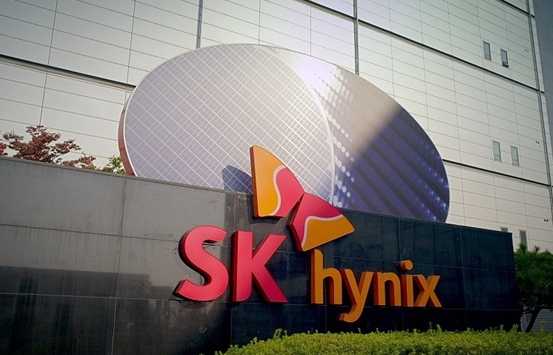
Understand how financial markets are betting on the AI hardware boom through new leveraged instruments.
30-Second TL;DR
What Changed
New leveraged ETFs target Samsung Electronics and SK Hynix stock performance.
Why It Matters
The launch reflects the intense market focus on AI hardware supply chains and may lead to increased capital flow into the semiconductor sector, impacting valuation metrics for AI infrastructure providers.
What To Do Next
Track the stock performance of major AI chip suppliers as a proxy for market sentiment toward the AI hardware sector.
Key Points
- •New leveraged ETFs target Samsung Electronics and SK Hynix stock performance.
- •Products offer 2x daily returns, amplifying both gains and losses for investors.
- •High demand from retail investors in Korea despite analyst warnings on volatility.
Deep Insight
Background and context from public sources — not the original article. 19 sources cited.
Enhanced Key Takeaways
- •South Korea officially launched its first individual stock leveraged ETFs tracking Samsung Electronics and SK Hynix on May 24, 2026, with 16 such ETFs (eight for each company) from eight domestic asset management firms scheduled to list on May 27, 2026.
- •Analysts anticipate significant net inflows of up to 5.3 trillion Korean won (approximately $3.5 billion) into these new ETFs by the end of May, driven by strong retail investor demand.
- •The initial listing price for these leveraged ETFs is set at 20,000 won ($13.30), making them significantly more accessible to retail investors compared to the underlying shares, which trade near 300,000 won for Samsung Electronics and 2 million won for SK Hynix.
- •The Financial Supervisory Service (FSS) has expressed concerns that these products could heighten concentration risks and exacerbate market volatility, particularly given that Samsung and SK Hynix together comprise nearly half of the KOSPI index.
- •To mitigate risks, retail investors are required to complete a mandatory one-hour online pre-trading education course and a three-hour simulated trading test before investing in these single-stock leveraged ETFs.
Technical Deep Dive
- Leveraged ETFs achieve their magnified exposure through the use of derivatives such as swaps and futures contracts.
- These products are designed to track daily returns and must rebalance their portfolios every day to maintain their target leverage ratio.
- The daily rebalancing mechanism can lead to phenomena like 'volatility decay,' where the fund may erode value by effectively buying high and selling low in volatile, oscillating markets.
- Compounding mismatch is another risk, causing long-term returns to diverge significantly from the simple leveraged performance of the underlying stock over periods longer than a day.
- Frictional costs, including those associated with swaps, financing, and trading spreads, also contribute to the underperformance of leveraged ETFs, with these costs typically increasing with higher leverage.
- Due to these inherent complexities and risks, leveraged single-stock ETFs are generally not considered suitable for buy-and-hold investment strategies.
Future ImplicationsAI analysis grounded in cited sources
Timeline
- 2025-12South Korean FSS implemented mandatory online courses and mock-trading exams for retail investors trading foreign leveraged/inverse ETFs, indicating pre-existing regulatory concern.
- 2026-01South Korea's Financial Services Commission (FSC) announced plans to introduce single-stock 2x leveraged ETFs to the domestic market.
- 2026-04-21Regulatory revisions were approved, officially permitting single-stock leveraged ETFs with Samsung Electronics and SK Hynix as underlying assets and requiring mandatory pre-education for investors.
- 2026-05-22A mandatory minimum deposit of 10 million won (approximately $6,700) for first-time investors in overseas leveraged ETFs/ETNs took effect as part of broader investor protection measures.
- 2026-05-24South Korea officially launched its first individual stock leveraged ETFs tracking Samsung Electronics and SK Hynix.
- 2026-05-27Sixteen single-stock leveraged ETFs, eight each for Samsung Electronics and SK Hynix, are scheduled to list on the KOSPI market.
Sources (19)
Factual claims are grounded in the sources below. Forward-looking analysis is AI-generated interpretation.
Weekly AI Recap
Read this week's curated digest of top AI events →
Related Updates

AI-curated news aggregator. All content rights belong to original publishers.
Original source: cnBeta (Full RSS) ↗
This is a summary, not the original. Read the source, or get the weekly briefing.
The weekly digest
One email a week. Unsubscribe anytime.