South Africa AI Policy Has Fake Citations
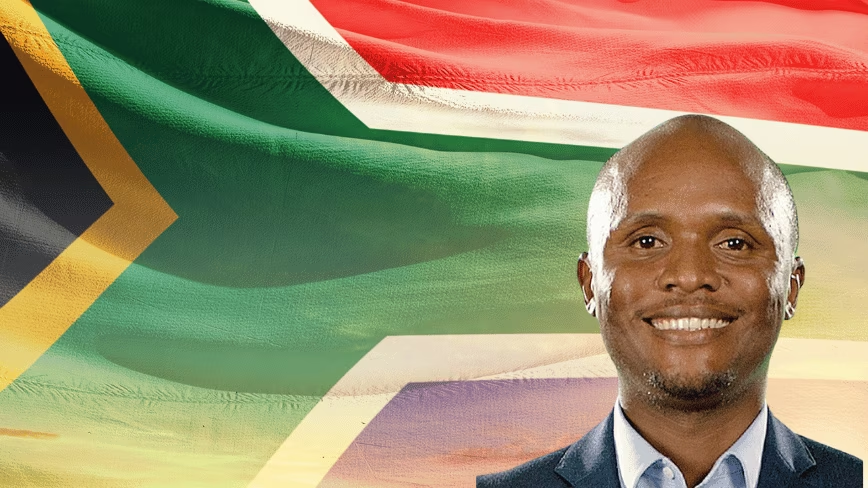
💡Gov't AI policy exposed fake citations—critical lesson on AI reliability in policy.
⚡ 30-Second TL;DR
What Changed
South Africa used AI to draft national AI policy
Why It Matters
This incident highlights AI hallucination risks in official documents, potentially slowing governmental AI adoption. It serves as a cautionary tale for policymakers worldwide on verifying AI outputs.
What To Do Next
Fact-check all AI-generated citations against primary sources before official use.
Key Points
- •South Africa used AI to draft national AI policy
- •Proposed National AI Commission, AI Ethics Board, AI Regulatory Authority
- •Outlined five pillars including skills capacity and responsible governance
- •Department spent months on the drafting process
- •Citations in the policy were fake, generated by AI
🧠 Deep Insight
AI-generated analysis for this event — not the original article.
🔑 Enhanced Key Takeaways
- •The incident has triggered a formal review by the South African Parliamentary Portfolio Committee on Communications and Digital Technologies, which is investigating the procurement and oversight processes used by the Department.
- •Academic and civil society groups, including the South African AI Association, have publicly criticized the lack of human-in-the-loop verification, citing it as a breach of the very 'responsible AI' principles the policy intended to promote.
- •The Department of Communications and Digital Technologies has officially retracted the draft document and initiated a public consultation process to restart the drafting phase with human-led authorship.
🔮 Future ImplicationsAI analysis grounded in cited sources
⏳ Timeline
Weekly AI Recap
Read this week's curated digest of top AI events →
👉Related Updates


AI-curated news aggregator. All content rights belong to original publishers.
Original source: The Next Web (TNW) ↗
This is a summary, not the original. Read the source, or get the weekly briefing.
Weekly AI briefing
One email a week. Unsubscribe anytime.