Sony Patents AMD PS5 Pro Graphics Upgrade
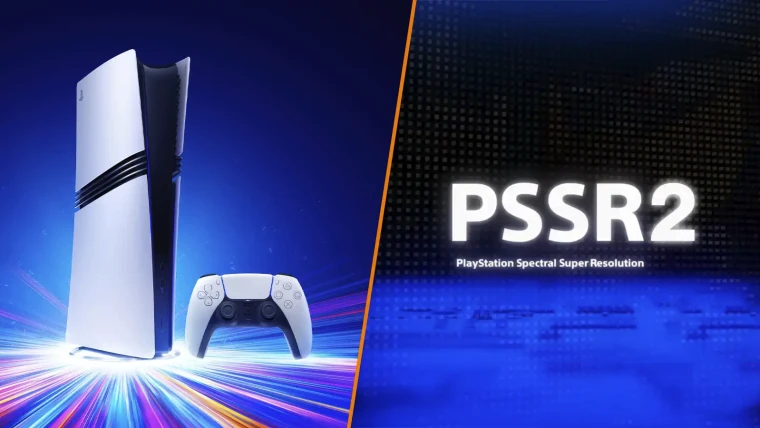
💡Sony-AMD patent fixes PS5 Pro PSSR flaws—insights for AI game upscaling devs
⚡ 30-Second TL;DR
What Changed
New Sony patent targets PS5 Pro image quality improvements
Why It Matters
Improves AI upscaling reliability for gaming, potentially influencing console AI graphics standards. Benefits developers optimizing for high-end hardware.
What To Do Next
Test PSSR upscaling on PS5 Pro dev kits to benchmark AI graphics improvements.
Key Points
- •New Sony patent targets PS5 Pro image quality improvements
- •Collaboration with AMD to fix PSSR visual artifacts
- •Addresses performance issues in select games post-launch
- •PSSR shows strengths but instability in some titles
🧠 Deep Insight
Background and context from public sources — not the original article. 8 sources cited.
🔑 Enhanced Key Takeaways
- •Project Amethyst, Sony's collaborative framework with AMD, enables bidirectional technology transfer—AMD has already released the co-developed algorithm as FSR 4 on PC, while Sony implements it on PS5 Pro in 2026[2].
- •PSSR 2.0 employs dynamic precision computing rather than static resolution reduction: the system continuously monitors GPU/CPU load and adjusts neural network precision in real-time, maintaining target frame rates during intensive scenes (explosions, particle effects, NPC crowds) without lowering native resolution[6].
- •Mark Cerny confirmed that elements of RDNA 5 architecture are emerging from Amethyst engineering work, with implications for AMD's next-generation graphics hardware design beyond the PS5 Pro's immediate upgrade cycle[2].
- •The patent filing at WIPO (early February 2026) describes real-time quantization as the core innovation: temporarily reducing convolutional neural network (CNN) usage during heavy GPU loads to stabilize frame rates while preserving resolution fidelity[1][4].
🛠️ Technical Deep Dive
PSSR 2.0 Architecture & Implementation:
- Real-Time Quantization Mechanism: Monitors GPU and CPU load continuously; reduces precision of neural network weights and activations dynamically rather than applying fixed computing budgets[6]
- CNN Reduction Strategy: During performance bottlenecks, PSSR 2.0 temporarily reduces convolutional neural network usage to free GPU resources while maintaining stable 60/120 fps targets[1][4]
- Precision Adjustment Scope: Affects computational accuracy of weights and activations in the neural network; lower precision calculations are computationally cheaper, enabling resource reallocation without resolution throttling[6]
- FSR 4 Integration: Incorporates key elements from AMD's Fidelity FX Super Resolution 4 technology, though the patent does not specify exact component integration or interaction with existing PSSR architecture[1]
- Variable Precision Computing: Not a novel GPU technique, but PSSR 2.0's innovation lies in dynamic, situational adjustment during active gameplay rather than pre-configured settings[6]
- Performance Scenarios: System designed to handle complex scenes (particle effects, NPC density, explosions) by operating with reduced internal precision while maintaining target resolution and frame rate[6]
🔮 Future ImplicationsAI analysis grounded in cited sources
⏳ Timeline
📎 Sources (8)
Factual claims are grounded in the sources below. Forward-looking analysis is AI-generated interpretation.
- tbreak.com — Ps5 Pro Pssr 2 Update Fps Fix
- tomsguide.com — Sonys Mark Cerny Explains Why Your Ps5 Pro Is Getting an Upgrade in 2026
- youtube.com — Watch
- mp1st.com — Sony Patent Hints at Pssr 2 0 Upgrade
- forums.guru3d.com — Ps5 Pro to Implement Fsr 4 Based AI Upscaling in 2026
- playfront.de — Ps5 Pro Pssr 2 0 Passt Ki Praezision an Um Framedrops Zu Verhindern
- neogaf.com — Sony Patents Pssr Breakthrough to Eliminate Fps Drops and Lower Internal Resolution in Games
- mundogamer.community — Sony Details the Future of Pssr in a New Patent
Weekly AI Recap
Read this week's curated digest of top AI events →
👉Related Updates
AI-curated news aggregator. All content rights belong to original publishers.
Original source: cnBeta (Full RSS) ↗
This is a summary, not the original. Read the source, or get the weekly briefing.
Weekly AI briefing
One email a week. Unsubscribe anytime.