Silicon Valley Coders Turn AI Agent Overseers
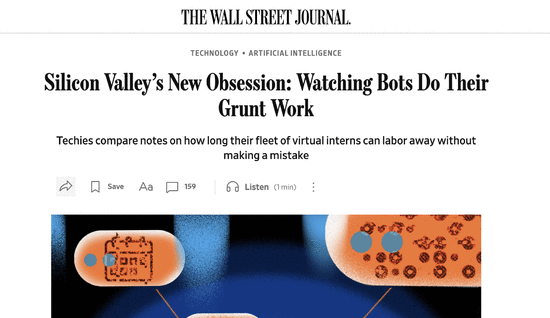
💡AI agents redefine coding jobs—coders become monitors
⚡ 30-Second TL;DR
What Changed
Claude 4.5 and OpenClaw enable overnight coding delegation, sparking addiction-like monitoring
Why It Matters
Accelerates software job evolution to supervisor roles, pressuring traditional coders. Boosts productivity but highlights need for reliable agents in enterprise.
What To Do Next
Test OpenClaw on a simple scripting task with non-sleep laptop monitoring.
Key Points
- •Claude 4.5 and OpenClaw enable overnight coding delegation, sparking addiction-like monitoring
- •Engineers like Notion co-founder manage multiple agents instead of writing code
- •Hiring shifts to 'agentic' oversight; reliability issues in long tasks and context loss
- •Examples: agents delete emails or fail multi-step workflows without human babysitting
🧠 Deep Insight
Background and context from public sources — not the original article. 5 sources cited.
🔑 Enhanced Key Takeaways
- •Claude Code leverages context compaction to automatically summarize and compress conversation history when token limits are approached, enabling sustained execution of long-running agentic coding tasks[1].
- •OpenClaw operates as an open-source (MIT license), model-agnostic daemon with long-term persistent memory in Markdown/YAML, supporting integrations like WhatsApp, Slack, email, and social media posting beyond coding[2][4].
- •In 2026, developers increasingly view Claude Code with Opus 4.5 and OpenClaw as complementary tools, using the former for codebase refactoring and git workflows, and the latter for personal life automation[2].
- •Claude Code excels in multi-file editing and test running via terminal/IDE, mapping entire projects with agentic search and MCP integrations to GitHub and databases[2].
📊 Competitor Analysis▸ Show
| Feature | Claude Code | OpenClaw |
|---|---|---|
| Primary Focus | Pure software engineering and coding | General-purpose life and work automation |
| Model | Claude Opus 4.6 / Sonnet 4.5 | Model-agnostic (Claude, GPT, Llama, etc.) |
| Connectivity | Terminal, Git, local files, IDE | Terminal, web, WhatsApp, Slack, email, social media |
| Memory | Session-based with context compaction | Long-term persistent (Markdown/YAML) |
| Cost | High token-based (Claude subscription) | Free software / low with local models |
| Open Source | Proprietary | Yes (MIT license) |
| Ease of Use | Plug-and-play | Steep learning curve[1][2][4] |
🛠️ Technical Deep Dive
- •Claude Code uses automatic context compaction: monitors token usage, injects summary prompts at thresholds, clears history, and continues with compressed context for long tasks[1].
- •OpenClaw runs as a persistent daemon with long-term memory stored in Markdown/YAML files, enabling weeks-long state retention across sessions[2][4].
- •Claude Code supports agentic codebase understanding via project mapping in seconds, multi-file autonomous refactoring, test execution, git commits/PRs, and MCP for GitHub/database/Slack integration[2].
- •OpenClaw is model-agnostic, compatible with Claude Opus 4.5 ($15/$75 per million tokens), Sonnet 4, GPT-4, DeepSeek, and local models, with tool-calling optimized in Anthropic models[3][4].
🔮 Future ImplicationsAI analysis grounded in cited sources
⏳ Timeline
📎 Sources (5)
Factual claims are grounded in the sources below. Forward-looking analysis is AI-generated interpretation.
Weekly AI Recap
Read this week's curated digest of top AI events →
👉Related Updates

AI-curated news aggregator. All content rights belong to original publishers.
Original source: 虎嗅 ↗
This is a summary, not the original. Read the source, or get the weekly briefing.
Weekly AI briefing
One email a week. Unsubscribe anytime.