Silicon Photonics Becomes AI’s Next Bottleneck
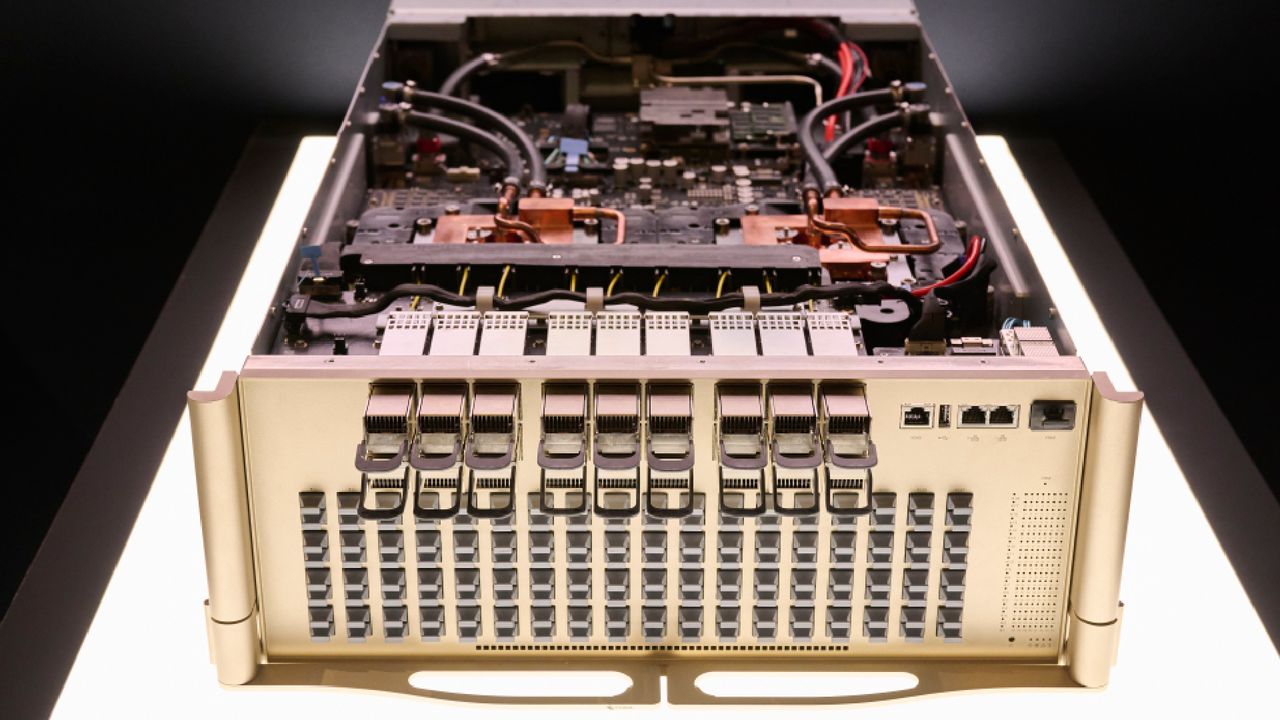
💡AI clusters depend on photonics, but geopolitical controls could reshape optical hardware sourcing.
⚡ 30-Second TL;DR
What Changed
AI data centers are increasing demand for optical interconnects and silicon photonics.
Why It Matters
Supply constraints or geopolitical restrictions on optical components could affect AI cluster deployment timelines and costs. AI infrastructure operators may need to diversify suppliers and validate non-Chinese alternatives before expanding data-center capacity.
What To Do Next
Audit your AI cluster networking roadmap and qualify at least two non-Chinese optical transceiver suppliers for upcoming deployments.
Key Points
- •AI data centers are increasing demand for optical interconnects and silicon photonics.
- •The U.S. wants Chinese optical transceivers excluded from future AI data centers.
- •China’s dominance across the photonics supply chain could complicate export controls or procurement bans.
🧠 Deep Insight
AI-generated analysis for this event.
🔑 Enhanced Key Takeaways
- •Silicon photonics integration is shifting from pluggable transceivers to Co-Packaged Optics (CPO), which places optical engines directly on the switch or GPU substrate to reduce power consumption by up to 30%.
- •The U.S. Department of Commerce is evaluating the inclusion of optical components under the Export Administration Regulations (EAR) to prevent advanced AI clusters from utilizing Chinese-manufactured high-speed interconnects.
- •Major hyperscalers like NVIDIA, Meta, and Microsoft have formed the 'Universal Chiplet Interconnect Express' (UCIe) consortium to standardize die-to-die interconnects, which is essential for the adoption of silicon photonics.
- •China's state-backed investment in 'Optics Valley' in Wuhan has created a vertically integrated ecosystem that currently controls approximately 40% of the global market for low-to-mid-range optical transceivers.
- •Thermal management remains a primary technical barrier for silicon photonics, as laser sources are highly sensitive to the heat generated by adjacent high-performance AI accelerators.
📊 Competitor Analysis▸ Show
| Feature | Silicon Photonics (CPO) | Traditional Pluggable Optics | Copper Interconnects |
|---|---|---|---|
| Power Efficiency | High (Low pJ/bit) | Moderate | Low (High heat at distance) |
| Latency | Ultra-Low | Moderate | Low (Short reach only) |
| Bandwidth Density | Very High | Moderate | Low |
| Cost | High (Initial R&D) | Low (Commoditized) | Lowest |
🛠️ Technical Deep Dive
- Silicon photonics utilizes CMOS-compatible manufacturing processes to integrate optical components like modulators, waveguides, and photodetectors on a single silicon die.
- CPO architecture replaces traditional electrical SerDes (Serializer/Deserializer) links with optical I/O, significantly reducing the energy required to move data between chips.
- Wavelength Division Multiplexing (WDM) is being implemented to increase throughput by sending multiple data streams over a single fiber using different light wavelengths.
- The integration of III-V materials (like Indium Phosphide) onto silicon substrates is the current industry standard for creating efficient on-chip laser sources.
🔮 Future ImplicationsAI analysis grounded in cited sources
⏳ Timeline
Weekly AI Recap
Read this week's curated digest of top AI events →
👉Related Updates
AI-curated news aggregator. All content rights belong to original publishers.
Original source: Tom's Hardware ↗