🔧Tom's Hardware•Freshcollected in 17m
Panther Lake Powers a Compact AI Workstation
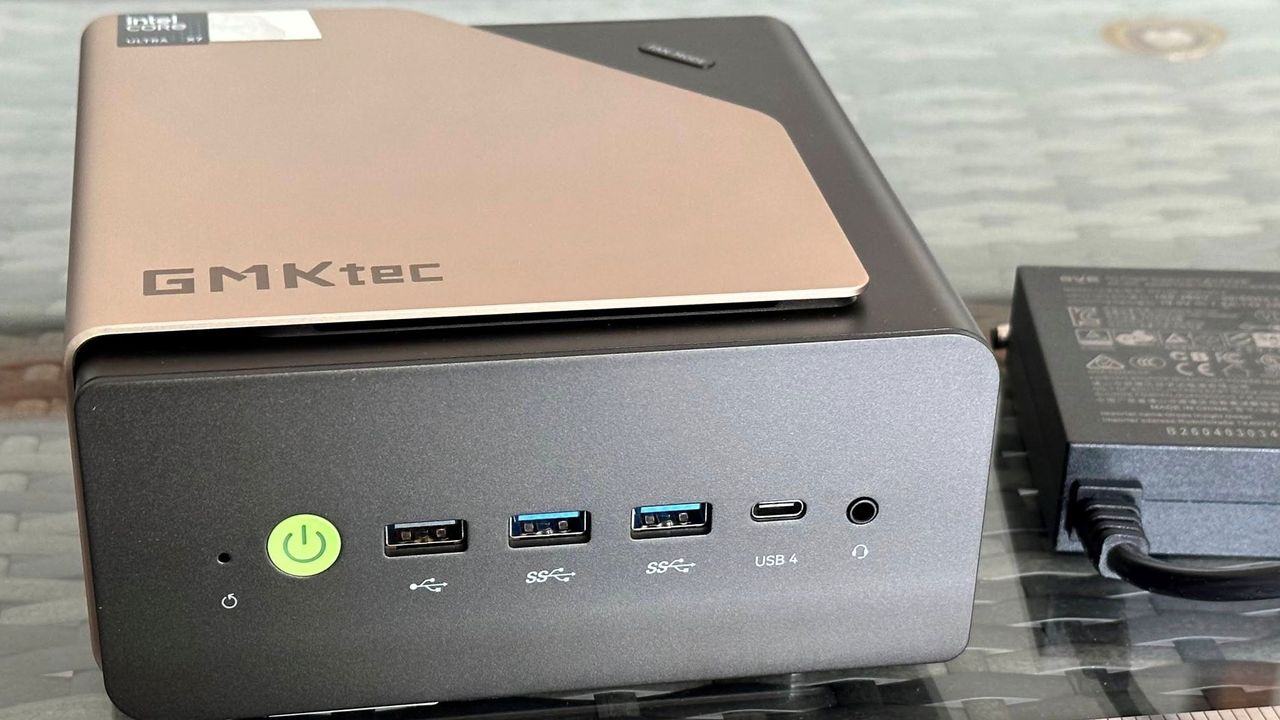
💡See whether Intel's Panther Lake mini PC can deliver practical local AI performance at a compact size.
⚡ 30-Second TL;DR
What Changed
Built around Intel's 18A Panther Lake silicon
Why It Matters
The Evo-T2 could make local AI experimentation more accessible in a compact form factor. Its practical value for developers will depend on real-world inference performance, software compatibility, thermals, and pricing.
What To Do Next
Benchmark your target local models with Ollama on the Evo-T2 before considering it for an edge or developer workstation.
Who should care:Developers & AI Engineers
Key Points
- •Built around Intel's 18A Panther Lake silicon
- •Includes 64GB of LPDDR5X-8533 memory
- •Designed for AI workloads, office productivity, and gaming
🧠 Deep Insight
AI-generated analysis for this event.
🔑 Enhanced Key Takeaways
- •Panther Lake utilizes Intel's 18A process node, marking a significant transition to RibbonFET gate-all-around transistors and PowerVia backside power delivery.
- •The Evo-T2 integrates a next-generation NPU (Neural Processing Unit) specifically optimized for local execution of large language models (LLMs) with sub-10 billion parameters.
- •Thermal management in the Evo-T2 employs a vapor chamber cooling solution designed to sustain high AI inference loads without thermal throttling in a sub-1-liter chassis.
- •The LPDDR5X-8533 memory configuration is soldered directly to the PCB to minimize signal latency, which is critical for the high-bandwidth requirements of on-device AI processing.
- •Intel's Panther Lake architecture in this device features a disaggregated chiplet design, separating the compute tile from the I/O and graphics tiles to improve yield and power efficiency.
📊 Competitor Analysis▸ Show
| Feature | GMKtec Evo-T2 (Panther Lake) | Apple Mac Mini (M4 Pro) | Minisforum EliteMini (AMD Ryzen AI) |
|---|---|---|---|
| Architecture | Intel 18A (Panther Lake) | Apple Silicon (M4 Pro) | AMD Zen 5 / XDNA 2 |
| AI TOPS | ~80+ TOPS (NPU) | ~45 TOPS (NPU) | ~50 TOPS (NPU) |
| Memory | 64GB LPDDR5X-8533 | Up to 64GB Unified | Up to 64GB DDR5-5600 |
| Target Market | AI Enthusiast/Prosumer | Creative Professional | General Productivity/Gaming |
🛠️ Technical Deep Dive
- Silicon Node: Intel 18A (1.8nm class) utilizing RibbonFET and PowerVia.
- NPU Performance: Designed to exceed 80 TOPS for local AI acceleration.
- Memory Interface: 128-bit wide LPDDR5X-8533 bus providing high memory bandwidth for integrated graphics and NPU tasks.
- Connectivity: Includes dual Thunderbolt 5 ports for external GPU support and high-speed data transfer.
- Power Delivery: Advanced power management integrated into the SoC to dynamically balance power between CPU, GPU, and NPU tiles.
🔮 Future ImplicationsAI analysis grounded in cited sources
Mini PCs will replace entry-level workstations for local AI development.
The combination of high-bandwidth memory and dedicated NPU silicon allows compact devices to handle inference tasks previously reserved for discrete GPU systems.
Intel 18A will become the standard for high-efficiency compact computing.
The power efficiency gains from RibbonFET and PowerVia allow for higher performance density in constrained thermal envelopes like the Evo-T2.
⏳ Timeline
2024-02
Intel announces 18A process node readiness and foundry roadmap.
2025-06
Intel confirms Panther Lake architecture details and focus on AI-PC integration.
2026-03
GMKtec announces partnership with Intel for next-gen compact workstation development.
2026-07
Official unveiling of the Evo-T2 mini PC at the Global Tech Summit.
📰
Weekly AI Recap
Read this week's curated digest of top AI events →
👉Related Updates

AI-curated news aggregator. All content rights belong to original publishers.
Original source: Tom's Hardware ↗