Reflections on the AI era: Infrastructure and Profitability
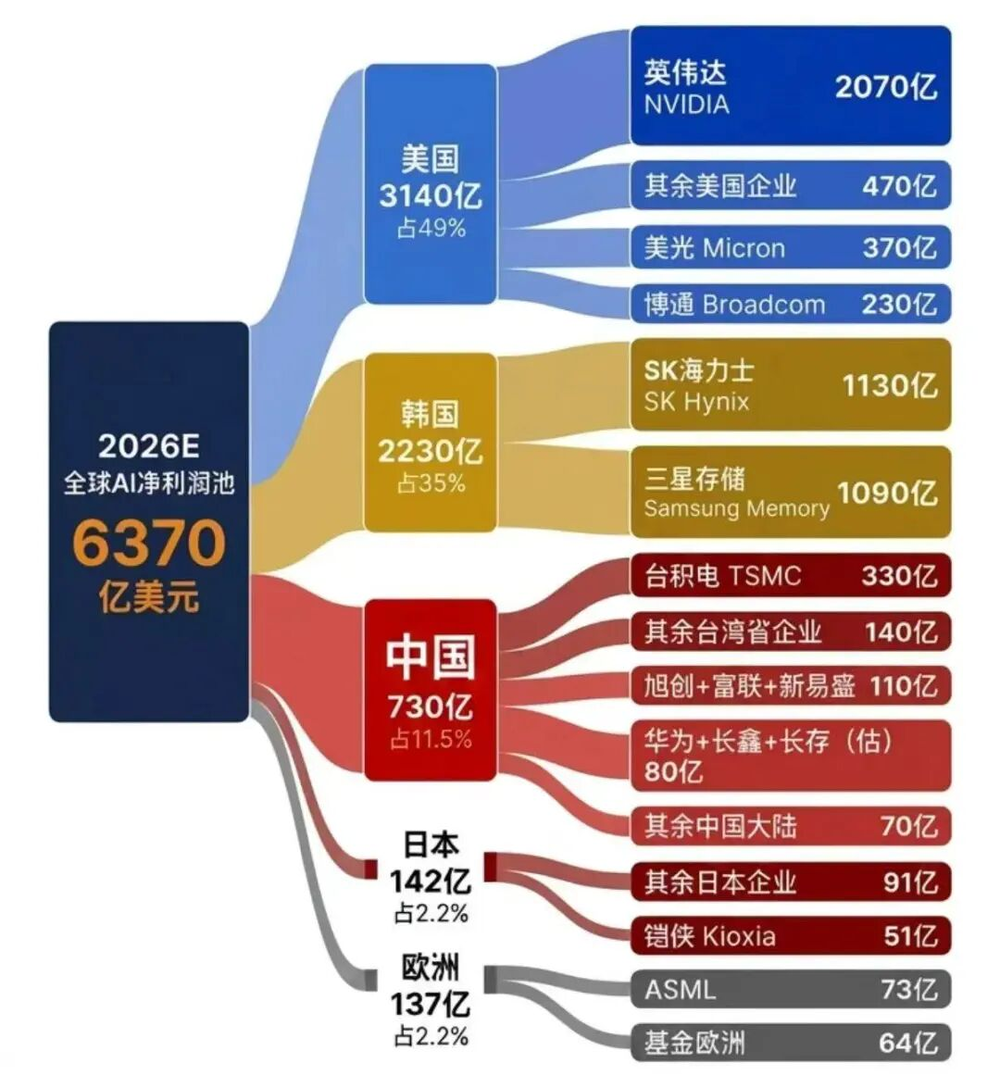
💡Critical analysis of AI profitability and the sustainability of the current infrastructure-heavy business model.
⚡ 30-Second TL;DR
What Changed
AI infrastructure (chips, cloud) is in a super-cycle, driven by massive capital expenditure from tech giants.
Why It Matters
Investors and founders should be cautious about the 'AI+' application layer's ability to generate immediate cash flow compared to the infrastructure layer.
What To Do Next
Analyze your unit economics for AI inference; ensure your application's value proposition justifies the underlying compute costs.
Key Points
- •AI infrastructure (chips, cloud) is in a super-cycle, driven by massive capital expenditure from tech giants.
- •There is a significant gap between the profitability of hardware suppliers (Nvidia, TSMC) and AI application developers.
- •The author questions the sustainability of current business models given the high cost of AI inference and training.
- •AI is evolving from a frontier technology into a pillar industry, but market growth remains highly polarized.
🧠 Deep Insight
AI-generated analysis for this event — not the original article.
🔑 Enhanced Key Takeaways
- •The 'AI-to-Revenue' conversion ratio has stagnated, with recent industry reports indicating that for every $1 spent on AI infrastructure, less than $0.20 is currently being recouped in direct application revenue as of mid-2026.
- •Energy constraints have emerged as the primary bottleneck for infrastructure expansion, with major hyperscalers now prioritizing the acquisition of dedicated nuclear power assets to bypass grid limitations.
- •The shift toward 'Small Language Models' (SLMs) and edge-AI deployment is accelerating as companies attempt to reduce the prohibitive costs of cloud-based inference identified in the original analysis.
- •Capital expenditure patterns are shifting from pure compute acquisition to 'full-stack' vertical integration, where tech giants are increasingly designing custom silicon and proprietary interconnects to reduce reliance on third-party hardware vendors.
- •Regulatory scrutiny regarding AI data center environmental impact has begun to influence stock valuations, with institutional investors increasingly factoring 'carbon-per-query' metrics into their long-term profitability models.
🛠️ Technical Deep Dive
- Transition from monolithic Transformer architectures to Mixture-of-Experts (MoE) models to optimize inference costs by activating only a fraction of parameters per token.
- Implementation of FP8 and INT4 quantization techniques becoming standard in production environments to maximize throughput on existing GPU clusters.
- Adoption of liquid cooling solutions in high-density racks to support TDP (Thermal Design Power) requirements exceeding 1000W per chip.
- Integration of specialized AI accelerators (NPUs) into edge devices to shift inference workloads away from centralized data centers.
🔮 Future ImplicationsAI analysis grounded in cited sources
⏳ Timeline
Weekly AI Recap
Read this week's curated digest of top AI events →
👉Related Updates

AI-curated news aggregator. All content rights belong to original publishers.
Original source: 虎嗅 ↗
This is a summary, not the original. Read the source, or get the weekly briefing.
Weekly AI briefing
One email a week. Unsubscribe anytime.