Micron invests 1.5 trillion yen to expand Hiroshima AI facility
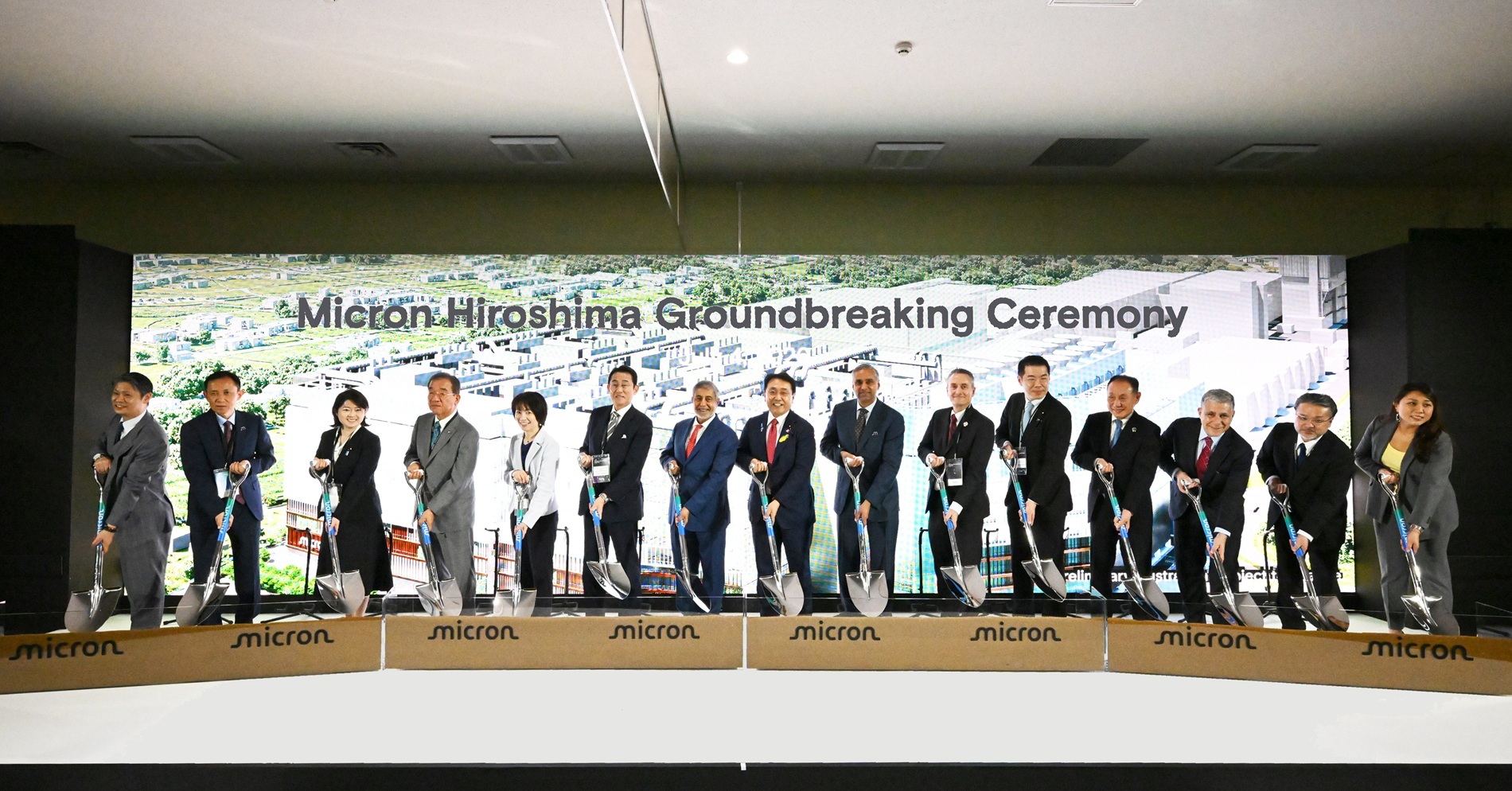
💡Major infrastructure investment by Micron highlights the critical supply bottleneck for AI-grade memory.
⚡ 30-Second TL;DR
What Changed
Micron is investing 1.5 trillion yen into its Hiroshima manufacturing site.
Why It Matters
This significant capital expenditure signals a long-term commitment to securing the memory supply chain necessary for high-performance AI hardware.
What To Do Next
Monitor Micron's HBM (High Bandwidth Memory) production roadmap to adjust your hardware procurement strategy for AI clusters.
Key Points
- •Micron is investing 1.5 trillion yen into its Hiroshima manufacturing site.
- •The expansion focuses on building a new cleanroom to scale production capacity.
- •Manufacturing equipment installation is slated to begin in late 2028.
🧠 Deep Insight
AI-generated analysis for this event — not the original article.
🔑 Enhanced Key Takeaways
- •The Japanese government has pledged significant subsidies to support this expansion, aligning with national efforts to secure a domestic supply chain for advanced semiconductors.
- •This investment is specifically targeted at accelerating the production of High Bandwidth Memory (HBM), which is critical for training and operating large-scale AI models.
- •Micron's Hiroshima facility serves as the company's primary global hub for DRAM manufacturing and R&D, making it central to their 1-gamma process node transition.
- •The expansion is expected to create thousands of high-skilled jobs in the Chugoku region, bolstering the local semiconductor ecosystem.
- •The project is part of a broader multi-year capital expenditure strategy by Micron to increase its global market share in the AI memory sector against South Korean rivals.
📊 Competitor Analysis▸ Show
| Feature | Micron (Hiroshima) | Samsung Electronics | SK Hynix |
|---|---|---|---|
| Primary AI Focus | HBM3E / HBM4 | HBM3E / HBM4 | HBM3E / HBM4 |
| Manufacturing Hub | Japan (Hiroshima) | South Korea | South Korea |
| Market Strategy | Aggressive capacity expansion | Vertical integration | First-mover advantage in HBM |
🛠️ Technical Deep Dive
- The facility is designed to support the transition to 1-gamma (1γ) node technology, which utilizes Extreme Ultraviolet (EUV) lithography.
- The new cleanroom architecture is optimized for the high-density stacking requirements of HBM4, which involves 12-high and 16-high DRAM die stacks.
- Implementation includes advanced thermal management systems to handle the increased power density associated with next-generation AI memory modules.
- Integration of automated material handling systems (AMHS) to increase wafer throughput and reduce contamination risks during the multi-step HBM fabrication process.
🔮 Future ImplicationsAI analysis grounded in cited sources
⏳ Timeline
Weekly AI Recap
Read this week's curated digest of top AI events →
👉Related Updates

AI-curated news aggregator. All content rights belong to original publishers.
Original source: ITmedia AI+ (日本) ↗
This is a summary, not the original. Read the source, or get the weekly briefing.
Weekly AI briefing
One email a week. Unsubscribe anytime.