Redefining the 'Driver' as 'Controller' in AI Vehicles
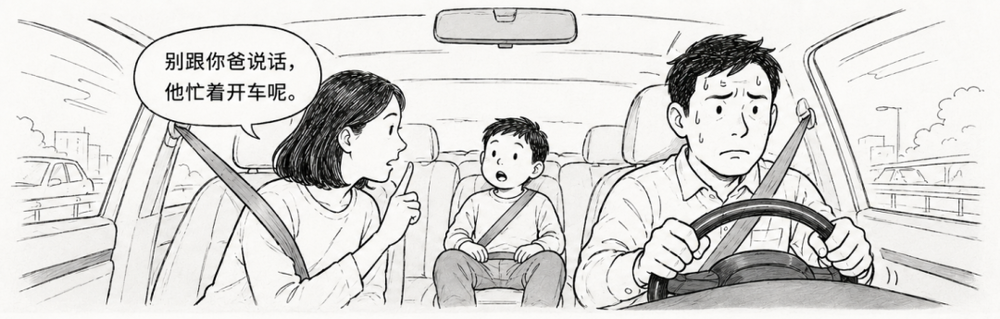
Learn how to design HMI for AI systems that prioritize user trust and intent over raw data output.
30-Second TL;DR
What Changed
Human roles in vehicles are shifting from 'Driving' to 'Controlling'.
Why It Matters
This shift requires AI developers to focus on 'explainable AI' and user-centric design to bridge the gap between machine capability and human trust.
What To Do Next
Incorporate 'explainability' features into your AI agent interfaces to help users understand system decisions and build long-term trust.
Key Points
- •Human roles in vehicles are shifting from 'Driving' to 'Controlling'.
- •Current HMI designs are still focused on mechanical data rather than system intent.
- •Future HMI should prioritize transparency, trust, and life-context over raw vehicle performance data.
Deep Insight
Background and context from public sources — not the original article. 23 sources cited.
Enhanced Key Takeaways
- •The transition from 'driver' to 'controller' in autonomous vehicles introduces challenges such as cognitive overload and passive fatigue, necessitating the development of adaptive Human-Machine Interface (HMI) strategies that dynamically adjust based on driver state, driving context, and automation level.
- •Future HMI designs are evolving beyond traditional buttons and screens to incorporate AI-powered multimodal interfaces, leveraging visual displays (e.g., augmented reality heads-up displays, pillar-to-pillar screens), auditory feedback (e.g., natural language processing, conversational AI), and haptic feedback to create intuitive, context-aware, and even emotion-aware user experiences.
- •Building and maintaining user trust in autonomous vehicles is paramount, requiring HMIs to provide transparent, real-time, and context-sensitive explanations of the vehicle's actions, intentions, and limitations, especially during critical situations or when requesting a transition of control back to the human.
- •Advanced driver monitoring systems, utilizing biosensors and AI (e.g., eye tracking, facial expressions, heart rate variability), are becoming crucial for continuously assessing the human operator's readiness, attention, and cognitive/emotional state to ensure safe handovers and personalize the HMI experience.
- •The development of HMIs for autonomous vehicles faces significant challenges including the lack of universal standardization, the need to minimize driver distraction, ensuring usability and accessibility for diverse user groups, and integrating seamlessly with complex software-defined vehicle architectures.
Technical Deep Dive
- AI and Machine Learning: Utilized for powering decision-making algorithms, enabling adaptive interfaces that learn user preferences, facilitating emotion recognition systems, and driving predictive analytics for intuitive user experiences.
- Multimodal Interfaces: Integration of various communication channels including advanced visual displays (e.g., Augmented Reality Heads-Up Displays (AR-HUDs), pillar-to-pillar screens), sophisticated auditory feedback (e.g., natural language processing, conversational AI with Large Language Model (LLM) integration like ChatGPT), and haptic feedback systems.
- Driver State Monitoring (DSM): Employs a combination of sensors and AI to track physiological and behavioral indicators such as eye gaze patterns, pupil dilation, blink frequency, facial expressions, steering micro-corrections, reaction time delays, heart rate variability, and posture analysis to estimate cognitive load, attention, and emotional state.
- Context-Aware Computing: Systems designed to dynamically adjust the interface and information presentation based on real-time factors including the driver's state, current driving context, environmental conditions, and the vehicle's level of automation.
- Explainable AI (XAI): Focuses on providing transparent, real-time, and context-aware explanations of the autonomous vehicle's decisions and intentions to the user, often conceptualized using a '3W1H' (what, whom, when, how) approach to build trust and enhance situational awareness.
- User-Centered Design (UCD): A fundamental design philosophy that prioritizes the needs, preferences, and limitations of the human user throughout the HMI development process.
- Advanced Control Systems: Research includes integrating Adaptive Neuro-Fuzzy Inference Systems (ANFIS) with Deep Deterministic Policy Gradient (DDPG) reinforcement learning for real-time, online training of autonomous vehicle controllers.
- Sensor Fusion: The process of combining data from multiple sensors (e.g., cameras, radar, lidar) to create a more robust and comprehensive understanding of the vehicle's surroundings, which is then communicated via the HMI.
Future ImplicationsAI analysis grounded in cited sources
Timeline
- 1980sBasic automotive HMIs with analog controls for fundamental vehicle functions.
- 2000sIntroduction of multifunctional digital displays and touchscreens in automotive dashboards.
- 2005DARPA Grand Challenge significantly advances autonomous vehicle technology, setting the stage for more complex HMI needs.
- 2015Valeo introduces the Mobius HMI concept at CES, integrating touch displays into the steering wheel for non-driving tasks and safe takeovers.
- 2016Industry analysts highlight the need for a paradigm shift in HMI to build trust and manage transitions in autonomous vehicles.
- 2023A AAA survey reveals growing public distrust in self-driving cars, underscoring the critical role of HMI in fostering acceptance.
Sources (23)
Factual claims are grounded in the sources below. Forward-looking analysis is AI-generated interpretation.
Weekly AI Recap
Read this week's curated digest of top AI events →
AI-curated news aggregator. All content rights belong to original publishers.
Original source: 虎嗅 ↗
This is a summary, not the original. Read the source, or get the weekly briefing.
The weekly digest
One email a week. Unsubscribe anytime.