Razer updates Blade 18 with new Intel chips
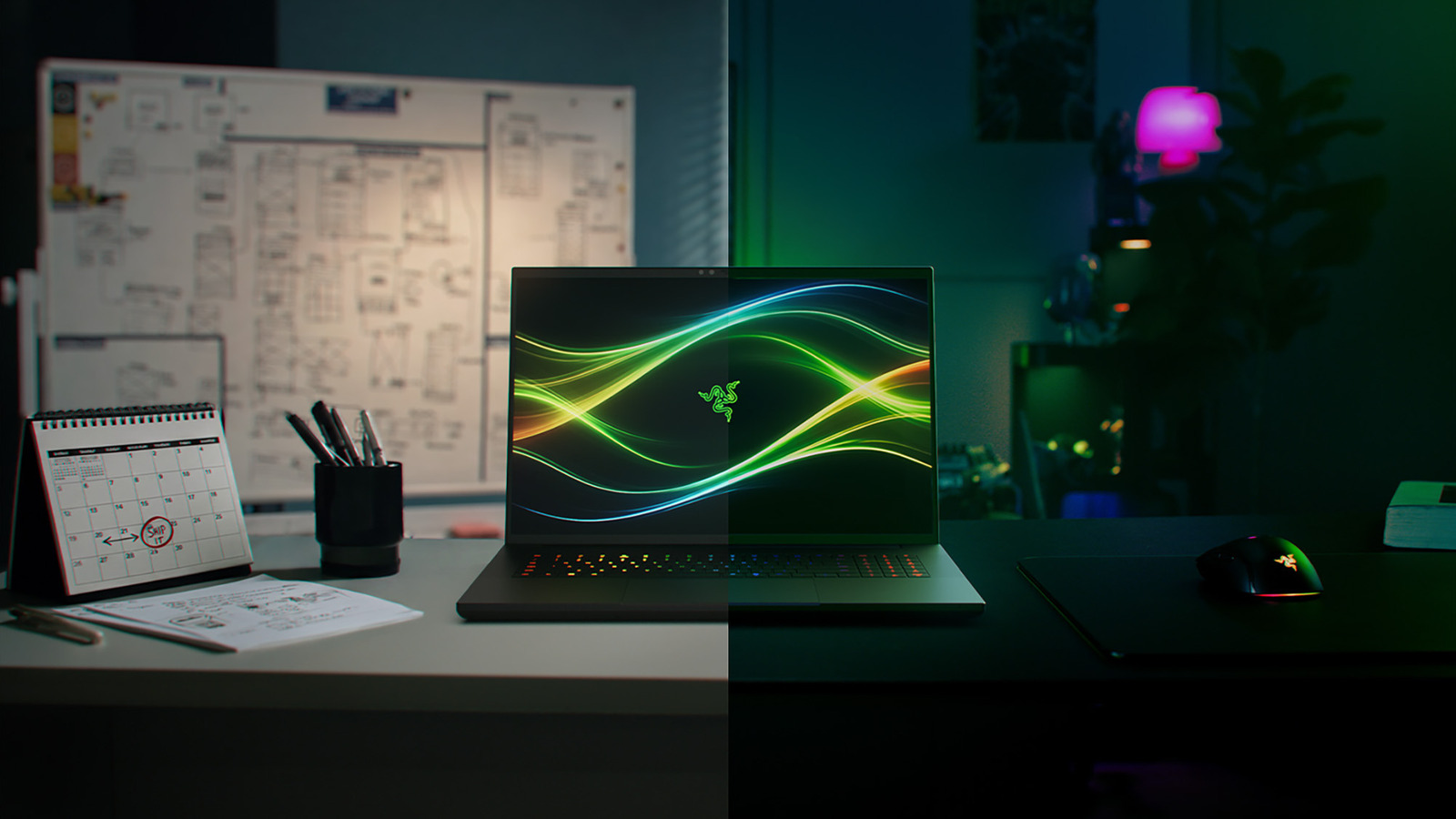
New high-performance mobile hardware featuring latest Intel silicon, critical for local AI development workflows.
30-Second TL;DR
What Changed
Blade 18 updated with Intel Core Ultra 9 290HX Plus
Why It Matters
The inclusion of the latest Intel Core Ultra chips signals the continued push for high-performance mobile hardware capable of handling demanding local AI workloads. The premium pricing reflects the current market demand for high-end mobile compute.
What To Do Next
Evaluate the NPU capabilities of the new Intel Core Ultra series for running local LLMs before investing in high-end mobile workstations.
Key Points
- •Blade 18 updated with Intel Core Ultra 9 290HX Plus
- •Specced-out configuration reaches $7,000 price point
- •Focus on high-performance computing for mobile users
Deep Insight
Background and context from public sources — not the original article. 13 sources cited.
Enhanced Key Takeaways
- •The new Intel Core Ultra 9 290HX Plus processor, part of the Arrow Lake-HX Refresh architecture, features 24 cores (8 P-cores, 16 E-cores) and was launched in March 2026.
- •The Blade 18's updated Mini-LED display offers a dual-mode experience, capable of 4K resolution at 240Hz or FHD+ at a blistering 440Hz, and boasts 20% better brightness than its 2025 predecessor.
- •Beyond gaming, the 2026 Razer Blade 18 is positioned as a desktop-class platform for AI developers, delivering up to 37% faster LLM inference and 2.2 times faster image generation locally, leveraging its integrated NPU and up to NVIDIA RTX 5090 GPU with 24GB VRAM.
- •The laptop incorporates advanced connectivity including Thunderbolt 5, Wi-Fi 7, and 2.5 Gb Ethernet, alongside a sophisticated vapor chamber cooling system to sustain high performance for demanding workloads.
- •The 2026 Razer Blade 18, with its high-end configurations, sees a price increase of $500 over last year's model, attributed to an ongoing RAM crisis.
Competitor Analysis
- Razer Blade 18 (2026)
- Intel Core Ultra 9 290HX Plus
- MSI Titan 18 HX AI (2026)
- Intel Ultra 9 285HX CPU
- Alienware 16 Area-51 (2026)
- Intel Ultra 9 275HX
- HP Omen Max 16 (2025/26 Refresh)
- Not specified (top-tier)
- Razer Blade 18 (2026)
- Up to NVIDIA GeForce RTX 5090 Laptop GPU (175W TGP, 24GB VRAM)
- MSI Titan 18 HX AI (2026)
- 24 GB RTX 5090 GPU
- Alienware 16 Area-51 (2026)
- RTX 5080 GPU
- HP Omen Max 16 (2025/26 Refresh)
- RTX 5090 (175W)
- Razer Blade 18 (2026)
- 18-inch dual-mode Mini-LED (UHD+ 240Hz / FHD+ 440Hz)
- MSI Titan 18 HX AI (2026)
- 18-inch (high refresh, likely Mini-LED)
- Alienware 16 Area-51 (2026)
- 16-inch
- HP Omen Max 16 (2025/26 Refresh)
- Not specified
- Razer Blade 18 (2026)
- Up to $7,000 (specced-out), $4,900 (RTX 5090 config)
- MSI Titan 18 HX AI (2026)
- $5,000+ (previous year's model, likely similar for 2026)
- Alienware 16 Area-51 (2026)
- Not specified
- HP Omen Max 16 (2025/26 Refresh)
- Described as offering top-tier specs at a lower price
- Razer Blade 18 (2026)
- 7.06 pounds
- MSI Titan 18 HX AI (2026)
- Heavy and bulky, significantly more cumbersome than Blade 18
- Alienware 16 Area-51 (2026)
- 7.49 lbs
- HP Omen Max 16 (2025/26 Refresh)
- Not specified
- Razer Blade 18 (2026)
- Desktop-class performance for gaming and AI, Thunderbolt 5, Wi-Fi 7, advanced cooling, premium unibody chassis
- MSI Titan 18 HX AI (2026)
- Extreme performance, AI-assisted cooling, OverBoost Ultra (up to 270W power limit), can outperform some desktop RTX 4090 systems
- Alienware 16 Area-51 (2026)
- Strong gaming performance, optional Cherry MX mechanical keyboard, extensive ports
- HP Omen Max 16 (2025/26 Refresh)
- Value meets performance, upgraded cooling, sustains high frame rates
| Feature/Pricing/Benchmarks | Razer Blade 18 (2026) | MSI Titan 18 HX AI (2026) | Alienware 16 Area-51 (2026) | HP Omen Max 16 (2025/26 Refresh) |
|---|---|---|---|---|
| CPU | Intel Core Ultra 9 290HX Plus | Intel Ultra 9 285HX CPU | Intel Ultra 9 275HX | Not specified (top-tier) |
| GPU | Up to NVIDIA GeForce RTX 5090 Laptop GPU (175W TGP, 24GB VRAM) | 24 GB RTX 5090 GPU | RTX 5080 GPU | RTX 5090 (175W) |
| Display | 18-inch dual-mode Mini-LED (UHD+ 240Hz / FHD+ 440Hz) | 18-inch (high refresh, likely Mini-LED) | 16-inch | Not specified |
| Price (High-end) | Up to $7,000 (specced-out), $4,900 (RTX 5090 config) | $5,000+ (previous year's model, likely similar for 2026) | Not specified | Described as offering top-tier specs at a lower price |
| Weight | 7.06 pounds | Heavy and bulky, significantly more cumbersome than Blade 18 | 7.49 lbs | Not specified |
| Key Selling Points | Desktop-class performance for gaming and AI, Thunderbolt 5, Wi-Fi 7, advanced cooling, premium unibody chassis | Extreme performance, AI-assisted cooling, OverBoost Ultra (up to 270W power limit), can outperform some desktop RTX 4090 systems | Strong gaming performance, optional Cherry MX mechanical keyboard, extensive ports | Value meets performance, upgraded cooling, sustains high frame rates |
Technical Deep Dive
- Intel Core Ultra 9 290HX Plus Processor:
- Architecture: Arrow Lake-HX Refresh, BGA 2114 socket.
- Manufacturing Process: 3 nm production node (TSMC N3B for CPU part), utilizing Foveros 3D packaging for chiplets.
- Core Configuration: 24 cores (8 Performance-cores, 16 Efficient-cores), 24 threads.
- Clock Speeds: P-core Max Turbo Frequency up to 5.5 GHz, E-core Max Turbo Frequency up to 4.7 GHz. P-core Base Frequency 2.7 GHz, E-core Base Frequency 1.8 GHz.
- Cache: 36 MB Intel Smart Cache (L3), 40 MB Total L2 Cache.
- TDP: Processor Base Power 55 W, Maximum Turbo Power 160 W.
- Memory Support: DDR5 6400 MT/s, dual-channel interface, with ECC memory support.
- PCI-Express: Gen 5 connection.
- Integrated Graphics: Intel Arc Xe-LPG Graphics with 64 Execution Units (EU), dynamic frequency ranging from 300 MHz to 2000 MHz.
- Neural Processing Unit (NPU): Integrated AI Boost delivering up to 13 TOPS (Int8) for AI acceleration. Combined with CPU and GPU, the total platform AI performance can reach up to 36 TOPS (Int8).
- Advanced Technologies: Includes Intel Thread Director, Intel Turbo Boost Max Technology 3.0, and support for AVX2 instructions.
- Razer Blade 18 (2026) Specifics:
- Display: 18-inch Mini-LED panel, offering dual-mode functionality for UHD+ (3840 x 2400) resolution at 240 Hz or FHD+ (1920 x 1200) at 440 Hz. It covers 100% of the DCI-P3 color space and provides 20% better brightness compared to the 2025 model.
- Cooling: Features an advanced vapor chamber cooling system complemented by a refined multi-fan design for sustained high-performance workloads.
- Connectivity: Equipped with Thunderbolt 5, Wi-Fi 7, 2.5 Gb Ethernet, HDMI 2.1 output, and a UHS-II SD card reader.
- Audio: Integrates a six-speaker system powered by THX Spatial Audio+.
- Chassis: Constructed from a precision-milled unibody aluminum block, finished with a sand-blasted texture and anodized coating for durability and a premium feel.
Future ImplicationsAI analysis grounded in cited sources
Timeline
- 2023-02Razer Blade 18 (first 18-inch model) launched with Intel Core i9-13950HX and Nvidia RTX 4080/4090, featuring the world's first Thunderbolt 5 in a gaming laptop.
- 2024-04Razer Blade 18 detailed with Intel Core i9-14900HX and RTX 4090, introducing an 18-inch 4K 200Hz display.
- 2026-03Razer Blade 18 (Intel Core Ultra 9 275HX) reviewed, highlighting its unique dual-mode display (4K 240Hz / FHD+ 440Hz).
- 2026-03Intel Core Ultra 9 290HX Plus processor, based on Arrow Lake-HX architecture, is launched.
- 2026-05Razer refreshes the Blade 18 with the new Intel Core Ultra 9 290HX Plus processor and up to NVIDIA GeForce RTX 5090 Laptop GPU.
Sources (13)
Factual claims are grounded in the sources below. Forward-looking analysis is AI-generated interpretation.
Weekly AI Recap
Read this week's curated digest of top AI events →
Related Updates

AI-curated news aggregator. All content rights belong to original publishers.
Original source: Engadget ↗
This is a summary, not the original. Read the source, or get the weekly briefing.
The weekly digest
One email a week. Unsubscribe anytime.