Trump Announces a New AI Force
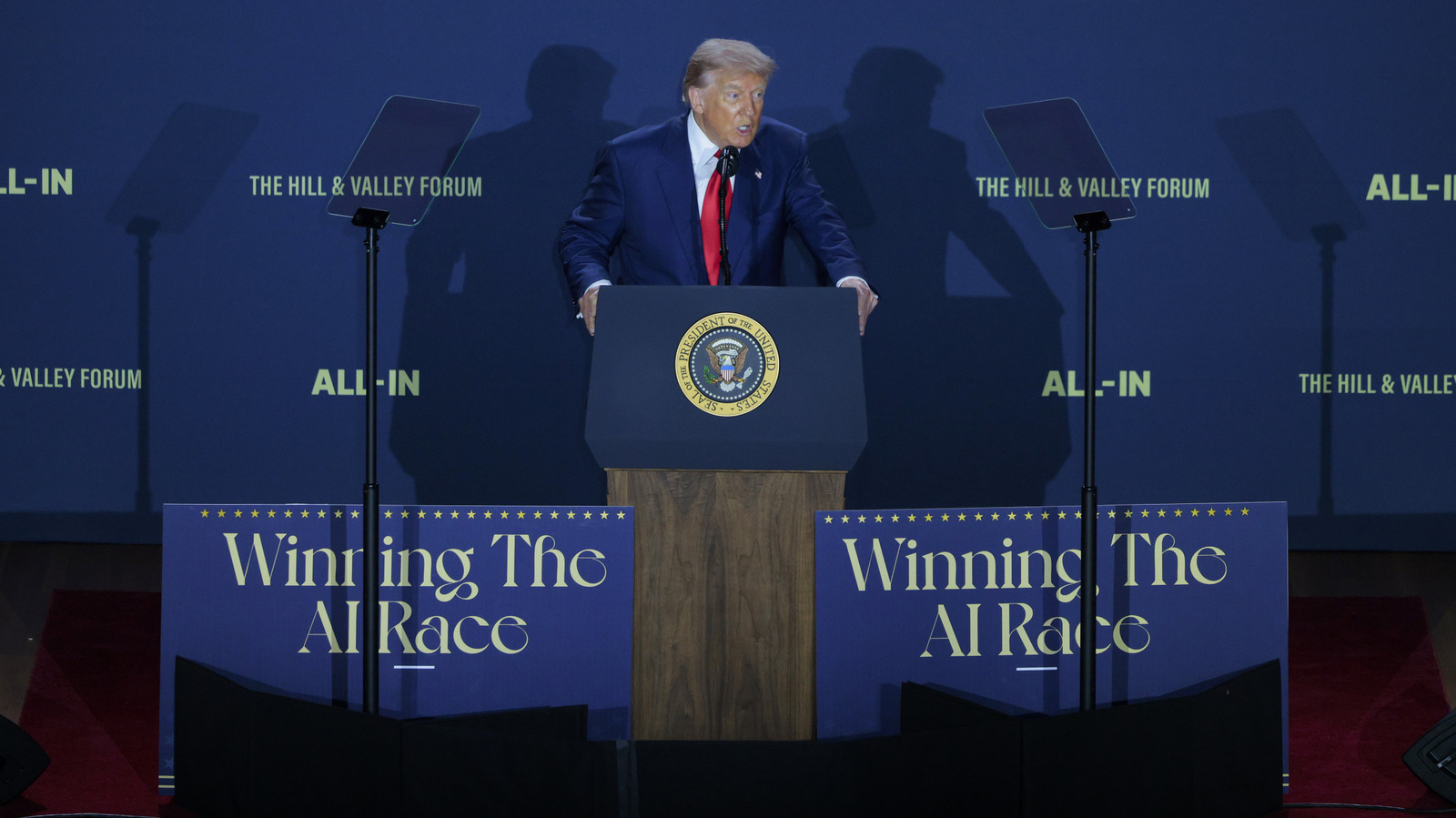
A proposed US AI agency could reshape public-sector procurement, regulation, and research priorities.
30-Second TL;DR
What Changed
Trump said an AI czar will soon be appointed
Why It Matters
A centralized AI office could influence federal procurement, regulation, research priorities, and national-security policy. The lack of detail makes the practical impact uncertain for now.
What To Do Next
Track the AI Force appointment and subsequent procurement announcements for changes to US government AI compliance requirements.
Key Points
- •Trump said an AI czar will soon be appointed
- •The proposed AI Force is described as a new government agency
- •The scope, budget, authority, and launch timeline remain unspecified
Deep Insight
Background and context from public sources — not the original article. 10 sources cited.
Enhanced Key Takeaways
- •The initiative is explicitly modeled after the U.S. Space Force established during Trump's first term, though the administration has not clarified whether it will operate as a military branch, civilian enforcement agency, or inter-agency coordinator.
- •The announcement directly rebuffs recent calls for frontier AI slowdowns from tech leaders, including a proposal by Anthropic CEO Dario Amodei and backed by OpenAI and xAI leadership, framing safety pauses as a threat to beating China.
- •Instead of introducing new regulatory licensing frameworks or restrictive compliance rules, the administration intends to enforce standards against malicious AI use through existing civil and criminal statutes.
- •The new czar will fill a vacancy left by venture capitalist David Sacks, who previously served as the White House AI and Crypto Czar before stepping down in March 2026 after hitting the 130-day Special Government Employee service limit.
- •The AI Force builds on a prior June 2026 executive order that created a voluntary 30-day cybersecurity pre-screening process for frontier models, which was reduced from an initial 90-day proposal after industry pushback.
Future ImplicationsAI analysis grounded in cited sources
Timeline
- 2024-12David Sacks appointed as White House AI and Crypto Czar
- 2026-03David Sacks steps down after exhausting 130-day Special Government Employee service limit
- 2026-06Trump administration issues executive order creating a voluntary 30-day frontier model pre-screening window
- 2026-09Trump announces creation of the AI Force and plans to appoint a new AI Czar
Sources (10)
Factual claims are grounded in the sources below. Forward-looking analysis is AI-generated interpretation.
Weekly AI Recap
Read this week's curated digest of top AI events →
AI-curated news aggregator. All content rights belong to original publishers.
Original source: Engadget ↗
This is a summary, not the original. Read the source, or get the weekly briefing.
The weekly digest
One email a week. Unsubscribe anytime.