🇨🇳cnBeta (Full RSS)•Stalecollected in 20m
Physics Laws Expose Realistic AI Images
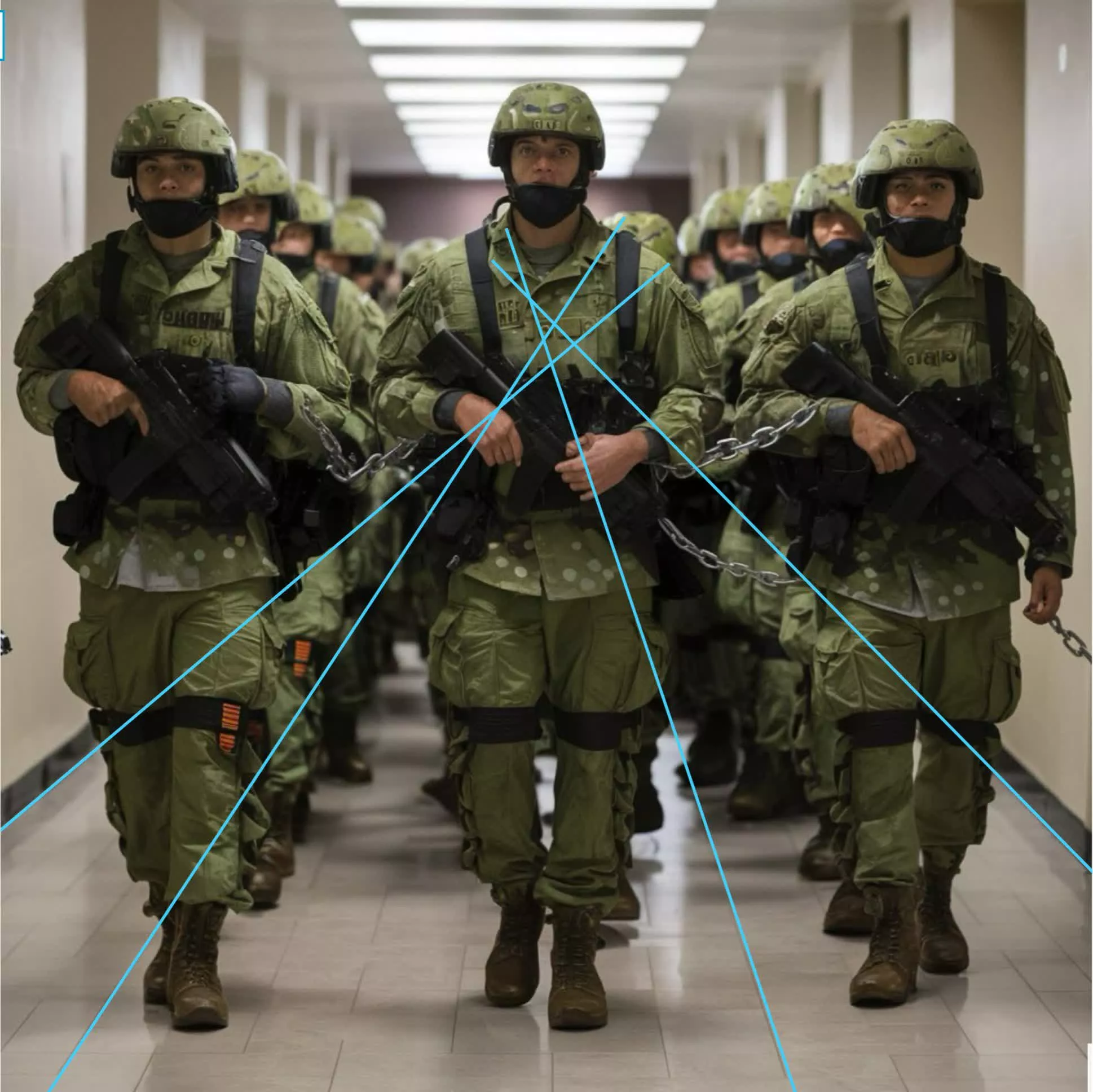
💡Science paper: Physics beats eye for spotting AI fakes—upgrade your detection stack
⚡ 30-Second TL;DR
What Changed
AI images now fool human eyes with fixed artifacts
Why It Matters
Strengthens forensic tools against deepfakes in media and social platforms. Guides developers to build physics-aware authenticity checkers.
What To Do Next
Integrate Specularity Index or lighting consistency checks into your image auth pipeline using OpenCV.
Who should care:Researchers & Academics
Key Points
- •AI images now fool human eyes with fixed artifacts
- •Models lack true understanding of real-world physics
- •Science study validates light/geometry for detection
- •Early flaws like noise and hands engineered away
🧠 Deep Insight
AI-generated analysis for this event.
🔑 Enhanced Key Takeaways
- •Researchers have identified that AI models struggle specifically with 'specular highlights' and 'shadow consistency' in reflective surfaces, which serve as high-fidelity forensic markers.
- •The detection methodology leverages 'inverse rendering' techniques to reconstruct 3D scenes from 2D images, highlighting discrepancies between the AI's generated geometry and actual physical light transport.
- •This approach shifts the detection paradigm from identifying pixel-level artifacts (which are easily patched by adversarial training) to identifying fundamental violations of physical laws that are computationally expensive for current diffusion models to simulate.
🛠️ Technical Deep Dive
- •The detection framework utilizes a 'Physical Consistency Score' (PCS) based on the analysis of light source positioning relative to surface normals.
- •Implementation involves extracting surface geometry using depth estimation models and comparing the resulting shading against the expected Lambertian or specular reflection models.
- •The study highlights that while diffusion models excel at texture synthesis, they lack a latent representation of 3D scene graph constraints, leading to 'light-source-geometry mismatch' in complex environments.
🔮 Future ImplicationsAI analysis grounded in cited sources
Adversarial training will shift toward 'Physics-Informed Neural Networks' (PINNs).
To counter physics-based detection, developers will likely integrate physical constraints directly into the loss functions of generative models.
Forensic detection tools will move from binary classifiers to geometric verification engines.
As pixel-based detection becomes obsolete, the industry will prioritize tools that verify the 3D structural integrity of generated content.
⏳ Timeline
2024-03
Initial research into 'geometric hallucinations' in diffusion models published.
2025-06
Development of light-consistency forensic benchmarks for synthetic media.
2026-02
Science journal publication detailing the physics-based detection framework.
📰
Weekly AI Recap
Read this week's curated digest of top AI events →
👉Related Updates
Same topic
Explore #deepfake-detection
Same product
More on ai-image-generators
Same source
Latest from cnBeta (Full RSS)

Microsoft plans to transform Minecraft into a global creator platform
cnBeta (Full RSS)•Aug 1

SpaceX Rocket Debris to Impact Moon
cnBeta (Full RSS)•Aug 1

Apple warns of potential AI compute resource shortages
cnBeta (Full RSS)•Aug 1

ShieldFont uses obfuscated typography to block AI scrapers
cnBeta (Full RSS)•Aug 1
AI-curated news aggregator. All content rights belong to original publishers.
Original source: cnBeta (Full RSS) ↗