Personalized mRNA Cancer Vaccine Clears Phase 3 Hurdle
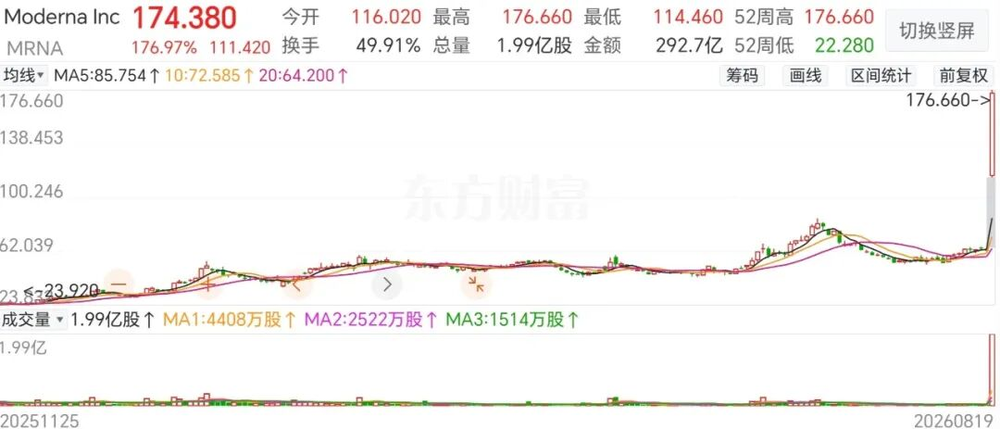
💡A 1,137-patient Phase 3 result gives personalized mRNA oncology its strongest clinical validation yet.
⚡ 30-Second TL;DR
What Changed
The randomized global Phase 3 trial enrolled 1,137 patients and compared combination therapy with pembrolizumab alone.
Why It Matters
This is an important validation signal for personalized mRNA oncology and could accelerate investment in tumor sequencing, antigen prediction, and individualized manufacturing. However, the result comes from a relatively immunogenic cancer type, so performance across other cancers remains uncertain.
What To Do Next
Prototype a neoantigen-ranking workflow on public tumor-sequencing datasets, but benchmark its predictions against validated immunogenicity data before considering clinical use.
Key Points
- •The randomized global Phase 3 trial enrolled 1,137 patients and compared combination therapy with pembrolizumab alone.
- •Interim analysis showed statistically significant and clinically meaningful improvements in recurrence-free and distant metastasis-free survival.
- •mRNA-4157 is a personalized vaccine designed from each patient’s tumor mutations and encodes 34 selected neoantigens.
- •The platform is also being studied in non-small cell lung cancer, bladder cancer, and renal cell carcinoma.
🧠 Deep Insight
Background and context from public sources — not the original article. 31 sources cited.
🔑 Enhanced Key Takeaways
- •The personalized mRNA cancer vaccine, also known as V940 and intismeran autogene, is being jointly developed by Merck and Moderna, with both companies sharing costs and profits equally under a worldwide collaboration.
- •Five-year follow-up data from the Phase 2b KEYNOTE-942 trial demonstrated a sustained 49% reduction in the risk of recurrence or death and a 59% reduction in the risk of distant metastasis or death when mRNA-4157 was combined with pembrolizumab, compared to pembrolizumab alone.
- •The vaccine's design process involves whole-exome sequencing (WES) and RNA sequencing (RNA-seq) of a patient's tumor and blood samples, followed by an automated algorithm to select up to 34 neoantigens.
- •mRNA-4157/V940 received Breakthrough Therapy Designation from the U.S. Food and Drug Administration (FDA) in February 2023, based on the promising Phase 2b results.
- •The Phase 3 INTerpath-001 trial marks the first positive late-stage trial result for an mRNA-based cancer treatment and an individualized neoantigen therapy, signifying a landmark moment in cancer care.
📊 Competitor Analysis▸ Show
| Company/Collaboration | Product/Platform | Key Features | Target Cancers (Clinical Stage) | Latest Benchmarks/Results (if available) |
|---|---|---|---|---|
| Moderna & Merck | mRNA-4157 (V940) / Intismeran Autogene | Personalized mRNA vaccine, targets up to 34 neoantigens, combined with PD-1 inhibitor (Keytruda) | Melanoma (Phase 3 positive), NSCLC (Phase 3), Bladder, Renal Cell Carcinoma (Phase 2), Pancreatic, Gastric (Phase 1) | Phase 3: Statistically significant and clinically meaningful improvements in recurrence-free and distant metastasis-free survival in high-risk melanoma. Phase 2b (5-year follow-up): 49% reduction in recurrence/death risk, 59% reduction in distant metastasis/death risk in high-risk melanoma. |
| BioNTech (with Genentech/Roche) | iNeST (individualized Neoantigen Specific Immunotherapy) / Autogene Cevumeran | Personalized mRNA vaccine, integrates tumor sequencing, antigen prediction, and personalized vaccine design | Melanoma, Head and Neck Cancers, NSCLC, Pancreatic Cancer, Colorectal Cancer (Phase 2) | Memorial Sloan Kettering collaboration showed nearly 90% of pancreatic cancer patients whose immune systems responded to personalized mRNA vaccine were alive up to six years. |
| Gritstone bio | GRANITE | Personalized self-amplifying mRNA (saRNA) neoantigen vaccine, also uses adenoviral vectors | Colorectal Cancer (Phase 2/3), Advanced Metastatic Cancers (Phase 1) | Phase 2 for colorectal cancer missed primary endpoint (ctDNA response), but showed an early trend toward benefit in progression-free survival in high-risk patients. |
| Agenus Inc. | ASV® platform | Individualized vaccine platform targeting unique antigens in a patient's tumor | Various cancers (details not specified in search results) | Details not publicly available for comparison. |
| Dana-Farber Cancer Institute | NeoVax | Personalized peptide vaccine, identifies up to 20 mutant proteins (neoantigens) | Advanced Melanoma (Clinical Trials) | Safe, well-tolerated, long-lasting anti-tumor immune response and tumor control (around 4 years). |
🛠️ Technical Deep Dive
- mRNA-4157 (V940) is an individualized neoantigen therapy (INT) consisting of a single synthetic mRNA molecule.
- It encodes for up to 34 patient-specific neoantigens, which are unique mutations present in an individual patient's tumor.
- The design process involves analyzing the patient's tumor and healthy genes through whole-exome sequencing (WES) and RNA sequencing (RNA-seq) to identify these unique mutational signatures.
- An automated algorithm is used to select the most immunogenic neoantigens for inclusion in the vaccine.
- The mRNA sequences are encapsulated in solid lipid nanoparticles (LNPs) for stable delivery into the body.
- Upon administration (intramuscular injection), the RNA-encoded neoantigen sequences are translated endogenously, undergo natural cellular antigen processing and presentation, which is intended to elicit a specific T-cell immune response against cancer cells.
- The vaccine is designed to work in combination with pembrolizumab (Keytruda), where the vaccine trains the immune system to recognize tumor mutations, and Keytruda helps release the immune system's 'brakes' to enhance the attack.
🔮 Future ImplicationsAI analysis grounded in cited sources
⏳ Timeline
📎 Sources (31)
Factual claims are grounded in the sources below. Forward-looking analysis is AI-generated interpretation.
- medcitynews.com
- wikipedia.org
- merck.com
- merck.com
- targetedonc.com
- ascopubs.org
- washingtonpost.com
- aacrjournals.org
- q4cdn.com
- ajmc.com
- facebook.com
- facebook.com
- fiercebiotech.com
- japantimes.co.jp
- merck.com
- dana-farber.org
- biontech.com
- researchandmarkets.com
- trilinkbiotech.com
- fiercebiotech.com
- biospace.com
- precisionmedicineonline.com
- biopharmadive.com
- patsnap.com
- curemelanoma.org
- biopharmadive.com
- modernatx.com
- speshealth.com
- alkpositive.org
- rupress.org
- firstwordpharma.com
Weekly AI Recap
Read this week's curated digest of top AI events →
👉Related Updates
AI-curated news aggregator. All content rights belong to original publishers.
Original source: 虎嗅 ↗
This is a summary, not the original. Read the source, or get the weekly briefing.
Weekly AI briefing
One email a week. Unsubscribe anytime.