AI Maps China’s New Urban Industry Playbook
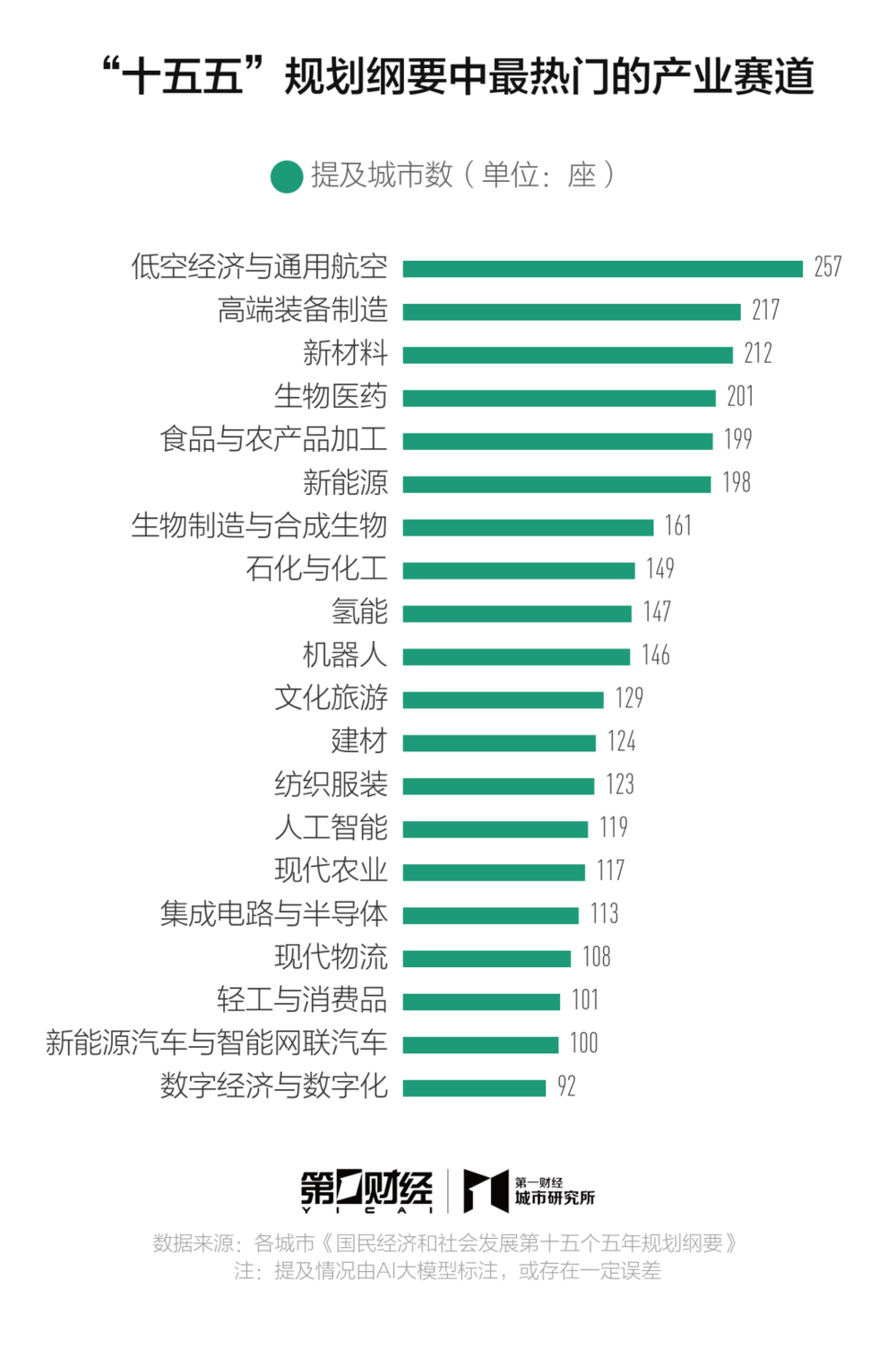
💡AI analysis of 291 city plans reveals where China’s next robotics and low-altitude economy opportunities may cluster.
⚡ 30-Second TL;DR
What Changed
Low-altitude economy is included in 257 of 291 city-level plans.
Why It Matters
The findings show how AI can turn millions of words of policy documents into structured signals for market and investment analysis. For AI companies, the broad convergence around robotics, low-altitude systems, and other future industries may increase competition for talent, pilots, and public-sector contracts.
What To Do Next
Build a document-mining pipeline with OCR, embeddings, and a controlled industry taxonomy to compare local policy priorities against your AI product’s target markets.
Key Points
- •Low-altitude economy is included in 257 of 291 city-level plans.
- •Among 285 comparable cities, each added and dropped roughly eight industry tracks between the two planning cycles.
- •Future-industry priorities such as synthetic biology, hydrogen energy, and robotics grew sharply from the previous five-year plan.
- •Cities using numeric industry-system labels increased from 89 to 143, compressing clusters and supply chains into shorthand portfolios.
🧠 Deep Insight
Background and context from public sources — not the original article. 17 sources cited.
🔑 Enhanced Key Takeaways
- •The 'low-altitude economy' in China encompasses economic activities in airspace generally below 1,000 meters, extending to 3,000 meters in designated corridors, including drone services, aerial tourism, advanced aircraft manufacturing, passenger transport, cargo delivery, and industrial inspection.
- •China's low-altitude economy exceeded 500 billion yuan (USD 69.15 billion) in 2023, with projections by the Civil Aviation Administration of China (CAAC) estimating its market size to reach RMB 1.5 trillion (approximately USD 211 billion) in 2025 and RMB 3.5 trillion by 2035.
- •The low-altitude economy was recognized as a national priority, included in China's national planning for next-generation transport in 2021, added to the list of strategic emerging industries in 2023, and explicitly listed as a strategic emerging industry in the 15th Five-Year Plan (2026-2030).
- •Beyond synthetic biology, hydrogen energy, and robotics, China's national framework for cultivating 'future industries' includes nine core sectors such as humanoid robots, quantum technology, 6G, brain-computer interfaces, nuclear fusion, gene therapy, and commercial aerospace.
- •Artificial intelligence is increasingly integrated into China's urban planning processes, moving from basic data integration to continuous fusion of foundational and emerging technologies, with applications in smart cities, land-use planning, transportation optimization, and environmental management, often leveraging tools like GeoAI.
🛠️ Technical Deep Dive
- AI in urban planning leverages machine learning algorithms, predictive analytics, and simulation for tasks like urban modeling and transportation optimization.
- Emerging tools such as GeoAI are utilized for spatial and geospatial urban data analysis, including 3D mapping and digital twin platforms for smart park planning and urban operations.
- Research into AI applications in urban planning has seen an 'explosive growth stage' from January 2023 to January 2025, with a growing focus on generative AI and explainable AI.
🔮 Future ImplicationsAI analysis grounded in cited sources
⏳ Timeline
📎 Sources (17)
Factual claims are grounded in the sources below. Forward-looking analysis is AI-generated interpretation.
Weekly AI Recap
Read this week's curated digest of top AI events →
👉Related Updates
AI-curated news aggregator. All content rights belong to original publishers.
Original source: 虎嗅 ↗
This is a summary, not the original. Read the source, or get the weekly briefing.
Weekly AI briefing
One email a week. Unsubscribe anytime.