Oracle’s Billion-Dollar AI Gamble
💡Oracle is trading software stability for AI scale—its debt, leases, GPUs, and OpenAI dependence reveal the real infrastr
⚡ 30-Second TL;DR
What Changed
Oracle 將未來戰略押注於 AI 算力需求,並參與由 Oracle、SoftBank 與 OpenAI 推動的 Stargate 計畫。
Why It Matters
Oracle’s strategy illustrates the financial and operational risks of scaling AI infrastructure ahead of confirmed demand. AI founders and enterprise architects should evaluate customer concentration, utilization guarantees, GPU depreciation, power availability, and financing costs before committing to similar capacity expansion.
What To Do Next
Before expanding GPU capacity, build a scenario model that stress-tests utilization, OpenAI-like customer concentration, GPU refresh cycles, 15-year lease costs, and power-price volatility.
Key Points
- •Oracle 將未來戰略押注於 AI 算力需求,並參與由 Oracle、SoftBank 與 OpenAI 推動的 Stargate 計畫。
- •公司公布的未來合約金額達 6,380 億美元,其中 OpenAI 合約約 3,000 億美元,預計自 2027 年起逐步履行。
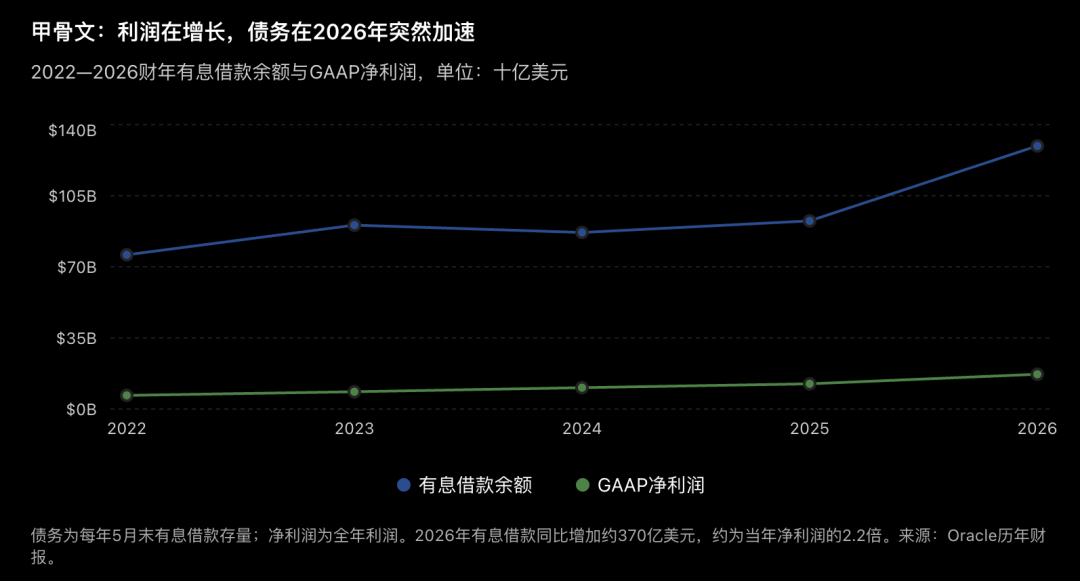
- •2026 財年 Oracle 資本支出達 557 億美元,自由現金流為負 237 億美元,有息借款增至 1,295 億美元。
- •Oracle 的信用評級降至 BBB-,同時承擔約 2,600 億美元長期租賃承諾,AI 客戶需求若放緩可能造成資料中心閒置與資產減值。
- •雲端基礎設施收入增長 77%,但新業務消耗現金的速度已超過傳統軟體業務產生現金的速度。
🧠 Deep Insight
AI-generated analysis for this event.
🔑 Enhanced Key Takeaways
- •Oracle has pioneered the use of modular, factory-built data centers that can be deployed rapidly to meet AI demand, significantly reducing construction timelines compared to traditional facilities.
- •The company's OCI (Oracle Cloud Infrastructure) architecture utilizes a unique 'RDMA over Converged Ethernet' (RoCE) network fabric, which allows for lower latency in massive GPU clusters compared to standard TCP/IP networking.
- •Oracle has secured strategic partnerships with sovereign governments to build 'Sovereign AI Clouds,' ensuring data residency and compliance for national security and public sector AI workloads.
- •The transition to AI infrastructure has led Oracle to shift its internal R&D focus away from legacy on-premise database maintenance toward autonomous database management systems optimized for vector search and AI-native applications.
- •Oracle's energy strategy now includes significant investments in small modular reactors (SMRs) and direct-to-grid power purchase agreements to sustain the extreme power density requirements of its latest AI superclusters.
📊 Competitor Analysis▸ Show
| Feature | Oracle (OCI) | AWS | Microsoft Azure | Google Cloud |
|---|---|---|---|---|
| Primary AI Differentiator | Bare-metal GPU performance & RoCE networking | Custom Silicon (Trainium/Inferentia) | OpenAI exclusive integration | TPU v5p/v6 infrastructure |
| Pricing Model | Aggressive egress fee waivers | Standard tiered egress | Enterprise-bundled discounts | Sustained use discounts |
| Target Market | High-performance AI training/Sovereign Cloud | General purpose/Enterprise scale | OpenAI ecosystem/Office 365 | Data analytics/MLOps focus |
🛠️ Technical Deep Dive
- OCI Supercluster architecture supports up to 64,000 NVIDIA Blackwell GPUs connected via a non-blocking, ultra-low latency RoCE v2 network fabric.
- Implementation of 'Oracle Autonomous Database' now includes native vector processing capabilities, allowing AI models to perform RAG (Retrieval-Augmented Generation) directly within the database layer.
- Utilization of liquid cooling technologies in high-density racks to support power densities exceeding 100kW per rack, necessary for next-generation AI training clusters.
- Deployment of 'Oracle Cloud VMware Solution' allows for hybrid cloud portability, enabling customers to migrate legacy workloads to OCI while simultaneously accessing AI training resources.
🔮 Future ImplicationsAI analysis grounded in cited sources
⏳ Timeline
Weekly AI Recap
Read this week's curated digest of top AI events →
👉Related Updates


AI-curated news aggregator. All content rights belong to original publishers.
Original source: 虎嗅 ↗