AI Debt Surge Deepens Global Bond Rout
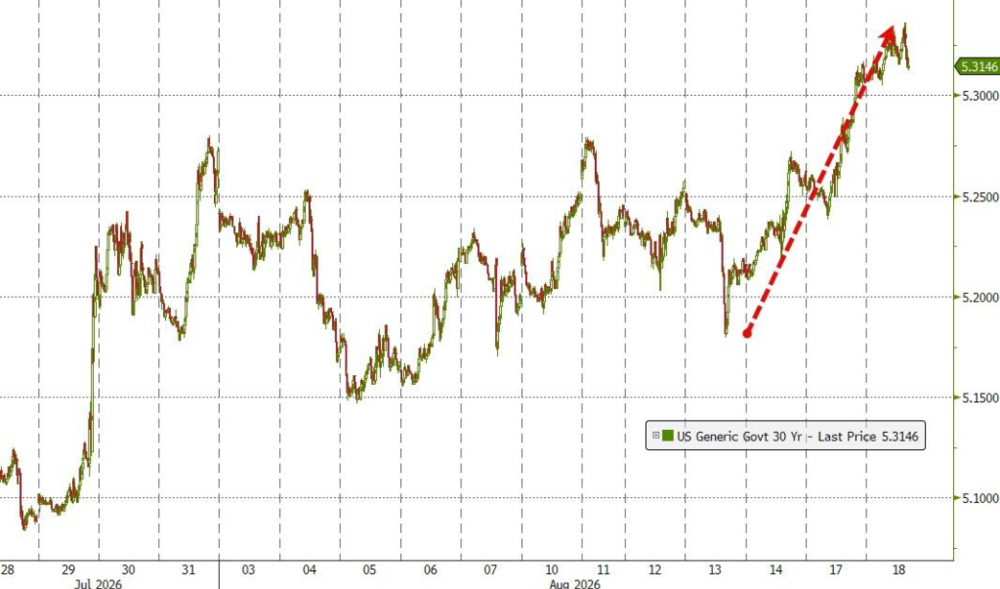
💡AI debt issuance is worsening bond-market stress, with direct implications for data-center and model-infrastructure cost
⚡ 30-Second TL;DR
What Changed
U.S. 30-year Treasury yields reached 5.33%, the highest level since 2007, while long-term yields also surged in France, Germany, the U.K., and Japan.
Why It Matters
Higher financing costs could make AI data centers, model training, and infrastructure expansion more expensive, especially for highly leveraged technology companies. AI startups may face tighter funding conditions and need to prioritize capital efficiency, shorter payback periods, and stronger cash-flow planning.
What To Do Next
Recalculate your next 12-month AI infrastructure budget using higher debt, cloud, and data-center financing costs before committing to expansion.
Key Points
- •U.S. 30-year Treasury yields reached 5.33%, the highest level since 2007, while long-term yields also surged in France, Germany, the U.K., and Japan.
- •AI-related debt issuance has reached $489 billion this year, exceeding the original full-year 2025 forecast of $322 billion.
- •U.S. investment-grade bond issuance has surpassed $1.5 trillion, with 2026 mega-cap technology issuance projected near $250 billion.
- •Long-term yields are being driven mainly by higher real yields and structural supply-demand imbalance rather than only inflation expectations.
- •High government interest costs may increase pressure on corporate borrowing, consumer credit, and fiscal policy.
🧠 Deep Insight
AI-generated analysis for this event.
🔑 Enhanced Key Takeaways
- •Institutional investors are increasingly shifting toward 'term premium' hedging strategies, as the compensation required for holding long-term debt has spiked to levels not seen since the 2008 financial crisis.
- •The surge in AI-related debt is heavily concentrated in 'hyperscaler' capital expenditure cycles, with data center energy infrastructure requirements accounting for nearly 30% of the new corporate bond issuance.
- •Central banks in the G7 are facing a 'fiscal dominance' dilemma, where the need to fund massive AI-driven industrial policy is conflicting with quantitative tightening (QT) programs, leading to reduced liquidity in secondary bond markets.
- •Pension funds and life insurers, traditionally the largest buyers of long-duration sovereign debt, have significantly reduced their allocation to 30-year Treasuries, citing the volatility induced by AI-sector credit risk contagion.
- •The correlation between AI-sector equity volatility and long-term bond yields has reached a 10-year high, suggesting that bond markets are now pricing in the potential for a 'tech-led' credit event.
🔮 Future ImplicationsAI analysis grounded in cited sources
⏳ Timeline
Weekly AI Recap
Read this week's curated digest of top AI events →
👉Related Updates

AI-curated news aggregator. All content rights belong to original publishers.
Original source: 虎嗅 ↗