London’s Taxi Legacy Meets Autonomous Driving
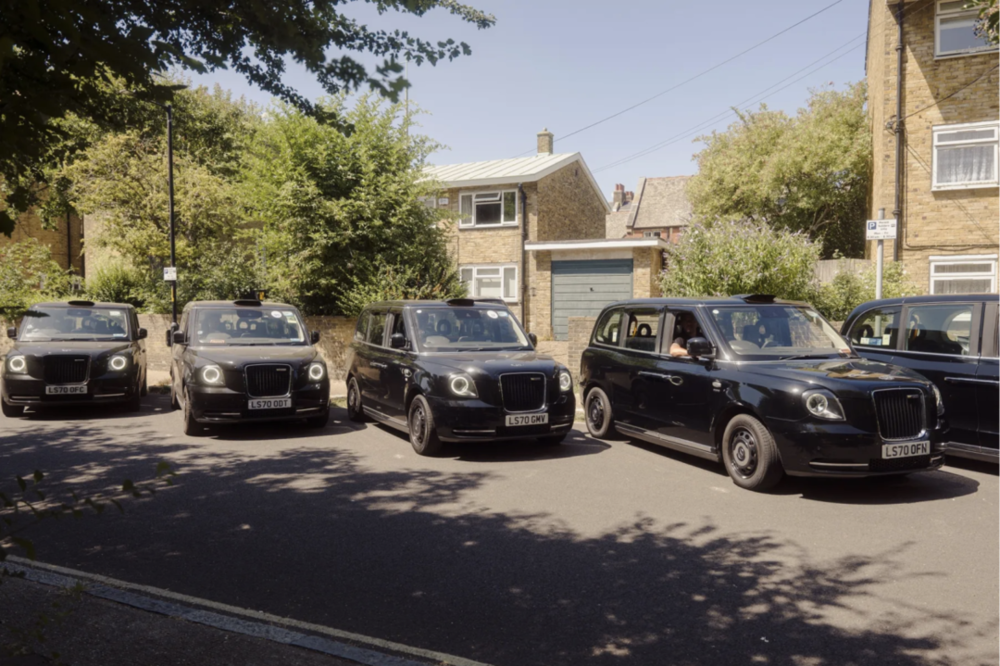
💡London’s toughest taxi test is becoming a real-world benchmark for robotaxi deployment, safety, and labor impact.
⚡ 30-Second TL;DR
What Changed
Waymo, Wayve, and Baidu are testing autonomous taxis in London, with services potentially launching by the end of the year pending government approval.
Why It Matters
London is a high-value test case for autonomous mobility because its dense streets, complex regulations, and highly trained taxi workforce create demanding real-world conditions. Successful deployment could accelerate robotaxi adoption, while unresolved liability and labor issues may slow regulation and commercialization.
What To Do Next
Prototype a London robotaxi evaluation set covering taxi-only lanes, rare addresses, emergency rerouting, and human handoff scenarios before deploying an autonomous mobility system.
Key Points
- •Waymo, Wayve, and Baidu are testing autonomous taxis in London, with services potentially launching by the end of the year pending government approval.
- •London’s licensed taxi drivers spend up to four years mastering the “Knowledge,” an intensive memorization of the city’s streets and routes.
- •The number of registered black cabs has fallen from more than 23,000 in 2011 to fewer than 16,000 today.
- •The GMB union is concerned about accident liability and warns autonomous vehicles could threaten the jobs of up to 300,000 private-hire drivers across the UK.
🧠 Deep Insight
AI-generated analysis for this event.
🔑 Enhanced Key Takeaways
- •The UK government introduced the Automated Vehicles (AV) Act in 2024, establishing a new legal framework for liability that shifts responsibility from human drivers to authorized entities or manufacturers during autonomous operation.
- •Wayve, a London-based startup, distinguishes itself from competitors by utilizing end-to-end deep learning models (AV2.0) that rely on generative AI rather than traditional rule-based mapping systems.
- •Transport for London (TfL) has implemented a 'sandbox' regulatory environment specifically for autonomous vehicle trials, requiring operators to share safety data and incident reports in real-time.
- •The decline in black cab numbers is partially attributed to the rise of ride-hailing platforms like Uber, which currently holds a significant market share in London, complicating the economic landscape for potential autonomous taxi adoption.
- •Insurance industry analysts in the UK are developing new 'product liability' insurance models to replace traditional motor insurance, specifically designed to cover software failures and cybersecurity breaches in autonomous fleets.
📊 Competitor Analysis▸ Show
| Feature | Waymo | Wayve | Baidu (Apollo) |
|---|---|---|---|
| Core Technology | Sensor-fusion/HD Maps | End-to-End AI/Generative | V2X/Cloud-based AI |
| London Strategy | Incremental testing | Native local deployment | Partnership-led |
| Primary Advantage | Proven safety record | Data efficiency | Scale/Infrastructure |
🛠️ Technical Deep Dive
- Wayve utilizes an end-to-end deep learning architecture that processes raw sensor data directly into driving commands, bypassing the need for high-definition maps.
- The system employs a transformer-based model capable of 'interpreting' complex urban environments, including non-standard road markings and unpredictable pedestrian behavior common in London.
- Waymo's London testing fleet utilizes a multi-modal sensor suite including LiDAR, radar, and high-resolution cameras, integrated with a proprietary machine learning stack for object detection and path planning.
- Baidu's Apollo platform integrates Vehicle-to-Everything (V2X) communication, allowing vehicles to receive traffic signal and infrastructure data to optimize navigation in dense urban traffic.
🔮 Future ImplicationsAI analysis grounded in cited sources
⏳ Timeline
Weekly AI Recap
Read this week's curated digest of top AI events →
👉Related Updates

AI-curated news aggregator. All content rights belong to original publishers.
Original source: 虎嗅 ↗