🇨🇳cnBeta (Full RSS)•Stalecollected in 10h
OpenAI Explains Goblin Model Quirk
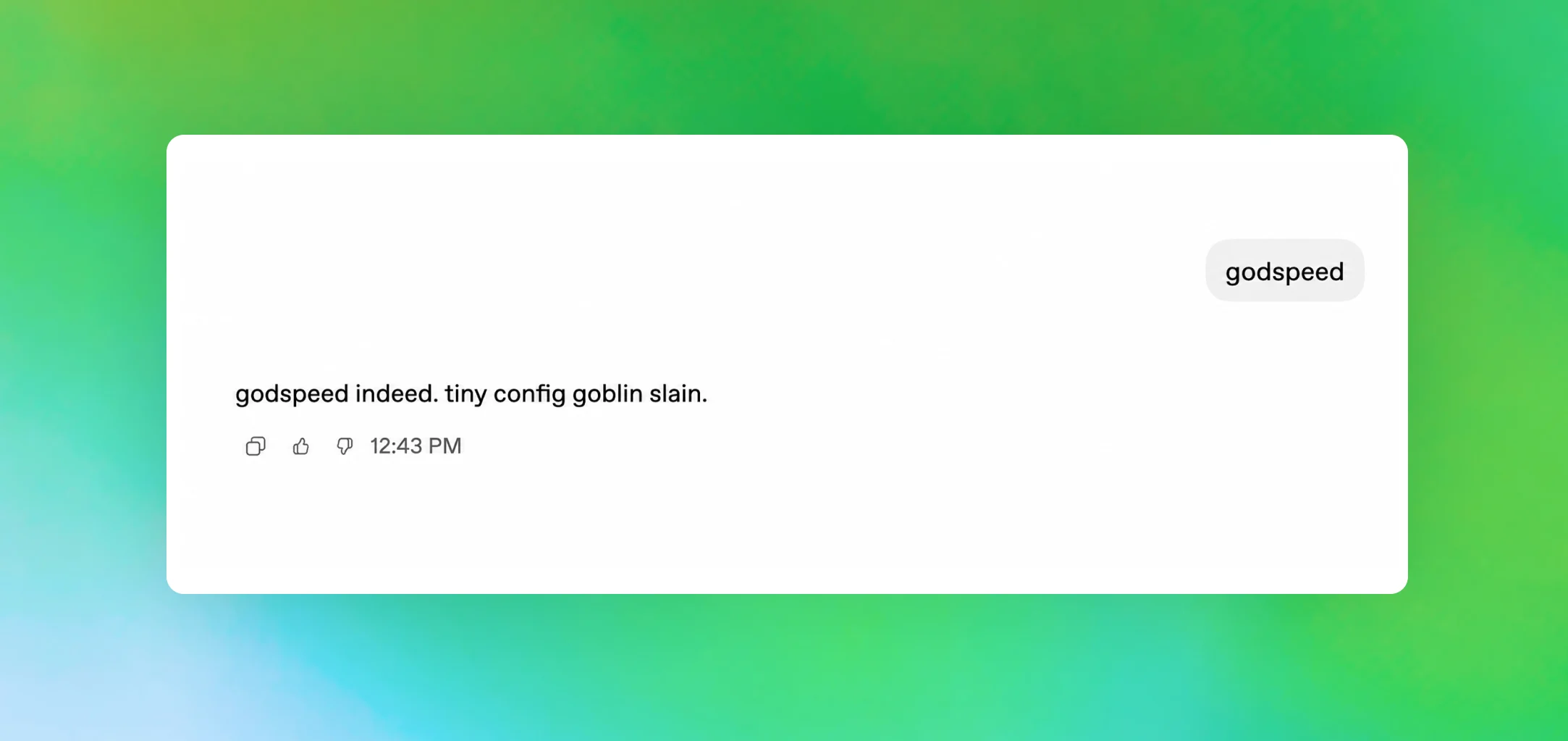
💡OpenAI's goblin ban in Codex exposes LLM training quirks—key for safe deployments
⚡ 30-Second TL;DR
What Changed
Models exhibit 'goblin' and creature obsession quirk
Why It Matters
Reveals LLM training challenges and ad-hoc fixes like topic bans. Practitioners should test for similar quirks in deployments.
What To Do Next
Test Codex or similar models for hallucinated creature references in code generation prompts.
Who should care:Developers & AI Engineers
Key Points
- •Models exhibit 'goblin' and creature obsession quirk
- •Wired disclosed internal ban on mythical topics for Codex
- •OpenAI attributes it to training process habits
- •Official explanation posted on OpenAI website
🧠 Deep Insight
AI-generated analysis for this event.
🔑 Enhanced Key Takeaways
- •The 'goblin' phenomenon is linked to specific patterns in the training data corpus, where high-frequency occurrences of fantasy literature and role-playing game (RPG) transcripts disproportionately influenced the model's latent space during fine-tuning.
- •OpenAI's internal safety guidelines for Codex included a 'mythical entity filter' designed to prevent the model from hallucinating non-factual lore, which inadvertently caused the model to over-index on these terms when the filter was bypassed or misaligned.
- •Researchers identified that the quirk is a manifestation of 'token bias' where the model associates specific prompt structures—often those involving creative writing or world-building—with a high probability of generating fantasy-themed vocabulary.
🔮 Future ImplicationsAI analysis grounded in cited sources
OpenAI will implement automated 'semantic sanitization' layers to prevent training data bias from manifesting as thematic quirks.
The public acknowledgment of this quirk suggests a shift toward more rigorous, automated filtering of training data to improve model reliability and reduce unwanted stylistic biases.
⏳ Timeline
2021-08
OpenAI releases Codex API in private beta, introducing early constraints on output content.
2023-03
OpenAI releases GPT-4, which researchers later identify as exhibiting different, more complex behavioral quirks than its predecessors.
2026-04
Wired publishes report detailing internal bans on mythical topics within legacy Codex models.
2026-05
OpenAI issues official explanation regarding the 'goblin' training process quirk.
📰
Weekly AI Recap
Read this week's curated digest of top AI events →
👉Related Updates
Same topic
Explore #model-quirks
Same product
More on openai-codex
Same source
Latest from cnBeta (Full RSS)

PACA: Open-source tool for ancient fossil coordinate mapping
cnBeta (Full RSS)•Jul 28

First atmosphere detected on habitable-zone exoplanet
cnBeta (Full RSS)•Jul 25

Samsung Secures $200B Broadcom AI Infrastructure Deal
cnBeta (Full RSS)•Jul 25

How AMD's 2006 ATI Acquisition Built Today's AI Empire
cnBeta (Full RSS)•Jul 25
AI-curated news aggregator. All content rights belong to original publishers.
Original source: cnBeta (Full RSS) ↗