OpenAI Enters Robotics; Nvidia Launches New PC Processors

💡OpenAI's pivot to robotics and Nvidia's new PC hardware are major shifts for the future of embodied and local AI.
⚡ 30-Second TL;DR
What Changed
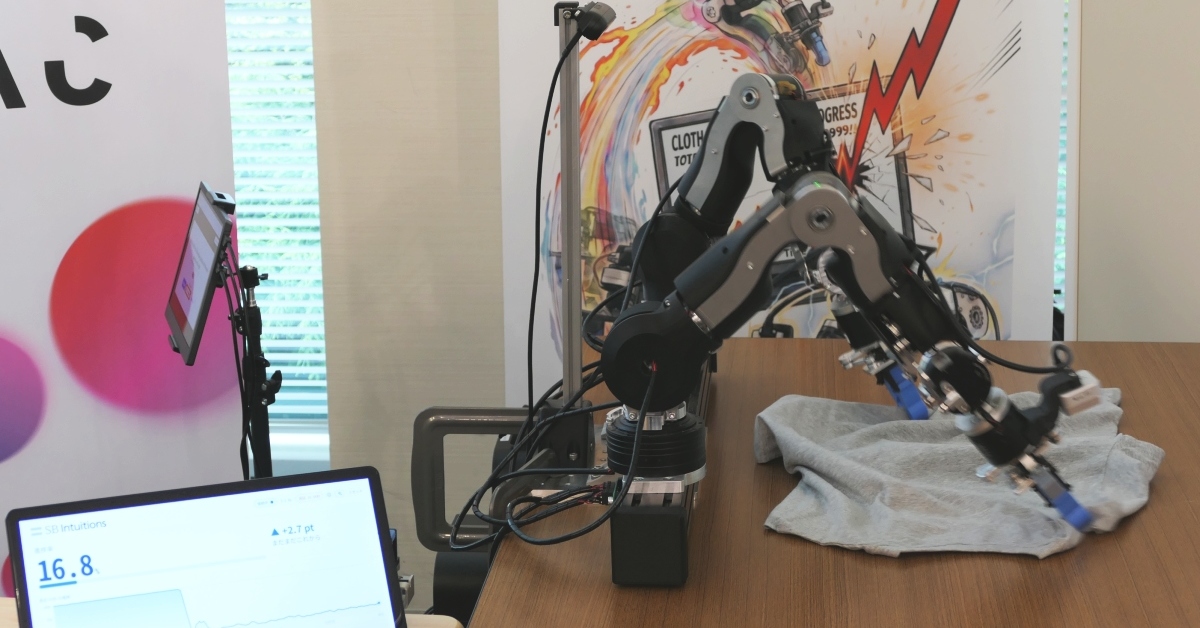
OpenAI officially enters the robotics market with a focus on assistive robot development.
Why It Matters
OpenAI's move into robotics suggests a shift toward embodied AI, while Nvidia's PC processor launch intensifies the competition for local AI compute power.
What To Do Next
Monitor OpenAI's developer blog for upcoming robotics SDKs or API access to their embodied AI models.
Key Points
- •OpenAI officially enters the robotics market with a focus on assistive robot development.
- •Nvidia releases new processors tailored for Windows PC platforms.
- •New 'Commercial Secret Protection Regulations' now include 'data' and 'algorithms' under legal protection.
🧠 Deep Insight
Background and context from public sources — not the original article. 19 sources cited.
🔑 Enhanced Key Takeaways
- •OpenAI's immediate robotics focus is on developing robots to support skilled workers in building critical infrastructure like data centers and power grids, with a long-term vision for personal robots for every individual.
- •Nvidia's new RTX Spark superchip for Windows PCs features an Arm-based 20-core NVIDIA Grace CPU and a Blackwell RTX GPU with 6,144 CUDA cores, delivering 1 petaflop of AI performance and up to 128GB of unified memory.
- •The updated Chinese Commercial Secret Protection Regulations, effective June 1, 2026, explicitly define data, algorithms, computer programs, and code as protectable trade secrets, replacing a 1995 framework to better address digital economy challenges.
- •OpenAI previously disbanded its robotics team in 2021 due to limited training data, but revived the initiative in January 2025, now actively hiring full-stack engineers to pursue physical AI for Artificial General Intelligence (AGI).
- •Nvidia's RTX Spark is a result of a three-year collaboration with Microsoft, aiming to enable local execution of AI agents on Windows PCs and is built on TSMC's 3nm manufacturing node.
🛠️ Technical Deep Dive
- Superchip Architecture: The NVIDIA RTX Spark superchip integrates an NVIDIA Blackwell RTX GPU, featuring 6,144 CUDA cores and fifth-generation Tensor Cores with FP4 precision, connected via NVIDIA NVLink®-C2C to a high-performance, 20-core NVIDIA Grace™ CPU.
- Manufacturing Process: The chip is produced using TSMC's 3 nanometer manufacturing node.
- Memory: It supports up to 128GB of unified memory.
- AI Performance: The RTX Spark delivers a claimed 1 petaflop of AI performance.
- Software Integration: It leverages the full-stack NVIDIA AI and graphics technology, including CUDA, RTX, DLSS, FP4, TensorRT, OptiX, Reflex, and G-SYNC. The collaboration with Microsoft provides a native Windows experience, new security primitives, and the NVIDIA OpenShell runtime for secure agent execution.
- Capabilities: The chip is designed to run 120B-parameter large language models (LLMs) locally with up to 1 million tokens context, render ultralarge 90GB+ 3D scenes, edit 12K 4:2:2 video, generate 4K AI videos, and support AAA gaming at 1440p and over 100 frames per second.
🔮 Future ImplicationsAI analysis grounded in cited sources
⏳ Timeline
📎 Sources (19)
Factual claims are grounded in the sources below. Forward-looking analysis is AI-generated interpretation.
Weekly AI Recap
Read this week's curated digest of top AI events →
👉Related Updates

AI-curated news aggregator. All content rights belong to original publishers.
Original source: 钛媒体 ↗
This is a summary, not the original. Read the source, or get the weekly briefing.
The weekly digest
One email a week. Unsubscribe anytime.