Open-Source Fixes AI Commons Tragedy
How open-source biz models prevent data abuse & model lock-in in AI commons
30-Second TL;DR
What Changed
AI knowledge now spans models, weights, data, and compute infrastructure with high modularity for easy recombination.
Why It Matters
Enables sustainable AI ecosystems by turning profit motives into communal resource upkeep, reducing monopolies and biases for broader innovation access.
What To Do Next
Review Apache 2.0-licensed AI models on Hugging Face for your next project to leverage community-driven improvements.
Key Points
- •AI knowledge now spans models, weights, data, and compute infrastructure with high modularity for easy recombination.
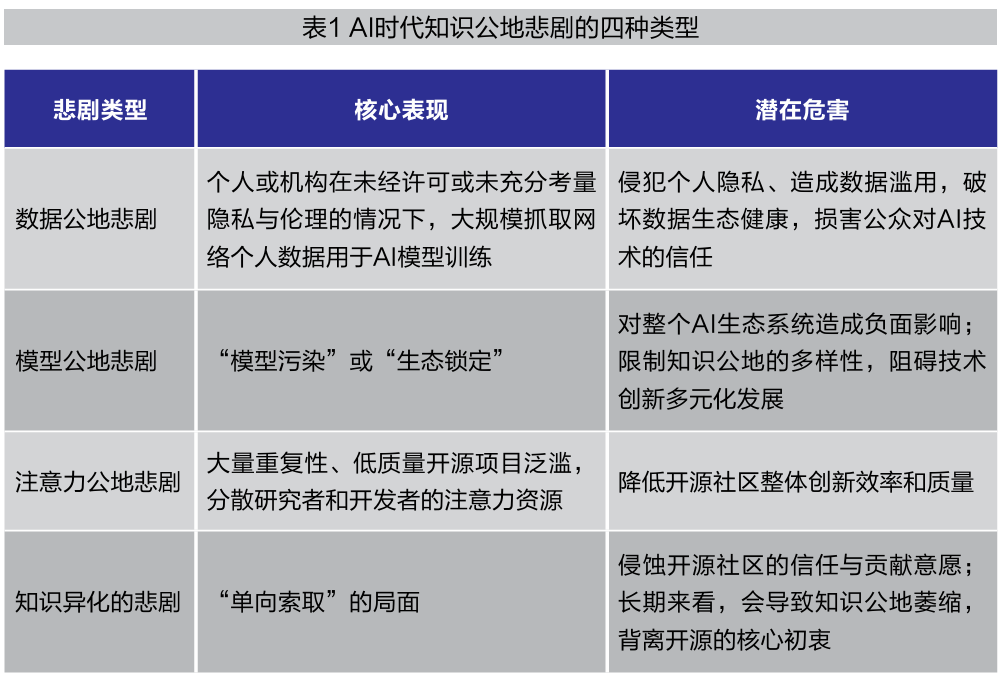
- •New tragedies: data privacy violations from scraping, spreading model biases, and 'attention tragedy' from low-quality projects.
- •Open-source licenses like MIT and Apache 2.0 clarify rights, incentivizing commercial contributions to commons maintenance.
- •Dynamic AI evolution demands adaptive governance for biases, black-box issues, and infrastructure divides.
Deep Insight
AI-generated analysis for this event — not the original article.
Enhanced Key Takeaways
- •The emergence of 'Model Collapse'—a phenomenon where models trained on AI-generated data suffer from irreversible quality degradation—has become a critical technical barrier to maintaining the AI knowledge commons.
- •Regulatory frameworks like the EU AI Act are increasingly mandating transparency requirements for open-source foundation models, forcing a shift from 'open-weight' models to 'open-source' models that include training data provenance.
- •The rise of decentralized compute networks (DePIN) is being positioned as a technical solution to the 'compute gap,' allowing smaller developers to contribute to the commons without relying on hyperscaler infrastructure.
Future ImplicationsAI analysis grounded in cited sources
Weekly AI Recap
Read this week's curated digest of top AI events →
AI-curated news aggregator. All content rights belong to original publishers.
Original source: 虎嗅 ↗
This is a summary, not the original. Read the source, or get the weekly briefing.
The weekly digest
One email a week. Unsubscribe anytime.