OJO Builds an AI Design Team Workspace

💡OJO shows how multi-agent workflows could connect product judgment, design iteration, and code delivery.
⚡ 30-Second TL;DR
What Changed
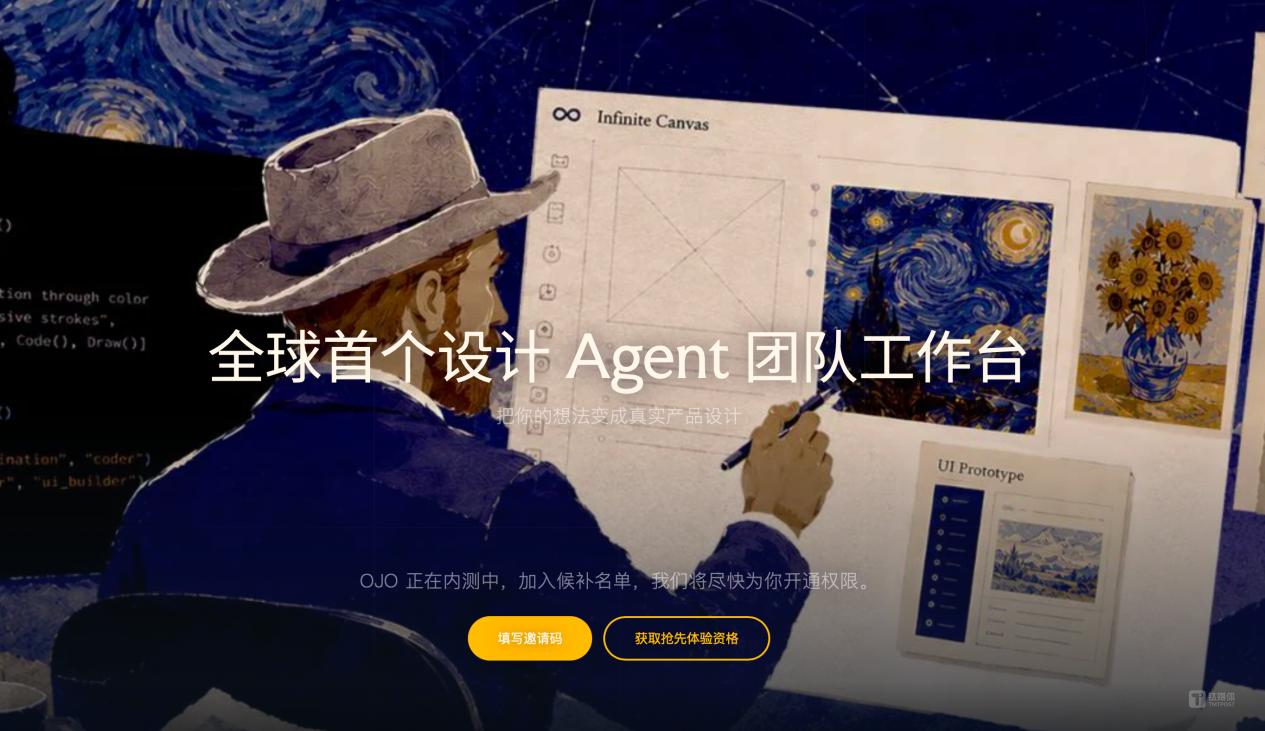
OJO defines itself as a Design Agent Team Workspace connecting product thinking, visual design, interaction iteration, and code delivery.
Why It Matters
OJO reflects a broader shift from AI generating isolated screens toward orchestrating continuous product and design workflows. If its multi-agent approach can preserve design intent across product, design, and engineering handoffs, it could challenge the role of conventional prototyping and design-to-code tools.
What To Do Next
Prototype one of your existing product flows in OJO, then compare its interactive output and code handoff with a Codex- or Cursor-based workflow.
Key Points
- •OJO defines itself as a Design Agent Team Workspace connecting product thinking, visual design, interaction iteration, and code delivery.
- •Instead of relying on one general-purpose agent, OJO combines task-specific Agents and Skills, coordinated by a main agent that manages tools and context.
- •The product targets product managers, marketers, founders, and other users with strong design needs but without access to a complete professional design team.
- •OJO was founded by former CapCut China head Zhang Qizhi and raised nearly RMB 100 million from Shunwei Capital and Lenovo Capital.
🧠 Deep Insight
Background and context from public sources — not the original article. 12 sources cited.
🔑 Enhanced Key Takeaways
- •Zhang Qizhi departed ByteDance in 2025 specifically to wait for AI model capabilities to mature sufficiently to support complex, multi-stage product design workflows.
- •The platform features an infinite canvas interface that prioritizes human-in-the-loop control, allowing users to manually annotate and edit AI-generated outputs to maintain design intent.
- •OJO functions as a pre-coding layer, designed to integrate with existing coding agents like Cursor or Claude Code rather than competing directly with them.
- •The company has launched an open ecosystem for its 'Design Skills' format, with 46 third-party tools already compatible with its framework.
- •Gaohu Capital served as the exclusive financial advisor for the nearly RMB 100 million seed funding round.
📊 Competitor Analysis▸ Show
| Feature | OJO | Traditional Design Tools (Figma/Sketch) | Coding Agents (Cursor/Claude) |
|---|---|---|---|
| Primary Focus | End-to-end product/design/code workflow | Manual visual design | Code generation/refactoring |
| AI Integration | Multi-agent team workspace | Plugin-based AI | Native IDE integration |
| Output | HTML, Figma, PNG, PPT, PDF | Static files | Executable code |
| Pricing | Not publicly disclosed | Subscription-based | Subscription-based |
🛠️ Technical Deep Dive
- Multi-agent architecture: Employs specialized agents for distinct roles including product, interaction, visual, motion, and development.
- Skill-based execution: Uses structured instruction sets (Skills) to allow agents to perform high-precision tasks within the workspace.
- Interoperability: Supports multi-format exports including HTML and Figma to bridge the gap between design and development ecosystems.
- Context management: A central orchestrator agent manages tool usage and maintains state across the product ideation and iteration lifecycle.
🔮 Future ImplicationsAI analysis grounded in cited sources
⏳ Timeline
📎 Sources (12)
Factual claims are grounded in the sources below. Forward-looking analysis is AI-generated interpretation.
Weekly AI Recap
Read this week's curated digest of top AI events →
👉Related Updates
AI-curated news aggregator. All content rights belong to original publishers.
Original source: 极客公园 ↗
This is a summary, not the original. Read the source, or get the weekly briefing.
Weekly AI briefing
One email a week. Unsubscribe anytime.