DeepSeek Eyes $74B Valuation Ahead of 2027 IPO
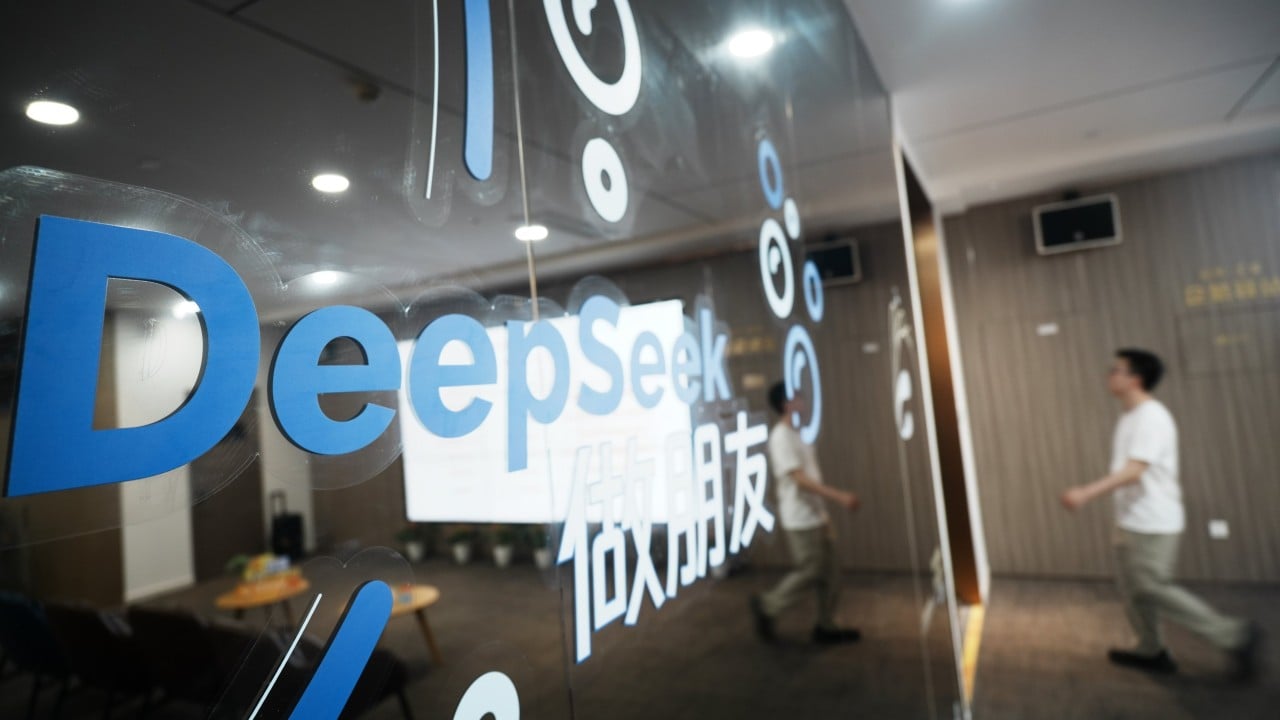
💡DeepSeek’s reported $74B valuation could reshape open-model competition and China’s AI funding landscape.
⚡ 30-Second TL;DR
What Changed
DeepSeek is reportedly targeting a pre-money valuation of about 500 billion yuan (US$74 billion).
Why It Matters
A funding round of this scale would give DeepSeek substantial capital to expand model development, computing capacity, and commercial operations. A potential Star Market listing would also signal growing investor confidence in China’s AI sector, although the reported terms remain unconfirmed.
What To Do Next
Benchmark DeepSeek’s available API models on your core workloads now so you can assess whether future funding could improve its cost, capacity, or reliability advantages.
Key Points
- •DeepSeek is reportedly targeting a pre-money valuation of about 500 billion yuan (US$74 billion).
- •The company is seeking approximately 50 billion yuan in new funding.
- •The round is expected to close before the end of August, with a potential 2027 Star Market listing.
🧠 Deep Insight
Background and context from public sources — not the original article. 13 sources cited.
🔑 Enhanced Key Takeaways
- •DeepSeek's funding coalition includes major strategic partners such as Tencent, NetEase, JD.com, CATL, and the state-backed National AI Industry Investment Fund.
- •Founder Liang Wenfeng maintains significant control, retaining approximately 78% of the company's equity following a personal 20 billion yuan investment in June 2026.
- •The company is actively pivoting toward vertical integration by recruiting chip-design engineers to develop proprietary AI inference hardware to bypass U.S. export restrictions.
- •DeepSeek's business model relies on extreme cost-efficiency, with inference costs reported to be up to 27x lower than comparable Western AI models.
- •The company originated from the quantitative hedge fund High-Flyer, which provided the initial capital and infrastructure support during the company's founding in July 2023.
📊 Competitor Analysis▸ Show
| Feature | DeepSeek (V4) | Meta (Llama 3.x) | OpenAI (GPT-4o) |
|---|---|---|---|
| Architecture | Mixture-of-Experts (MoE) | Dense/Hybrid | Proprietary MoE |
| Licensing | MIT Open-Weights | Llama Community License | Closed Source |
| Context Window | 1M Tokens | 128K Tokens | 128K Tokens |
| Primary Advantage | Cost-Efficiency | Ecosystem Integration | Multimodal Capability |
🛠️ Technical Deep Dive
- Architecture: Utilizes a highly optimized Mixture-of-Experts (MoE) framework designed to maximize parameter efficiency during inference.
- Training Methodology: Employs advanced reinforcement learning techniques to achieve frontier-level performance with lower compute requirements than standard dense models.
- Agent Framework: Introduced 'DeepSeek Harness' (dsh) in August 2026, utilizing a 'Cordis' kernel to manage tool-use and environment interaction for agentic workflows.
- Hardware Strategy: Developing proprietary AI inference hardware to mitigate reliance on restricted high-end GPU imports.
🔮 Future ImplicationsAI analysis grounded in cited sources
⏳ Timeline
📎 Sources (13)
Factual claims are grounded in the sources below. Forward-looking analysis is AI-generated interpretation.
Weekly AI Recap
Read this week's curated digest of top AI events →
👉Related Updates

AI-curated news aggregator. All content rights belong to original publishers.
Original source: SCMP Technology ↗
This is a summary, not the original. Read the source, or get the weekly briefing.
Weekly AI briefing
One email a week. Unsubscribe anytime.