OJO Raises Nearly $14M for Design Agents
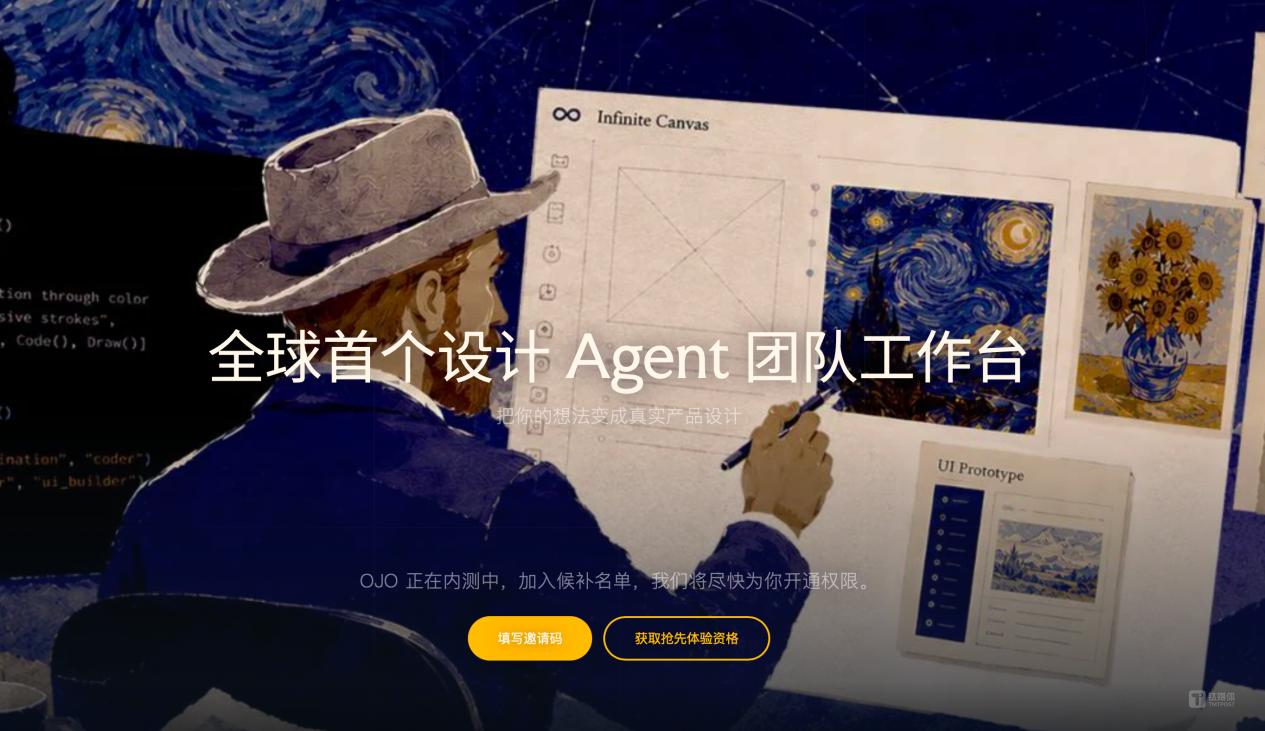
💡A major new bet on turning design Agents into coordinated production teams.
⚡ 30-Second TL;DR
What Changed
OJO was founded by Zhang Qizhi, the former head of Jianying.
Why It Matters
The funding signals growing investor interest in AI-native design workflows and multi-Agent collaboration. If OJO can coordinate specialized design Agents effectively, it could reshape how creative teams manage production and review processes.
What To Do Next
Prototype a design-Agent workflow with MCP-compatible tools and compare its task orchestration needs with OJO's announced platform capabilities.
Key Points
- •OJO was founded by Zhang Qizhi, the former head of Jianying.
- •The company raised a nearly 100 million yuan angel round.
- •Shunwei Capital and Lenovo Capital participated in the financing.
- •OJO focuses on a workplace platform for design Agent teams.
🧠 Deep Insight
Background and context from public sources — not the original article. 3 sources cited.
🔑 Enhanced Key Takeaways
- •OJO's platform utilizes a specialized 'Skills' architecture where individual AI agents collaborate to manage specific stages of the design lifecycle, including ideation, interaction, and visual delivery.
- •The platform features an editable infinite canvas that allows users to generate and refine research-backed UI, landing pages, and prototypes in a single workspace.
- •The startup aims to solve the 'design judgment' gap, specifically targeting non-professional users to achieve production-ready design quality similar to how AI coding tools have democratized software development.
- •Capital allocation is prioritized for global market expansion and the recruitment of specialized AI talent to scale the capabilities of their agentic design framework.
- •As of August 2026, the OJO platform is operating in a private beta phase, focusing on refining its collaborative agent workflows before a broader public release.
📊 Competitor Analysis▸ Show
| Feature | OJO | Uizard | Galileo AI |
|---|---|---|---|
| Core Focus | Collaborative Agent Teams | Rapid Prototyping | Text-to-UI Generation |
| Workflow | Multi-agent orchestration | Template-based drag-and-drop | Prompt-to-editable-design |
| Target User | Non-professionals & Teams | Product Managers/Designers | UI/UX Designers |
🛠️ Technical Deep Dive
- Agentic Architecture: Employs a multi-agent system where specialized agents handle distinct design tasks (ideation, interaction, visual) to mimic human design team collaboration.
- Integration Layer: Features an editable infinite canvas that supports real-time interaction between AI-generated outputs and user-defined constraints.
- Design Logic: Incorporates research-backed design systems to ensure generated UI components meet production-ready standards rather than just aesthetic mockups.
🔮 Future ImplicationsAI analysis grounded in cited sources
⏳ Timeline
📎 Sources (3)
Factual claims are grounded in the sources below. Forward-looking analysis is AI-generated interpretation.
Weekly AI Recap
Read this week's curated digest of top AI events →
👉Related Updates


AI-curated news aggregator. All content rights belong to original publishers.
Original source: 钛媒体 ↗
This is a summary, not the original. Read the source, or get the weekly briefing.
Weekly AI briefing
One email a week. Unsubscribe anytime.