Octopus and CATL bring EV battery swapping to Europe
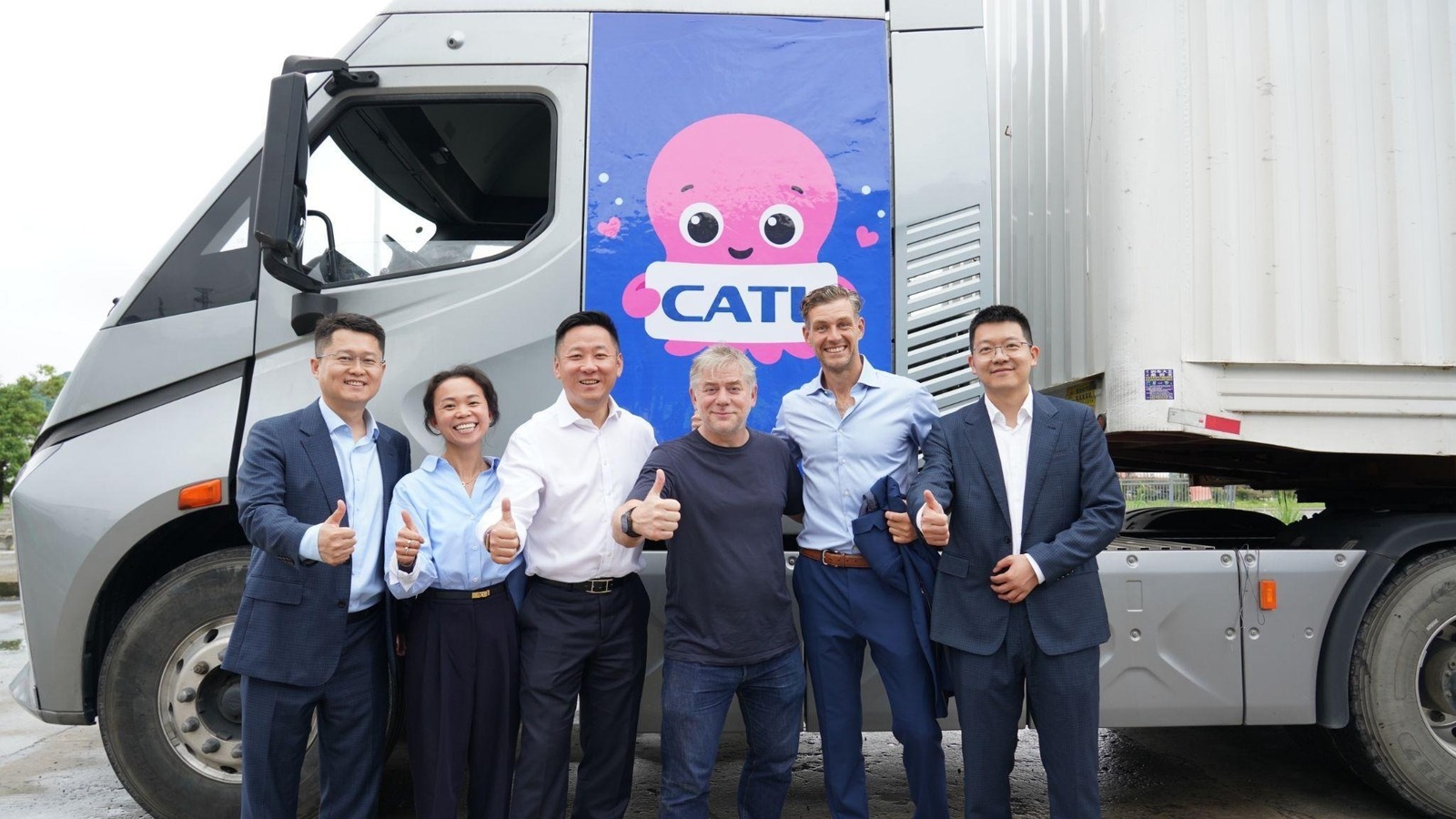
See how Chinese battery-swapping tech is scaling in Europe to solve heavy-duty EV charging bottlenecks.
30-Second TL;DR
What Changed
Network focuses on heavy-duty electric trucks
Why It Matters
This infrastructure expansion could significantly reduce downtime for electric logistics fleets, making heavy-duty EV adoption more commercially viable in Europe.
What To Do Next
If you are in the logistics or energy sector, evaluate how automated infrastructure can optimize your fleet's operational efficiency.
Key Points
- •Network focuses on heavy-duty electric trucks
- •Deployment targets the European logistics market
- •Partnership leverages CATL's battery swapping technology
Deep Insight
AI-generated analysis for this event — not the original article.
Enhanced Key Takeaways
- •The partnership utilizes CATL's 'EVOGO' modular battery swapping solution, which was originally developed for passenger vehicles but has been adapted for heavy-duty commercial applications.
- •Octopus Energy is integrating its Kraken software platform to manage the energy load of the swap stations, allowing them to act as grid-balancing assets during peak demand.
- •The initiative is supported by the European Union's 'Green Deal' infrastructure funding, which aims to reduce carbon emissions in the heavy-duty transport sector by 90% by 2050.
- •CATL's heavy-duty battery packs feature cell-to-chassis (CTC) technology, which increases energy density and reduces the overall weight of the electric truck chassis.
- •The swap stations are designed to be fully automated, enabling a complete battery exchange for a Class 8 truck in under 10 minutes, significantly faster than current high-power charging standards.
Competitor Analysis
- CATL/Octopus (EVOGO)
- Heavy-Duty Trucks
- Nio Power
- Passenger Vehicles
- Ample
- Passenger/Light Commercial
- Proterra (Powered)
- Transit Buses
- CATL/Octopus (EVOGO)
- < 10 Minutes
- Nio Power
- ~3-5 Minutes
- Ample
- ~10 Minutes
- Proterra (Powered)
- N/A (Charging focus)
- CATL/Octopus (EVOGO)
- Kraken (V2G/V2X)
- Nio Power
- Proprietary
- Ample
- Cloud-based
- Proterra (Powered)
- N/A
- CATL/Octopus (EVOGO)
- Europe/Logistics
- Nio Power
- China/Europe
- Ample
- North America
- Proterra (Powered)
- North America
| Feature | CATL/Octopus (EVOGO) | Nio Power | Ample | Proterra (Powered) |
|---|---|---|---|---|
| Target Vehicle | Heavy-Duty Trucks | Passenger Vehicles | Passenger/Light Commercial | Transit Buses |
| Swap Time | < 10 Minutes | ~3-5 Minutes | ~10 Minutes | N/A (Charging focus) |
| Grid Integration | Kraken (V2G/V2X) | Proprietary | Cloud-based | N/A |
| Market Focus | Europe/Logistics | China/Europe | North America | North America |
Technical Deep Dive
- Battery Architecture: Utilizes LFP (Lithium Iron Phosphate) chemistry for enhanced thermal stability and cycle life in high-frequency swapping environments.
- Swap Mechanism: Employs a multi-point locking system with high-voltage connectors rated for 800V+ architectures to support rapid energy transfer.
- Grid Interaction: Stations utilize stationary energy storage systems (ESS) to buffer the grid, preventing localized power spikes during high-demand swap periods.
- Automation: Uses AI-driven robotic arms with sub-millimeter precision to align battery packs with the truck chassis mounting points.
Future ImplicationsAI analysis grounded in cited sources
Timeline
- 2022-01CATL officially launches the EVOGO battery swapping brand in China.
- 2023-04Octopus Energy announces a strategic partnership with CATL to bring battery technology to the UK and European markets.
- 2024-09CATL unveils its heavy-duty truck battery swapping solution at the IAA Transportation show in Hanover.
- 2025-11Pilot deployment of the first heavy-duty swap station begins in Germany.
Weekly AI Recap
Read this week's curated digest of top AI events →
Related Updates

AI-curated news aggregator. All content rights belong to original publishers.
Original source: Engadget ↗
This is a summary, not the original. Read the source, or get the weekly briefing.
The weekly digest
One email a week. Unsubscribe anytime.