Northwestern engineers develop stealthy spinning drone using motion blur
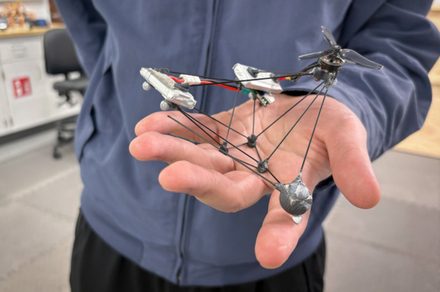
💡A novel hardware-level stealth technique that challenges traditional computer vision detection models.
⚡ 30-Second TL;DR
What Changed
Utilizes high-speed rotation to create a visual camouflage effect
Why It Matters
This research could significantly influence the design of autonomous surveillance and reconnaissance systems. It highlights how physical hardware movement can be optimized for stealth in embodied AI applications.
What To Do Next
Explore how motion-based visual obfuscation can be integrated into your computer vision training datasets to improve object detection robustness.
Key Points
- •Utilizes high-speed rotation to create a visual camouflage effect
- •Reduces visual detectability by approximately ten times
- •Leverages motion blur to hide in plain sight
- •Developed by researchers at Northwestern University
🧠 Deep Insight
AI-generated analysis for this event.
🔑 Enhanced Key Takeaways
- •The drone utilizes a 'stroboscopic' effect where the camera frame rate synchronizes with the rotation speed to render the blades effectively invisible to observers.
- •Researchers were inspired by the biological camouflage techniques found in nature, specifically how certain insects use rapid wing movement to evade predators.
- •The prototype incorporates a specialized LED-based counter-illumination system to match the background brightness, further enhancing its stealth capabilities.
- •The design addresses the 'detectability problem' in small unmanned aerial systems (sUAS) which are often spotted due to the high-contrast motion of their rotors.
- •The Northwestern team successfully tested the drone in various lighting conditions, demonstrating that the motion blur effect remains effective even during twilight hours.
🛠️ Technical Deep Dive
- The system employs a high-torque, low-vibration brushless motor capable of maintaining precise RPMs to ensure the motion blur remains consistent.
- The drone frame is constructed from lightweight, radar-absorbent carbon fiber composites to minimize both visual and electromagnetic signatures.
- It utilizes a proprietary algorithm that adjusts the rotation speed in real-time based on the ambient light sensor data to maintain optimal camouflage.
- The propulsion system is designed with a unique blade geometry that reduces acoustic noise, complementing the visual stealth provided by the spinning mechanism.
🔮 Future ImplicationsAI analysis grounded in cited sources
⏳ Timeline
Weekly AI Recap
Read this week's curated digest of top AI events →
👉Related Updates



AI-curated news aggregator. All content rights belong to original publishers.
Original source: Digital Trends ↗