New Power Battery Regulations and Legacy Issues
Understand the regulatory landscape impacting EV hardware, a key sector for AI-driven optimization.
30-Second TL;DR
What Changed
New regulations aim to standardize battery performance.
Why It Matters
This regulatory shift affects the EV supply chain, which is increasingly integrated with AI-driven battery management systems (BMS).
What To Do Next
If building AI-based BMS, ensure your algorithms comply with the new performance verification standards to maintain market access.
Key Points
- •New regulations aim to standardize battery performance.
- •Industry faces challenges with legacy battery quality and manufacturer reliability.
- •Market confidence is impacted by past performance issues.
Deep Insight
AI-generated analysis for this event — not the original article.
Enhanced Key Takeaways
- •The new regulations mandate a standardized 'Battery Passport' system, requiring digital traceability for battery materials from extraction to recycling to combat supply chain opacity.
- •Regulatory bodies have introduced a mandatory 'State of Health' (SoH) certification requirement for second-hand electric vehicles to mitigate risks associated with legacy battery degradation.
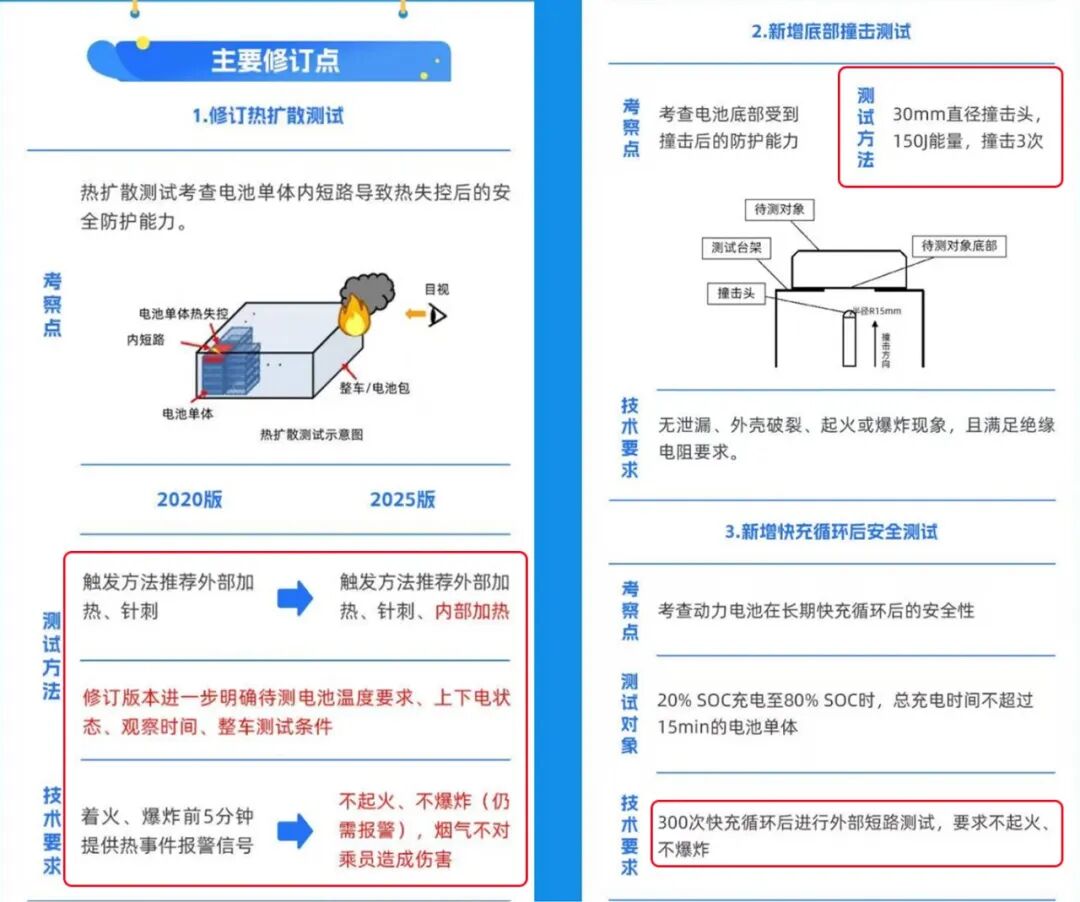
- •New standards impose stricter thermal runaway prevention protocols, requiring manufacturers to integrate advanced AI-driven Battery Management Systems (BMS) that predict cell failure before it occurs.
- •The policy framework includes a 'Manufacturer Responsibility Fund,' forcing companies to set aside capital for the decommissioning and recycling of batteries produced by defunct or insolvent entities.
- •Recent updates specifically target the standardization of modular battery pack designs to facilitate easier repairability and component replacement, moving away from proprietary, non-serviceable architectures.
Technical Deep Dive
- Implementation of electrochemical impedance spectroscopy (EIS) for real-time internal resistance monitoring within the BMS.
- Requirement for multi-layer ceramic separators to enhance thermal stability under high-stress charging cycles.
- Integration of cloud-based digital twins for every battery pack to track historical charge-discharge cycles and thermal exposure.
- Adoption of standardized cell-to-pack (CTP) structural requirements to ensure uniform energy density benchmarks across different manufacturers.
Future ImplicationsAI analysis grounded in cited sources
Timeline
- 2023-08Initial proposal of the Battery Passport framework by regulatory authorities.
- 2024-05Pilot program launched for mandatory battery lifecycle tracking in select provinces.
- 2025-02Introduction of the Manufacturer Responsibility Fund guidelines for battery recycling.
- 2026-01Official enforcement of new thermal runaway prevention standards for all new battery packs.
Weekly AI Recap
Read this week's curated digest of top AI events →
AI-curated news aggregator. All content rights belong to original publishers.
Original source: 钛媒体 ↗
This is a summary, not the original. Read the source, or get the weekly briefing.
The weekly digest
One email a week. Unsubscribe anytime.