New crash data highlights the slow progress of Tesla's robotaxis
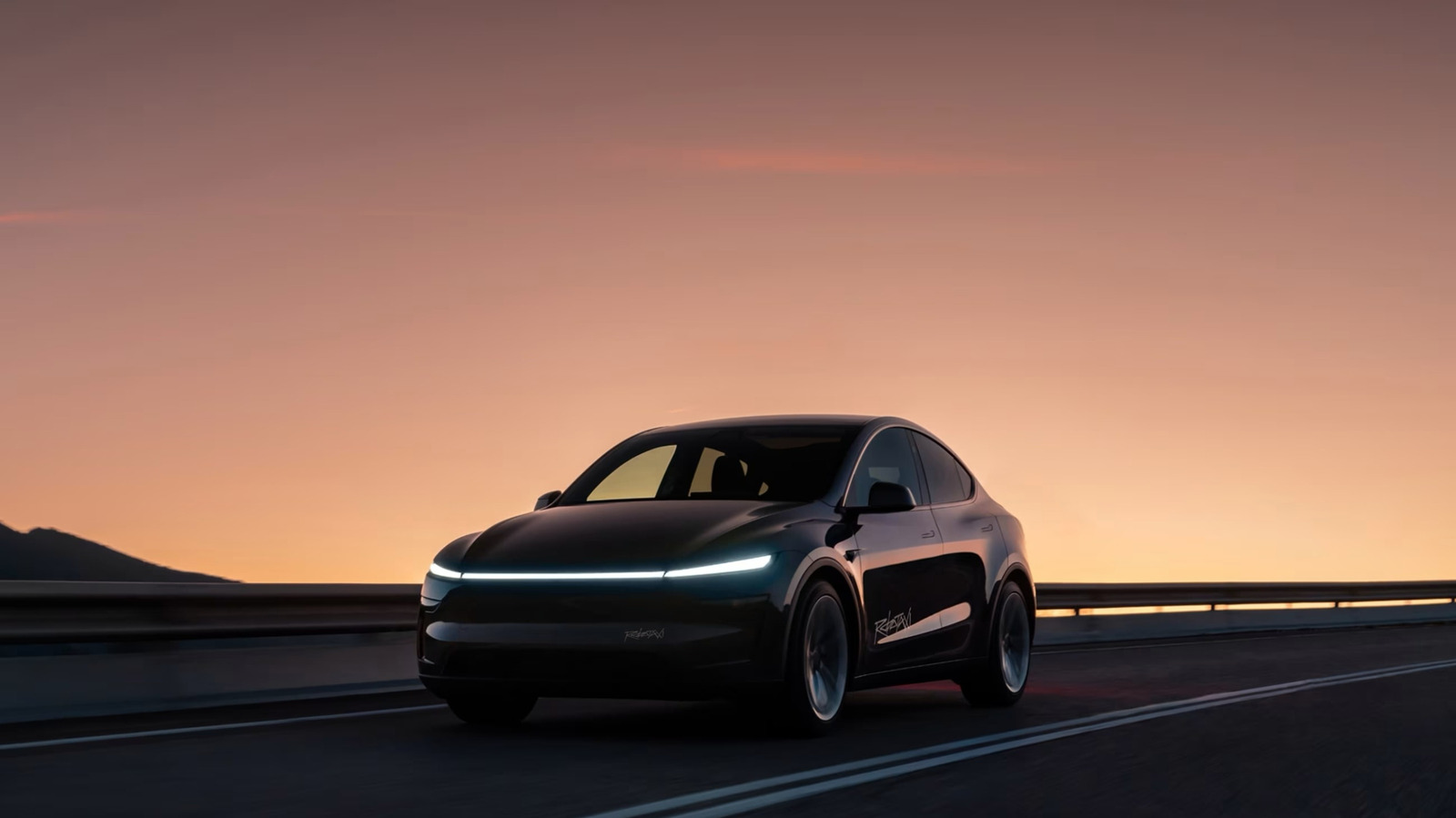
Understand the safety hurdles and remote operation challenges facing Tesla's autonomous fleet deployment.
30-Second TL;DR
What Changed
Two reported crashes involving Tesla robotaxis since July 2025
Why It Matters
These incidents may lead to increased regulatory scrutiny of Tesla's remote operation protocols. It highlights the difficulty of edge-case handling in real-world autonomous deployments.
What To Do Next
Analyze your own teleoperation latency budgets and fail-safe protocols if you are building autonomous systems that rely on human-in-the-loop intervention.
Key Points
- •Two reported crashes involving Tesla robotaxis since July 2025
- •Incidents occurred while vehicles were under remote operator supervision
- •Data suggests ongoing challenges in achieving full autonomous safety standards
Deep Insight
Background and context from public sources — not the original article. 36 sources cited.
Enhanced Key Takeaways
- •The two reported remote operator crashes are part of a larger set of 17 unique Tesla ADS incidents reported to NHTSA between July 2025 and March 2026 during Austin robotaxi testing, with 6 incidents deemed at fault or partially at fault for the Tesla ADS.
- •Tesla's robotaxi service, which launched in Austin in June 2025 with human safety monitors, began integrating unsupervised vehicles in Austin by January 2026 and expanded to Dallas and Houston by April 2026.
- •The National Highway Traffic Safety Administration (NHTSA) has escalated investigations into Tesla's Full Self-Driving (FSD) system, covering millions of vehicles, due to concerns about traffic violations and performance in reduced visibility.
- •Tesla's remote operators are authorized to temporarily assume direct vehicle control as a 'final escalation maneuver' when the autonomous driving system cannot resolve a situation, typically at low speeds (under 10 mph).
- •The 2026 Tesla Model Y is the first vehicle to pass NHTSA's new benchmark for vehicles equipped with automated driver-assistance technology, applicable to models built on or after November 12, 2025.
Competitor Analysis
- Tesla Robotaxi
- Vision-only (cameras)
- Waymo
- LiDAR, radar, cameras
- Cruise
- LiDAR, radar, cameras
- Tesla Robotaxi
- Modified Model Ys, purpose-built Cybercab (unveiled Oct 2024); launched with safety monitors, now some unsupervised
- Waymo
- Purpose-built vehicles; fully driverless operations in select cities
- Cruise
- Purpose-built vehicles; operations suspended in late 2023 after incident
- Tesla Robotaxi
- FSD (Supervised) claims 7x fewer major/minor collisions than human drivers
- Waymo
- 0.41 (over 7.3M driverless miles)
- Cruise
- At least 1.0 (over 1M driverless miles)
- Tesla Robotaxi
- Remote operators can temporarily take direct control at low speeds (under 10 mph)
- Waymo
- Remote 'fleet response' offers context/guidance to software, but does not directly drive
- Cruise
- Relies on remote monitoring/assistance, but direct remote driving is less common
- Tesla Robotaxi
- Under NHTSA investigation for FSD performance and visibility issues
- Waymo
- Active operations, but also under NHTSA investigation
- Cruise
- Operations largely suspended/restricted after high-profile incident
| Feature/Metric | Tesla Robotaxi | Waymo | Cruise |
|---|---|---|---|
| Primary Sensor Suite | Vision-only (cameras) | LiDAR, radar, cameras | LiDAR, radar, cameras |
| Deployment Model | Modified Model Ys, purpose-built Cybercab (unveiled Oct 2024); launched with safety monitors, now some unsupervised | Purpose-built vehicles; fully driverless operations in select cities | Purpose-built vehicles; operations suspended in late 2023 after incident |
| Injury Crash Rate (per million miles) | FSD (Supervised) claims 7x fewer major/minor collisions than human drivers | 0.41 (over 7.3M driverless miles) | At least 1.0 (over 1M driverless miles) |
| Remote Human Intervention | Remote operators can temporarily take direct control at low speeds (under 10 mph) | Remote 'fleet response' offers context/guidance to software, but does not directly drive | Relies on remote monitoring/assistance, but direct remote driving is less common |
| Regulatory Status | Under NHTSA investigation for FSD performance and visibility issues | Active operations, but also under NHTSA investigation | Operations largely suspended/restricted after high-profile incident |
Technical Deep Dive
- Vision-Only Approach: Tesla's Full Self-Driving (FSD) system operates exclusively using an array of 8 cameras for 360-degree perception, eschewing radar and LiDAR sensors in its latest iterations.
- End-to-End Neural Networks: FSD v12, released in late 2023, represents a significant architectural shift, largely replacing approximately 300,000 lines of traditional C++ control code with an end-to-end neural network that directly outputs steering, acceleration, and braking commands from raw camera inputs.
- Neural Network Architecture: The system integrates 48 distinct neural networks that process visual data, transforming 2D camera images into a 3D spatial understanding through techniques like Bird's Eye View (BEV) transformations and occupancy networks.
- Custom Hardware (FSD Chip): Tesla designs its own AI inference chips. Hardware 3 (introduced 2019) processes 2,300 frames per second at 144 trillion operations per second (TOPS). Hardware 4 (shipping since January 2023) offers 3 to 8 times more computational power and features higher-resolution cameras.
- Massive Data Training: The FSD system is continuously trained on billions of miles of real-world driving data collected from Tesla's global fleet of millions of vehicles, requiring extensive GPU hours (70,000 per cycle) and utilizing Tesla's custom-built Dojo Supercomputer.
- Remote Assistance Capability: As a redundancy measure, remote teleoperators can temporarily assume direct vehicle control in rare cases, particularly when the autonomous driving system encounters situations it cannot resolve at low speeds (typically below 10 mph).
Future ImplicationsAI analysis grounded in cited sources
Timeline
- 2016-10Elon Musk announces all new Tesla cars will have hardware for 'full self-driving capability' and outlines robotaxi vision.
- 2019-04Tesla introduces its custom 'FSD Chip' (Hardware 3) for autonomous driving.
- 2023-01Tesla begins shipping vehicles equipped with Hardware 4, offering increased computational power.
- 2023-12Tesla launches FSD v12, transitioning to an end-to-end neural network architecture.
- 2024-10Tesla unveils the 'Cybercab,' a purpose-built robotaxi, and the 'Robovan.'
- 2025-06Tesla launches its commercial Robotaxi service in a limited capacity in Austin, Texas, with human safety monitors.
Sources (36)
Factual claims are grounded in the sources below. Forward-looking analysis is AI-generated interpretation.
Weekly AI Recap
Read this week's curated digest of top AI events →
Related Updates
AI-curated news aggregator. All content rights belong to original publishers.
Original source: Engadget ↗
This is a summary, not the original. Read the source, or get the weekly briefing.
The weekly digest
One email a week. Unsubscribe anytime.