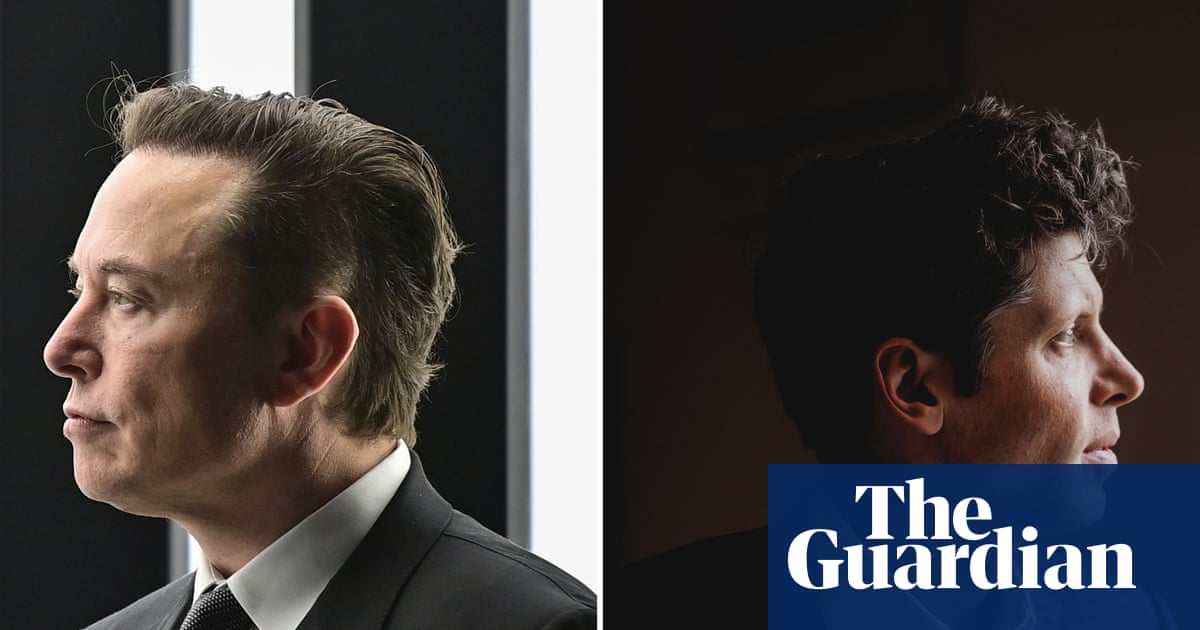
Musk vs. Altman: OpenAI courtroom drama highlights industry tensions
Understand the legal and governance risks facing major AI labs as they navigate the transition to commercial entities.
30-Second TL;DR
What Changed
Elon Musk alleges that Sam Altman and OpenAI leadership 'stole' a charity.
Why It Matters
This trial highlights the fragility of AI governance models and the potential for internal mission drift in high-stakes AI organizations. It serves as a cautionary tale for founders regarding the importance of clear legal structures when transitioning from research to commercial products.
What To Do Next
Review your own startup's founding documents and governance structure to ensure mission alignment is legally protected during future funding rounds.
Key Points
- •Elon Musk alleges that Sam Altman and OpenAI leadership 'stole' a charity.
- •The trial involves testimony from key figures including Microsoft CEO Satya Nadella.
- •Legal teams are using private communications and diary entries to debate the company's founding mission.
- •The jury will decide on the legitimacy of the claims regarding OpenAI's governance.
Deep Insight
Background and context from public sources — not the original article. 28 sources cited.
Enhanced Key Takeaways
- •Microsoft CEO Satya Nadella testified that Microsoft's agreement with OpenAI granted it rights to intellectual property but not control over the company, and he expressed concerns about Microsoft being left behind in the AI industry during the 2023 leadership crisis.
- •Elon Musk's federal lawsuit, filed in August 2024, seeks $180 billion in damages and demands that OpenAI revert to its non-profit status and remove Sam Altman and Greg Brockman from leadership.
- •Sam Altman admitted in court to holding an indirect equity stake in OpenAI through a fund managed by Y Combinator, a revelation that contradicted his previous testimony to the U.S. Senate.
- •Musk's departure from OpenAI in February 2018 followed a power struggle where he sought total control and expressed a belief that the company had no viable path forward, subsequently shifting his focus to AGI development at Tesla.
- •OpenAI reportedly abandoned its controversial plan to fully convert from a non-profit-controlled structure to a for-profit company in May 2025, opting instead to restructure its commercial arm as a public benefit corporation (PBC) while retaining non-profit control, following significant backlash and legal scrutiny.
Competitor Analysis
- Chatbot Market Share (Daily U.S. Mobile App Users, Jan 2026)
- 45.3% (down from 69.1% in Jan 2025)
- Enterprise LLM Spend (2025)
- 27% (down from 50% in 2023)
- Key Offerings/Notes
- GPT series (GPT-4o, GPT-5), DALL-E, Sora, ChatGPT
- Chatbot Market Share (Daily U.S. Mobile App Users, Jan 2026)
- 25.1% (up from 14.7% in Jan 2025)
- Enterprise LLM Spend (2025)
- N/A (but growing rapidly)
- Key Offerings/Notes
- Gemini, Google Search integration, Workspace integration
- Chatbot Market Share (Daily U.S. Mobile App Users, Jan 2026)
- N/A (but high engagement)
- Enterprise LLM Spend (2025)
- 40% (up from 12% in 2023)
- Key Offerings/Notes
- Claude series, strong in enterprise and coding
- Chatbot Market Share (Daily U.S. Mobile App Users, Jan 2026)
- 15.2% (up from 1.6% in Jan 2025)
- Enterprise LLM Spend (2025)
- N/A
- Key Offerings/Notes
- Real-time access to X (formerly Twitter) data
- Chatbot Market Share (Daily U.S. Mobile App Users, Jan 2026)
- 7.73% (April 2026 referral share)
- Enterprise LLM Spend (2025)
- N/A
- Key Offerings/Notes
- AI-powered search and answer engine
- Chatbot Market Share (Daily U.S. Mobile App Users, Jan 2026)
- 3.76% (April 2026 referral share)
- Enterprise LLM Spend (2025)
- N/A
- Key Offerings/Notes
- Integrated into Microsoft products, powered by OpenAI
| Competitor | Chatbot Market Share (Daily U.S. Mobile App Users, Jan 2026) | Enterprise LLM Spend (2025) | Key Offerings/Notes |
|---|---|---|---|
| OpenAI (ChatGPT) | 45.3% (down from 69.1% in Jan 2025) | 27% (down from 50% in 2023) | GPT series (GPT-4o, GPT-5), DALL-E, Sora, ChatGPT |
| Google (Gemini) | 25.1% (up from 14.7% in Jan 2025) | N/A (but growing rapidly) | Gemini, Google Search integration, Workspace integration |
| Anthropic (Claude) | N/A (but high engagement) | 40% (up from 12% in 2023) | Claude series, strong in enterprise and coding |
| xAI (Grok) | 15.2% (up from 1.6% in Jan 2025) | N/A | Real-time access to X (formerly Twitter) data |
| Perplexity | 7.73% (April 2026 referral share) | N/A | AI-powered search and answer engine |
| Microsoft (Copilot) | 3.76% (April 2026 referral share) | N/A | Integrated into Microsoft products, powered by OpenAI |
Technical Deep Dive
- Transformer Architecture: OpenAI's GPT models are based on the Transformer deep learning architecture, which utilizes an attention mechanism to handle long-range dependencies in text and enable efficient training on large datasets.
- Generative Pre-trained Transformer (GPT) Evolution:
- GPT-1 (2018): Introduced with 117 million parameters, demonstrating the concept of pre-training on raw text and fine-tuning for specific tasks.
- GPT-2 (2019): Scaled to 1.5 billion parameters, introduced pre-normalization, and showed zero-shot transfer capabilities.
- GPT-3 (2020): A significant leap with 175 billion parameters, trained on trillions of words, demonstrating in-context learning.
- GPT-4 (2023): Believed to use a Mixture of Experts (MoE) architecture with an estimated 1.8 trillion total parameters across 120 layers, and introduced multimodal input (vision) and extended context length.
- GPT-5 (August 2025): Focuses on capability over parameter counts, showing improvements in math, coding, and reduced factual errors, with a real-time router for dynamic mode switching.
- Key Components: GPT models typically include a tokenizer, an embedding matrix, multiple Transformer blocks (with RMSNorm, masked multi-head self-attention, and often Mixture of Experts layers), and unembedding.
- Mixture of Experts (MoE): GPT-4 and later models like GPT-OSS utilize MoE, where a router component selects multiple 'experts' (neural networks) to process different input tokens, allowing for larger total parameter counts while managing inference costs.
Future ImplicationsAI analysis grounded in cited sources
Timeline
- 2015-12OpenAI founded as a non-profit with a mission for AGI to benefit all humanity.
- 2018-02Elon Musk departs from OpenAI's board following a reported power struggle and concerns over the company's direction.
- 2019-03OpenAI introduces a 'capped-profit' subsidiary to attract investment while maintaining non-profit control.
- 2023-11Sam Altman is briefly ousted and then reinstated as CEO, prompting questions about governance and investor influence.
- 2024-08Elon Musk files a federal lawsuit against OpenAI, Sam Altman, and others, alleging breach of founding principles.
- 2025-05OpenAI reportedly abandons plans for a full for-profit conversion, opting for a Public Benefit Corporation structure under non-profit control.
- 2026-04The 'Musk vs. Altman' trial begins in federal court, with testimonies from key industry figures.
Sources (28)
Factual claims are grounded in the sources below. Forward-looking analysis is AI-generated interpretation.
Weekly AI Recap
Read this week's curated digest of top AI events →
Related Updates

AI-curated news aggregator. All content rights belong to original publishers.
Original source: The Guardian Technology ↗
This is a summary, not the original. Read the source, or get the weekly briefing.
The weekly digest
One email a week. Unsubscribe anytime.