Musk Names China AI’s Strongest Rival
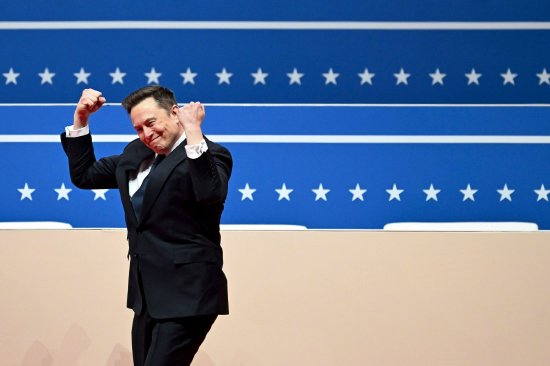
💡Musk’s comments highlight where AI competition and supply-chain risk may intensify next.
⚡ 30-Second TL;DR
What Changed
Musk identified China as the strongest current competitor in AI.
Why It Matters
The statement reinforces the importance of China’s AI progress in global technology strategy. For AI companies, it may signal intensifying competition for talent, compute, capital, and advanced model capabilities.
What To Do Next
Review your AI roadmap for dependence on a single country or supplier for models, compute, data, and hardware.
Key Points
- •Musk identified China as the strongest current competitor in AI.
- •He reiterated a 15-year-old prediction about China challenging SpaceX in rocket technology.
- •The comments frame China as a strategic competitor across both AI and aerospace.
🧠 Deep Insight
Web-grounded analysis with 12 cited sources.
🔑 Enhanced Key Takeaways
- •Elon Musk, during Tesla's fourth-quarter earnings call in January 2026, specifically identified China as the strongest competitor in the humanoid robot market, highlighting the country's proficiency in scaling, manufacturing, and rapidly advancing AI models.
- •Musk attributes China's potential decisive advantage in the AI race to its capacity for scaling electricity generation, estimating that China could achieve three times the electricity output of the United States by 2026, a critical factor for powering energy-intensive AI data centers.
- •Despite U.S. restrictions on advanced semiconductors, Musk suggested that China would eventually develop its own chip capabilities and that the diminishing returns at the cutting edge of chip performance might facilitate China's ability to catch up.
- •A 2026 AI Index report from Stanford University indicated that the performance gap between U.S. and Chinese AI models has 'effectively closed,' with both nations' systems frequently exchanging the lead.
- •China's national AI strategy, outlined in its 2017 'New Generation Artificial Intelligence Development Plan,' set ambitious goals to make the country a world leader in AI by 2030, with intermediate targets for 2020 and 2025.
🔮 Future ImplicationsAI analysis grounded in cited sources
⏳ Timeline
📎 Sources (12)
Factual claims are grounded in the sources below. Forward-looking analysis is AI-generated interpretation.
Weekly AI Recap
Read this week's curated digest of top AI events →
👉Related Updates

AI-curated news aggregator. All content rights belong to original publishers.
Original source: cnBeta (Full RSS) ↗