Musk Confident on EU FSD Approval Amid Regulator Skepticism
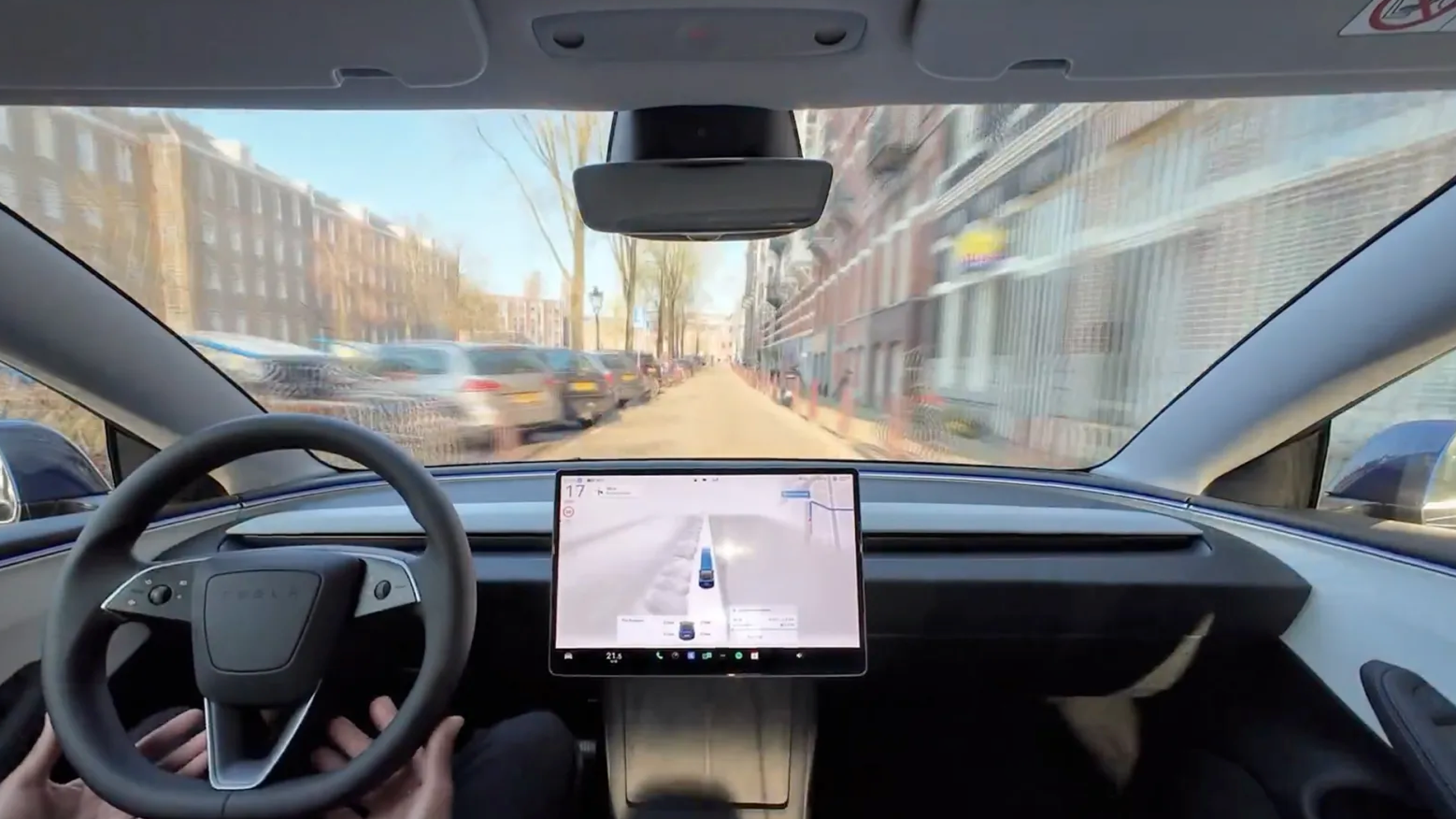
EU FSD approval battle reveals key regulatory risks for embodied AI deployment
30-Second TL;DR
What Changed
Musk claims EU approval for Tesla FSD imminent
Why It Matters
Potential EU approval could expand Tesla's AV market, but persistent doubts may delay rollouts and force safety improvements. Signals broader regulatory scrutiny for AI autonomy in Europe.
What To Do Next
Benchmark your AV vision models against Tesla's latest FSD safety data reports.
Key Points
- •Musk claims EU approval for Tesla FSD imminent
- •European regulators voice skepticism via emails
- •Doubts focus on FSD safety benefits and claims
Deep Insight
AI-generated analysis for this event — not the original article.
Enhanced Key Takeaways
- •European regulators are specifically scrutinizing Tesla's 'supervised' FSD approach, questioning whether it meets the stringent UNECE R157 regulations for Automated Lane Keeping Systems (ALKS) which require clear liability transfer protocols.
- •Internal regulatory correspondence highlights concerns regarding the 'black box' nature of Tesla's neural network-based decision-making, which complicates the safety validation processes required for type approval in the EU market.
- •The European Commission is currently evaluating whether Tesla's data collection practices for FSD training comply with the General Data Protection Regulation (GDPR), adding a privacy-centric layer to the existing safety-based regulatory hurdles.
Competitor Analysis
- Tesla FSD (Supervised)
- SAE Level 2
- Waymo (Driverless)
- SAE Level 4
- Mercedes-Benz Drive Pilot
- SAE Level 3
- Tesla FSD (Supervised)
- Any road (where permitted)
- Waymo (Driverless)
- Geofenced urban areas
- Mercedes-Benz Drive Pilot
- Limited highways (Germany/US)
- Tesla FSD (Supervised)
- Driver responsible
- Waymo (Driverless)
- Operator responsible
- Mercedes-Benz Drive Pilot
- Manufacturer responsible (active)
- Tesla FSD (Supervised)
- Vision-only
- Waymo (Driverless)
- LiDAR, Radar, Cameras
- Mercedes-Benz Drive Pilot
- LiDAR, Radar, Cameras, Ultrasonic
| Feature | Tesla FSD (Supervised) | Waymo (Driverless) | Mercedes-Benz Drive Pilot |
|---|---|---|---|
| Autonomy Level | SAE Level 2 | SAE Level 4 | SAE Level 3 |
| Operational Domain | Any road (where permitted) | Geofenced urban areas | Limited highways (Germany/US) |
| Liability | Driver responsible | Operator responsible | Manufacturer responsible (active) |
| Sensor Suite | Vision-only | LiDAR, Radar, Cameras | LiDAR, Radar, Cameras, Ultrasonic |
Technical Deep Dive
- •Tesla FSD utilizes an end-to-end neural network architecture (FSD v12+) that replaces hundreds of thousands of lines of C++ code with deep learning models trained on massive video datasets.
- •The system relies on 'Occupancy Networks' to create a 3D voxel representation of the environment, allowing the vehicle to understand geometry and obstacles without relying on pre-mapped HD maps.
- •Hardware requirements currently center on the HW4 computer, featuring increased processing power and higher-resolution camera inputs compared to the previous HW3 iteration.
Future ImplicationsAI analysis grounded in cited sources
Timeline
- 2021-03UNECE R157 regulation enters into force, setting the framework for Automated Lane Keeping Systems in Europe.
- 2023-09Tesla begins deploying FSD v12, transitioning to an end-to-end neural network architecture.
- 2025-06European regulators formally request additional safety documentation from Tesla regarding FSD performance in diverse weather conditions.
- 2026-02Leaked regulatory emails reveal significant concerns from EU member states regarding Tesla's safety validation methodology.
Event Coverage
Weekly AI Recap
Read this week's curated digest of top AI events →
Related Updates
AI-curated news aggregator. All content rights belong to original publishers.
Original source: cnBeta (Full RSS) ↗
This is a summary, not the original. Read the source, or get the weekly briefing.
The weekly digest
One email a week. Unsubscribe anytime.