Microsoft Expands Local AI Support to NVIDIA GPUs
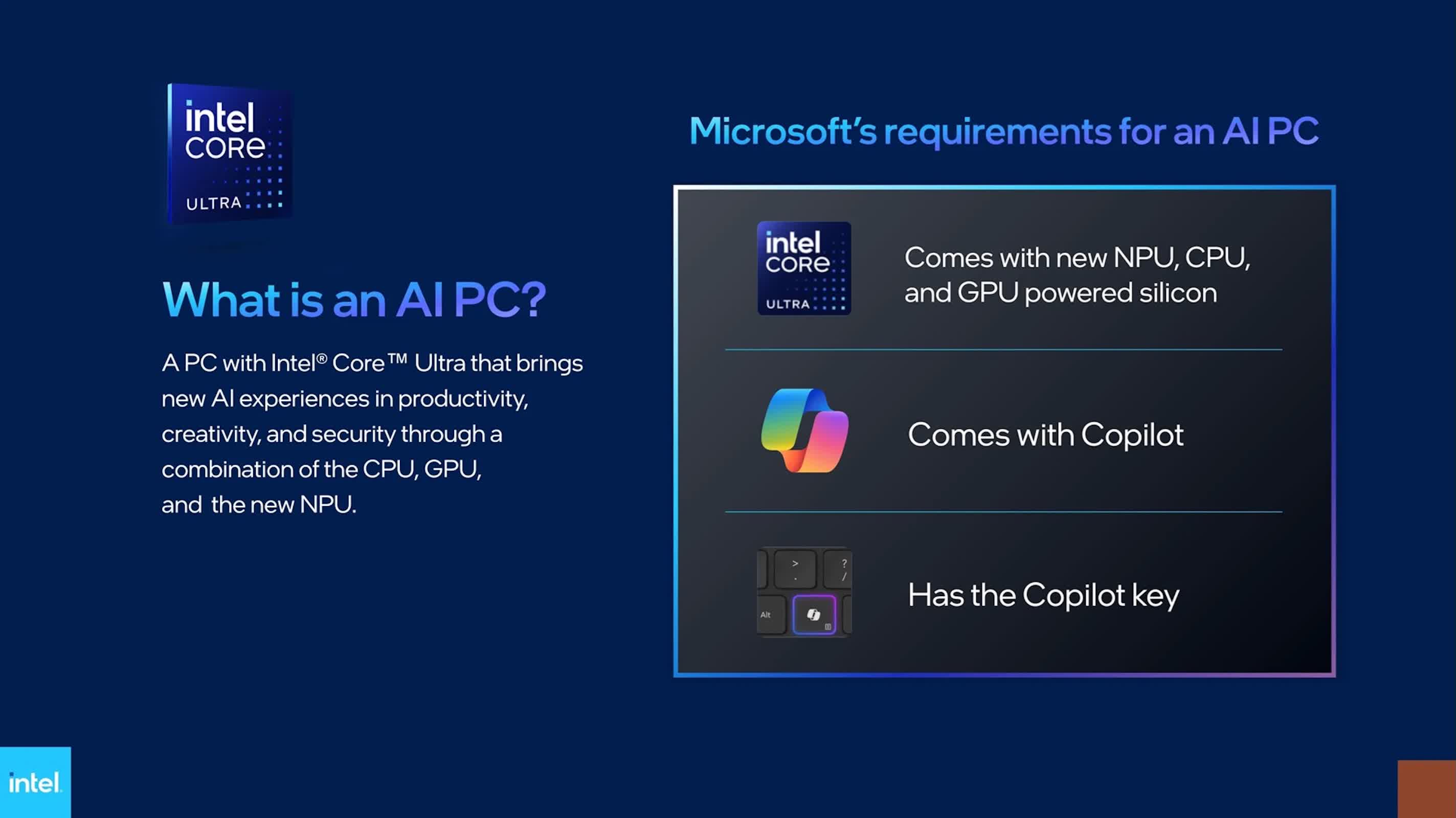
💡Developers can now run local AI models on standard NVIDIA GPUs, bypassing Copilot+ hardware requirements.
⚡ 30-Second TL;DR
What Changed
Windows 11 now supports local AI APIs on NVIDIA RTX 30 series GPUs or newer.
Why It Matters
This change significantly expands the addressable market for local AI applications, allowing developers to target a wider range of existing high-performance gaming and workstation PCs.
What To Do Next
Update your Windows local AI development environment and test your models on NVIDIA RTX 30+ hardware to leverage the new API support.
Key Points
- •Windows 11 now supports local AI APIs on NVIDIA RTX 30 series GPUs or newer.
- •Requires at least 6GB of VRAM for local AI workload execution.
- •Microsoft is moving away from strict Copilot+ brand hardware exclusivity.
🧠 Deep Insight
Background and context from public sources — not the original article. 30 sources cited.
🔑 Enhanced Key Takeaways
- •The expanded local AI support on NVIDIA GPUs specifically targets Windows' Language Model APIs, enabling text-based tasks like summarization, rewriting, and generation, powered by Microsoft's Phi Silica small language model.
- •Unlike Copilot+ PCs, which require a dedicated Neural Processing Unit (NPU) with at least 40 Trillion Operations Per Second (TOPS), 16GB RAM, and 256GB SSD for features like Recall and Live Captions, this GPU support broadens access to local AI capabilities on existing hardware.
- •This move is part of Microsoft's broader strategy to evolve Windows into an 'agentic OS' and a platform for hybrid AI, allowing developers to leverage both cloud and local processing for AI workloads.
- •The local AI capabilities on NVIDIA GPUs are currently in an experimental developer preview, indicating an initial focus on enabling developers to integrate these features into their applications rather than a direct rollout of all Copilot+ consumer features.
- •NVIDIA has also introduced its Arm-based RTX Spark superchip, featuring up to 1 petaflop of AI compute and 128GB of unified memory, designed to reinvent Windows PCs for personal AI agents and offering a native Windows experience.
📊 Competitor Analysis▸ Show
| Feature/Category | Microsoft (Windows + NVIDIA GPU) | Microsoft (Copilot+ PC - NPU) | AMD (Ryzen AI) | Intel (Core Ultra) | Apple (M-series) |
|---|---|---|---|---|---|
| Primary AI Accelerator | NVIDIA RTX 30 series+ GPUs (6GB+ VRAM) | Dedicated NPU (40+ TOPS) | Ryzen AI NPU (up to 55 TOPS), Radeon GPUs (ROCm) | Core Ultra NPU (40-47 TOPS) | Apple Neural Engine (M4 Max: 38 TOPS) |
| Local AI Capabilities | Language Model APIs (Phi Silica for text tasks like summarization, rewriting) | Recall, Live Captions, Windows Studio Effects, Cocreator | Local LLMs, image/video models (via ROCm on GPUs), Copilot+ features on qualifying NPUs | Text analysis, translations, video filters, image generation, language modeling (via NPU) | LLM inference, unified memory for large models |
| Minimum RAM | Not explicitly stated for GPU-only, but 6GB VRAM for GPU | 16GB RAM | 8GB (recommended 16GB) for LM on AMD NPU | 16GB RAM for Copilot+ | Unified memory (e.g., 32GB, 64GB, 128GB) |
| Ecosystem/SDKs | Windows ML, ONNX Runtime, DirectML, NVIDIA AI development platform, TensorRT | Windows ML, ONNX Runtime, DirectML | Windows ML, ONNX Runtime, ROCm, Ryzen AI Software | Windows ML, ONNX Runtime, OpenVINO | Core ML, unified memory architecture |
| Power Efficiency | Generally higher power consumption than NPUs for sustained AI workloads | Optimized for low-power, always-on AI features | Optimized for efficient AI processing on Ryzen AI processors | NPU designed for inference-based AI tasks | Highly efficient due to unified memory and SoC design |
| New Hardware (2026) | NVIDIA RTX Spark (Arm-based, up to 1 petaflop AI, 128GB unified memory) | Snapdragon X2, Intel Core Ultra 200V (Lunar Lake, Panther Lake), AMD Ryzen AI 300/Zen 5 | AMD Ryzen AI Max+ 395 (128GB unified memory) | Intel Core Ultra 200V series | Apple M4 Pro/Max |
🛠️ Technical Deep Dive
- Core Technologies: Microsoft's local AI capabilities on Windows leverage the Windows AI platform, which includes Windows ML, ONNX Runtime, and DirectML.
- Windows ML: This is a unified, high-performance local AI inferencing framework for Windows, designed to run custom or open-source ONNX models across CPUs, GPUs, and NPUs with built-in hardware acceleration. It handles dynamic execution provider selection and simplifies deployment.
- DirectML: A low-level API that enables hardware acceleration of ML models using DirectX 12-capable GPUs and NPUs. It can be accessed directly via C++ or through the ONNX Runtime.
- ONNX Runtime: Provides a consistent API for model inference and works with DirectML to offer cross-hardware capabilities.
- Phi Silica: Microsoft's on-device small language model (SLM) that powers the local Language Model APIs. It is designed for text-based tasks such as summarization, rewriting, text generation, and formatting. Phi Silica models are downloaded via Windows Update only when an application requires them, minimizing storage and bandwidth impact.
- NVIDIA RTX GPU Integration: For NVIDIA RTX 30 series and newer GPUs, the system utilizes their parallel processing power and dedicated Tensor Cores for AI workloads. NVIDIA's ecosystem also includes TensorRT for further optimization.
- NVIDIA RTX Spark (N1X): A new Arm-based superchip featuring an NVIDIA Blackwell RTX GPU with 6,144 CUDA cores and fifth-generation Tensor Cores with FP4 precision, connected via NVLink-C2C to a 20-core NVIDIA Grace CPU. It offers up to 1 petaflop of AI compute and 128GB of unified memory, specifically designed for personal AI agents and running NVIDIA's full software stack.
🔮 Future ImplicationsAI analysis grounded in cited sources
⏳ Timeline
📎 Sources (30)
Factual claims are grounded in the sources below. Forward-looking analysis is AI-generated interpretation.
- techspot.com
- windowsforum.com
- techradar.com
- windowsforum.com
- twit.tv
- visioncomputers.com
- amd.com
- pcworld.com
- reddit.com
- localaimaster.com
- thelettertwo.com
- windows.com
- windows.com
- windowslatest.com
- windowslatest.com
- nvidia.com
- nvidia.com
- amd.com
- youtube.com
- lukaszadam.com
- amd.com
- microsoft.com
- onnxruntime.ai
- microsoft.com
- github.io
- nvidia.com
- microsoft.com
- thurrott.com
- windows.com
- youtube.com
Weekly AI Recap
Read this week's curated digest of top AI events →
👉Related Updates
AI-curated news aggregator. All content rights belong to original publishers.
Original source: cnBeta (Full RSS) ↗
This is a summary, not the original. Read the source, or get the weekly briefing.
The weekly digest
One email a week. Unsubscribe anytime.